Posts tagged “personalized book creation”

"An illustrative digital drawing in a flat, textured style and warm, muted color palette of teal, orange, and brown, depicting a six-year-old girl with a backpack looking over her shoulder at three other diverse school children who are whispering together. In the foreground, the girl is holding hands with her smiling mother, who offers a reassuring presence. The scene takes place on a sidewalk in front of a stylized school building entrance. No text is present.
peer orientation

Peer Orientation in Kids: What Gordon Neufeld Means and How to Keep Your Child Anchored at Home

Children are wired to follow someone's lead. Gordon Neufeld's idea of peer orientation explains why that someone should still be you, and offers three simple ways to stay your child's first call.
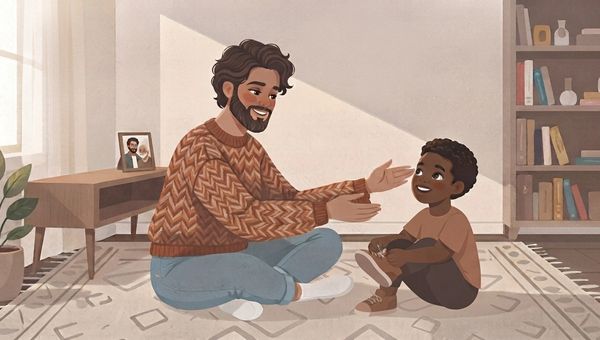
An illustrated interior scene of a cozy living room in a warm, muted color palette. A father with curly dark hair and a beard sits cross-legged on a patterned rug, looking lovingly and smiling at his young son. The son is sitting nearby on the floor, holding and putting on his shoes, looking up at his father with a happy expression. The background features a sofa table with a framed family photo, a potted plant, a bookshelf filled with books, and a window letting in soft light. The style is a flat vector illustration
Shefali Tsabary research

The Power Struggle Was Never Really About the Shoes

"It's only 10 percent what the child is doing and 90 percent what the parent is doing."

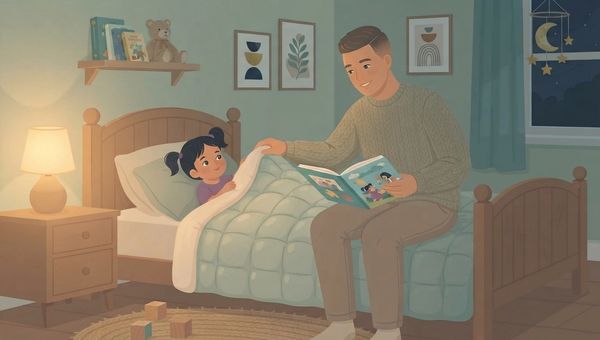
An illustrated scene in a child's bedroom at night. A man, wearing a sage green knitted sweater and beige pants, sits on the edge of a twin bed, smiling and holding an open picture book. He is tucking a young girl, who has dark pigtails and is wearing a purple top, under a textured, quilted blanket. The girl is also smiling up at the man. The room is dimly lit by a warm-glowing lamp on a wooden bedside table. On the wall behind them is a shelf with children's books and a teddy bear, and two framed abstract geometric prints. A window with a dark night sky and a moon and stars mobile is visible to the right. On the wooden floor is a round jute rug and a few wooden blocks. The overall style is cozy and warm.
bedtime routine

Why Kids Open Up at Bedtime (and How to Make the Most of It)

That moment at 8 p.m. when your kid finally tells you everything? It's not a coincidence. Here's why bedtime is your golden hour.

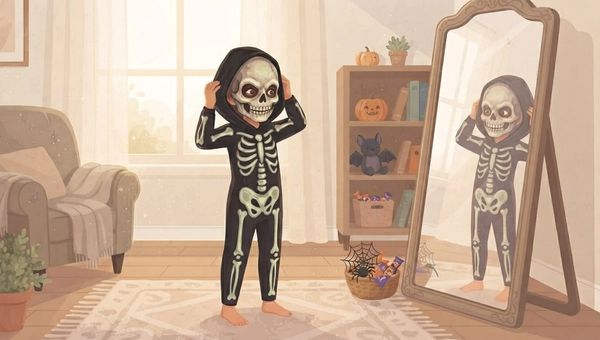
An illustration of a child dressed in a black skeleton costume with a white bone pattern and a matching skeleton mask, standing in a cozy, sun-drenched living room. The child, with bare feet, is adjusting the hood of the mask and looking at their reflection in a large, ornate floor mirror to their right. The room features a comfortable armchair with a throw blanket, a bookshelf with Halloween decorations like pumpkins and a bat, and a basket of goodies including a spiderweb and candy. The art style is soft, warm, and illustrative.
Halloween costume

Let Them Pick: Why Kids Should Choose Their Own Halloween Costume

Your kid wants to be "a spider who is also a mailman." Here's why saying yes might be the smartest parenting move of October.

An illustrative vector scene shows an outdoor playground at dusk with soft, natural lighting. In the center, a young girl with twin pigtails wearing a purple dress is dramatically lying facedown on the wood chips, crying and throwing a tantrum. Standing right next to her is a concerned mother with dark curly hair, wearing a denim jacket, white top, and dark pants, looking down with a stressed and empathetic expression with her hands held out in a gesture of gentle helplessness. In the background, there is a wooden playground structure with climbing equipment and slides, set against a soft evening sky. The overall art style is warm, flat, and gentle with textured shading.
two things are true

You Can Say No and Still Say "I Get It": The Two Things Are True Approach

The park meltdown doesn't have to be a choice between caving and "stop crying." Dr. Becky Kennedy offers a third way.

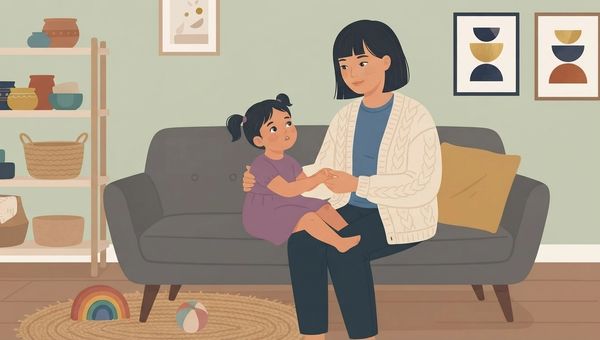
An illustrative vector scene in a cozy, bright living room features an Asian mother with short dark hair sitting on a dark gray sofa, wearing a cream-colored knitted cardigan over a blue top. Next to her, a young daughter with twin pigtails wearing a purple dress sits on her lap, holding hands with her and looking up attentively. In the background, there is a light green wall decorated with abstract geometric art prints, a light wooden shelving unit filled with decorative ceramics and baskets, and a round woven rug on the wooden floor with a wooden rainbow toy and a small ball. The overall art style is warm, flat, and gentle with soft pastel tones.
most generous interpretation

"He's Doing It on Purpose": Why Dr. Becky Kennedy Says to Look for the MGI Instead

"He's doing it on purpose" is the easiest story to believe. Dr. Becky Kennedy offers a better one, and it's usually more accurate.

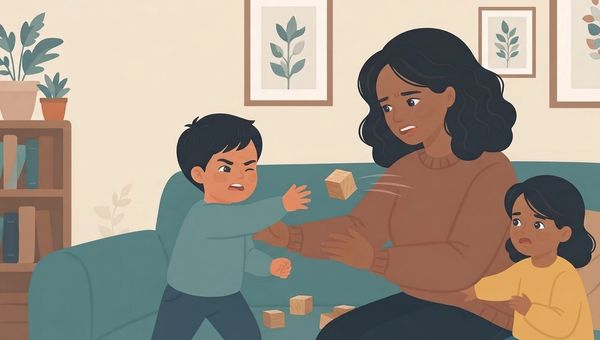
An illustrative vector scene inside a cozy living room shows a Black mother sitting on a teal sofa, looking distressed. A young boy with an angry expression in a light blue sweater stands on the sofa, leaning forward aggressively with his hand extended, apparently having just thrown a wooden block that is shown mid-air near the mother's chest. A younger girl in a yellow sweater is partially hidden behind the mother, looking upset and tearful. On the left, there's a wooden bookshelf with books and potted plants. The wall behind them is cream-colored with three framed botanical prints. Scattered wooden blocks are on the floor. The overall style is flat, warm, and domestic, with visible textures.
good inside

"A Good Kid Having a Hard Time": Dr. Becky Kennedy's Core Idea for Tough Behavior

Your kid threw a block at his sister. Dr. Becky Kennedy says the story you tell yourself next matters more than you think.

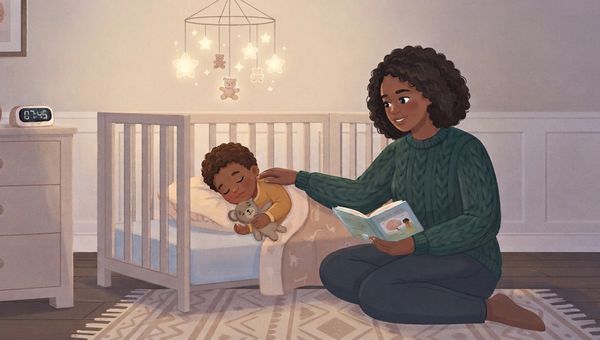
An illustrated scene in a softly lit nursery. A woman with dark curly hair wearing a green cable-knit sweater is sitting on a patterned rug, smiling down at a baby asleep in a white crib. The baby holds a small teddy bear and is covered by a blanket. Above the crib hangs a glowing star mobile. On the left, a dresser holds a plant and a digital clock displaying '07:45'. The woman holds a book in her lap. The style is warm and textured.
how much sleep do babies need

How Much Sleep Do Babies and Toddlers Need? Dr. Amen's Brain Health View

our toddler's 6 p.m. meltdown might not be about the banana. Here's how much sleep little brains actually need.

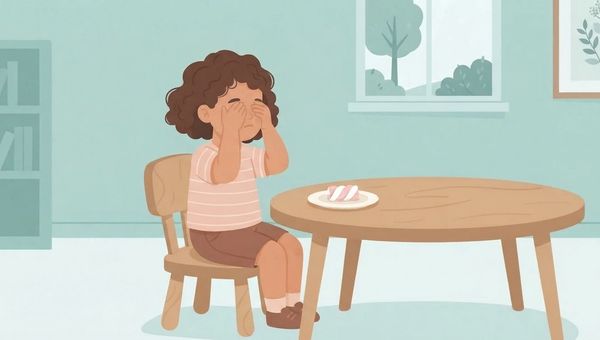
An illustration in a soft, muted pastel style showing a young girl with curly brown hair sitting alone at a wooden table in a bare room, covering her eyes with her hands to resist a single marshmallow placed on a white plate in front of her.
marshmallow test

The Marshmallow Test: What It Really Shows About Your Child's Self-Control

Your kid ate the marshmallow in 11 seconds. Here's what that really says, and how to teach waiting.

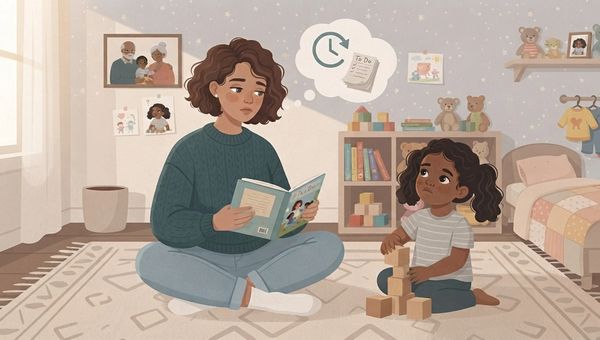
An illustrated interior scene of a cozy little girl's bedroom in a warm, muted color palette. A woman with short brown curly hair wearing a green sweater and jeans sits cross-legged on a patterned rug, holding a book, looking distracted with a thoughtful expression. Above her head, a thought bubble shows a clock and a to-do list. Nearby on the rug, a young girl with pigtails sits building a tower out of wooden blocks, looking up sadly at the woman. The background shows a child's bed, a shelf with stuffed animals and toys, a toy shelf, and framed drawings on the walls. The style is a flat vector illustration
Shefali Tsabary research

You're in the Room, But Are You Actually There?

Your body can be fully in the room while the part that actually matters checked out ten minutes ago.

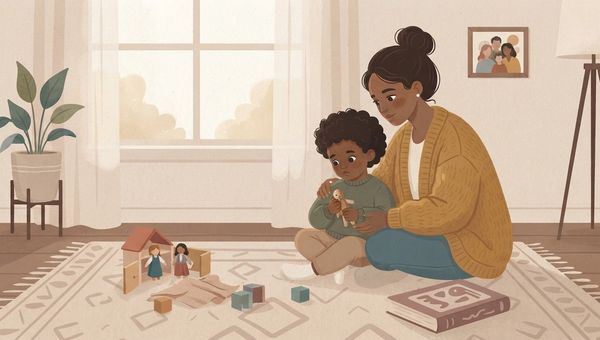
An illustrated interior scene of a cozy living room in a warm, muted color palette. A Black mother with dark hair tied in a bun sits on a patterned rug, gently embracing and comforting her young Black son who is holding a small doll. Nearby on the floor are wooden toys, blocks, and an open book. In the background, a large window lets in soft light, a potted plant stands on the left, a framed family portrait hangs on the wall, and a floor lamp stands on the right. The style is a flat vector illustration.
Shefali Tsabary research

Why the Same Punishment Keeps Working Less and Less

The same punishment, working less and less each time, might be a sign the whole approach was aimed at the wrong target.

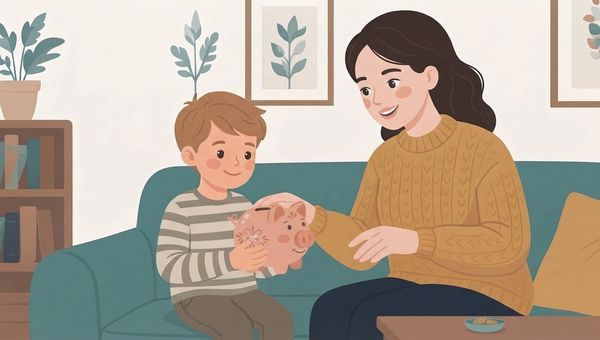
An illustrated scene shows a young boy with light brown hair, wearing a striped shirt, sitting on a teal sofa and holding a pink piggy bank with both hands. A woman with long, dark wavy hair, wearing a mustard yellow knit sweater, sits next to him on his right, looking at the piggy bank with a gentle smile. Her right hand is extended towards the piggy bank, as if guiding or touching it. On a small table in the foreground to the right, there is a small dish containing a few coins. The background features a bookshelf filled with books to the left, a potted plant on top of the bookshelf, and two framed botanical art prints on the cream-colored wall above the sofa. The overall style is a clean, flat vector illustration.
pocket money

Pocket Money Dilemmas: What Research Says Actually Works

The system matters less than the consistency. Real research points to a surprisingly simple answer.

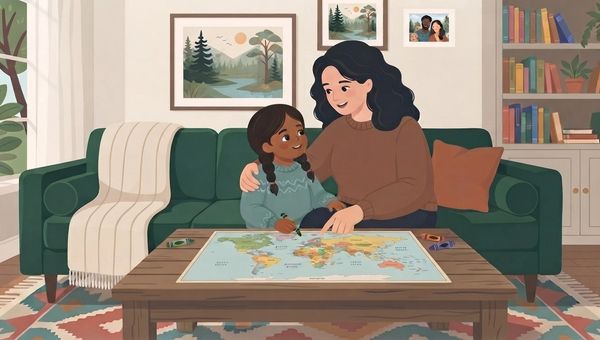
An illustration of a woman with dark wavy hair, wearing a brown sweater, sitting on a green velvet sofa with a young child who has braided pigtails and a patterned sweater. The child is holding a crayon, and the woman is pointing at a colorful world map spread out on a wooden coffee table in front of them. The background includes a window with a potted plant, a wall with framed landscape and family pictures, and a built-in bookshelf filled with books. A patterned rug is on the floor.
International Day of Peace

What "Peace" Actually Means to a Four-Year-Old

World peace is too abstract for a four-year-old. The crayon dispute happening right now isn't.

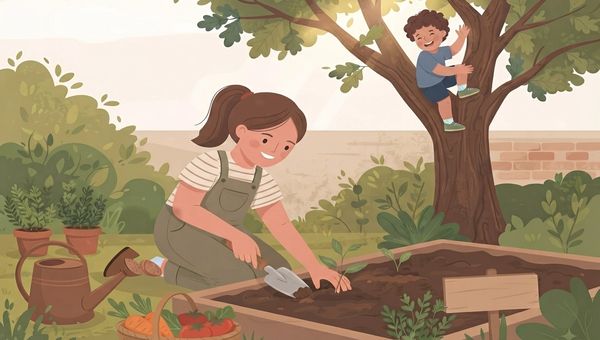
An illustrated scene in a garden. In the foreground, a woman with brown hair in a ponytail, wearing a striped shirt and green overalls, is kneeling beside a wooden raised garden bed, using a small trowel to plant a seedling. To her left, a rustic watering can rests on the grass, and a wicker basket overflows with carrots and tomatoes. In the background, a large tree stands on the right, and a small, smiling boy is happily climbing its lower branches, waving with one hand. More potted herbs and lush bushes surround them. The overall style is friendly and flat-colored, with soft, warm sunlight filtering through the leaves. A blank wooden signpost is on the right side of the garden bed.
Angeline Lillard research

Kids Actually Prefer Real Activities Over Pretend Play, Says the Research

Kids don't automatically prefer make-believe. Given a real choice, most of them pick real life, consistently.

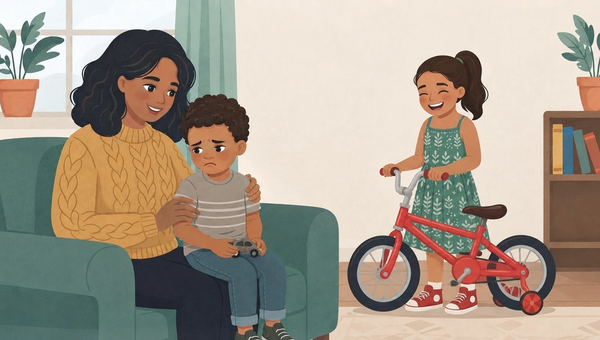
A mother comforts her sad young son on a teal sofa while a smiling girl stands beside her red bicycle in a cozy, warm living room with plants, a bookshelf, and soft natural light.
sibling comparisons

Why the Same Comparison Hits Differently Depending on Who It's With

The same comparison hits differently depending on whether it's a sibling or a stranger, and that difference is measurable.

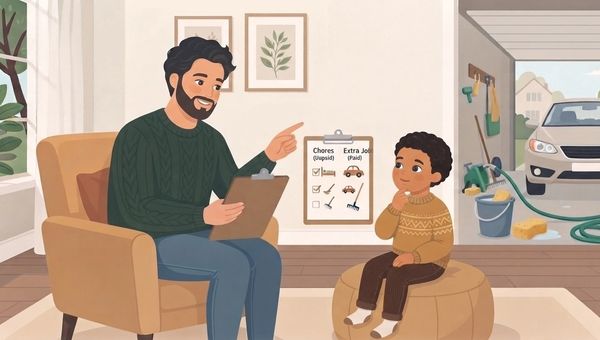
An illustrated scene shows a man with a beard, wearing a green sweater and jeans, sitting in an armchair and holding a clipboard. He is pointing with his other hand toward a chart on the wall. A young boy, wearing a patterned sweater, is sitting on a pouf opposite the man, looking at the chart with his hand to his chin. The chart is divided into two columns: "Chores (Unpaid)" with checkmarks next to a bed and a person sweeping, and "Extra Jobs (Paid)" with checkmarks next to two toy cars and a person with a rake. The background includes a window, framed botanical prints, and an open view into a garage with a car, cleaning supplies, and a hose.
kids earning money

The Difference Between a Kid Wanting to Earn and a Kid Being Bribed

A kid asking to earn money isn't the same as a kid being bribed, and the research treats those two situations very differently.

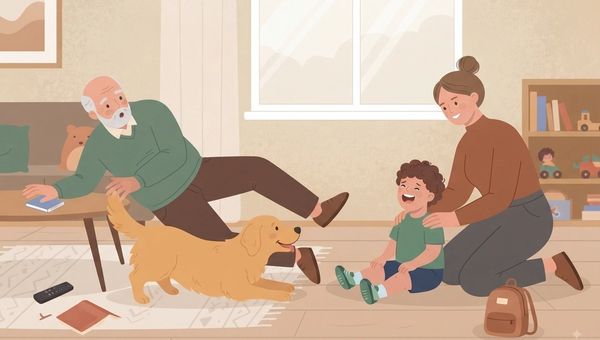
A flat-style digital illustration of a cozy living room scene. A bearded grandfather in a green sweater is sprawled on a patterned rug, having tripped over a playful golden retriever dog. Near them, a curly-haired toddler in a green shirt sits on the floor, laughing heartily with hands raised. The mother, kneeling beside the child in a rust-colored sweater, smiles gently while her hands rest on the toddler's shoulders. In the background are a bookshelf with toys, a sofa, and a window. The overall mood is lighthearted and warm.
child humor development

Why Your Kid Laughs When Someone Falls or Gets Hurt

That laugh at Grandpa's near-fall isn't a lack of empathy. It's your kid's brain making a split-second safety call.
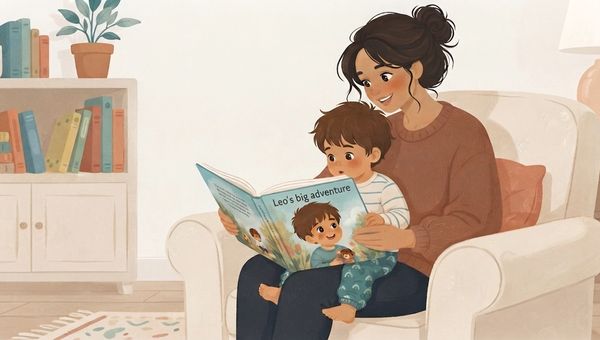
An illustrated scene in a warm, hand-drawn style shows a mother with dark hair tied in a bun, wearing a brown sweater, sitting in a cozy white armchair. She is holding a young boy of color on her lap as they look down together at an open picture book. The book's cover reads "Leo's big adventure" and features an illustration of the same little boy. The room has a soft, light color palette, featuring a white bookshelf filled with books and a potted plant in the background, along with a soft lamp light.
personalized children's books

What the Self-Reference Effect Actually Proves About Personalized Books

Personalization has real evidence behind it, but not quite in the simple, always-wins way it's usually marketed.

An illustration shows a woman with dark, wavy hair sitting in an armchair, holding up a smartphone that displays a receipt or payment screen, while pointing at the phone with her other hand. Next to her, a young boy with dark hair sits on a pouf, holding a tablet. The background shows a home setting with a window, a plant, and a bookshelf.
in-game purchases

Why Your Kid Didn't Realize They Were Spending Real Money

Your kid probably didn't understand what they were buying, and that's not an accident of game design.

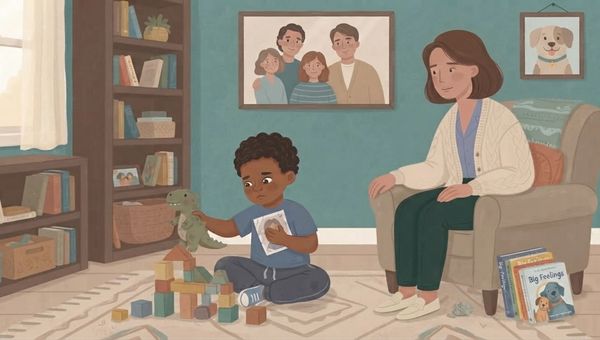
An illustrated scene in a muted, textured color palette shows a young boy of color with curly dark hair, wearing a blue t-shirt and grey sweatpants, sitting cross-legged on a patterned rug. He is holding a small, crinkled photo of an adult's face in one hand and a worn, small green plush dinosaur in the other, looking up with a concerned expression. A woman with short brown hair, wearing a cream-colored knitted cardigan and dark green pants, is seated in a beige armchair to the right, looking at the boy with a supportive expression and gently resting a hand on his shoulder. The setting is a cozy, muted-green bathroom with a pedestal sink, a round mirror, and a stack of books (one titled "Big Feelings") on a stool. A small, light-blue potty chair with a face on it sits in the foreground to the left. On the wall are two illustrated posters of the digestive and urinary tracts, with labels for "Coloin" and "Blagti". The overall style is warm, hand-drawn, and emotionally resonant.
Gabor Maté research

Trauma Isn't What Happened to Your Kid. It's What Happens Inside Them

Two kids can go through the exact same hard moment and come out completely differently, and that gap is the whole point.

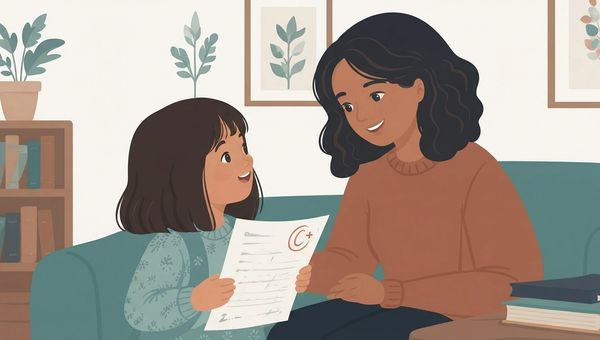
"A digital illustration shows a young girl with a patterned blue sweater holding up a paper with a red 'C+' grade. She looks with a joyful and expectant expression at an older woman, presumably her mother, who is sitting on a teal sofa and smiling warmly back at her. The mother has dark, wavy hair and wears a terracotta-colored sweater. They are in a cozy living room with a wooden bookshelf filled with books and plants to the left, and two framed botanical art prints on the wall behind them. A stack of books rests on a wooden side table to the right."
learned optimism

5 Signs Your Kid Handled That Bad Grade Better Than They Think

The exact words your kid uses after a bad grade might matter more than the grade itself.

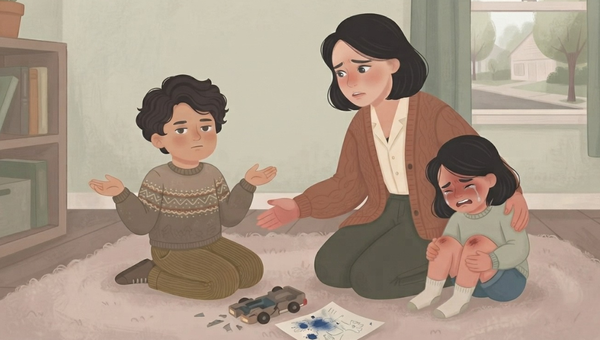
An illustrative scene in a soft, textured storybook style shows a family moment on a fluffy rug in a living room. A mother, with dark hair and wearing a rust-colored knit cardigan and green pants, kneels in the center. She looks with concern at a young boy on the left, who is also kneeling and gesturing with his hands upward in a shrug, wearing a patterned sweater and brown pants. The boy looks slightly defiant or confused. In front of them on the rug are the broken pieces of a small wooden toy vehicle and a crayon drawing of a blue figure. On the right, a younger girl, with dark hair, is sitting with her knees up, crying with tear-streaked cheeks, wearing a light-green sweater and socks. The mother has her right arm around the crying girl's shoulder and her left hand extended toward the boy. The background features a wooden bookshelf with books on the left, a window looking out onto a residential street on the right, and a soft, warm color palette of muted greens, browns, and creams. The overall mood is one of distress and conflict resolution. The lighting is diffused and gentle. A small, subtle artist's signature is in the bottom right corner.
callous-unemotional traits

When Your Child Seems to Lack Empathy: What "Callous-Unemotional Traits" Actually Means

The word you're searching for at 2am probably isn't the right one, and the actual research is more hopeful than it feels right now.

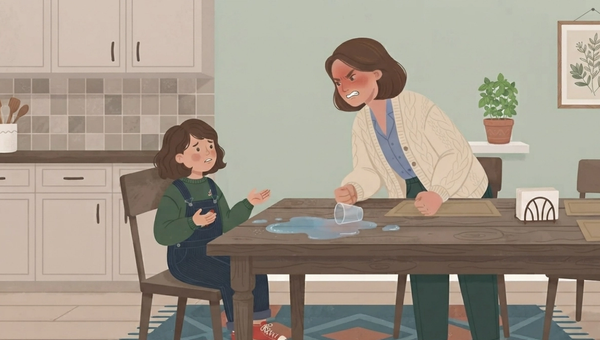
An illustrated scene in a warm, textured storybook style, depicting a tense domestic moment between a mother and her young daughter in a kitchen and dining area. A woman, with short brown hair and a flushed, angry face, wearing a cream knit cardigan over a blue shirt, is standing and leaning over a dark wood dining table, her fists clenched, looking furiously down at the girl. The girl, with wavy brown hair and wearing a green sweatshirt and denim overalls with a red patch, is sitting on a chair to the left, looking up at her mother with a pleading, worried expression, her hands open and palms up in a gesture of explanation or defense. Between them on the table, there is a large, spreading puddle of spilled water and a tipped-over, empty plastic cup. The background features light gray kitchen cabinets, a tiled backsplash, a counter with utensils, a window with a potted plant, and a framed botanical illustration on the wall. A patterned rug (blue, orange, cream geometric design) is on the light wood floor. The overall color palette is composed of muted greens, warm browns, and soft creams. A small star icon is in the bottom right corner. The lighting is even and gentle, contrasting with the emotional intensity of the figures. The style is illustrative, with visible brushstroke and fabric textures.
Shefali Tsabary research

Your Reaction to Your Kid Might Not Actually Be About What They Just Did

The fury over spilled water was never really about the water, and there are five specific ways it tends to show up.

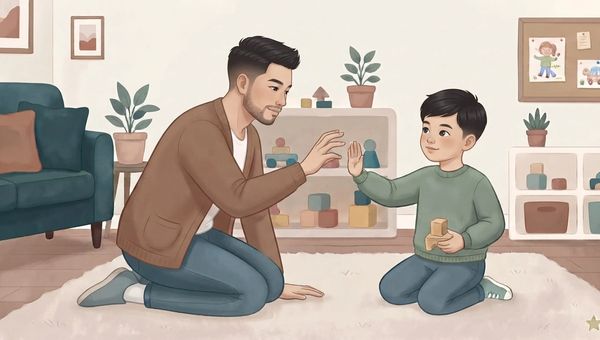
An illustration in a soft, textured storybook style depicting an Asian father and son on a fluffy rug in a cozy living room. The father, wearing a brown cardigan and jeans, is kneeling on the left, looking gently at the boy and extending a hand towards him with a gesture like a gentle tap or tickle. The son, wearing a green sweater and jeans, is kneeling on the right, smiling and raising his hand in a matching gesture, while holding a small wooden block in his other hand. In the background, there is a teal sofa, potted plants on a side table, shelves with various wooden and colorful toys, and a bulletin board with children's drawings. The overall atmosphere is warm and playful. A small stylized star icon is in the bottom right corner.
preschool aggression

My Kid Keeps Getting Hit at Preschool: What to Teach Besides "Tell a Grown-Up"

"Walk away" and "hit back" aren't the only two options. There's a third one research actually recommends.

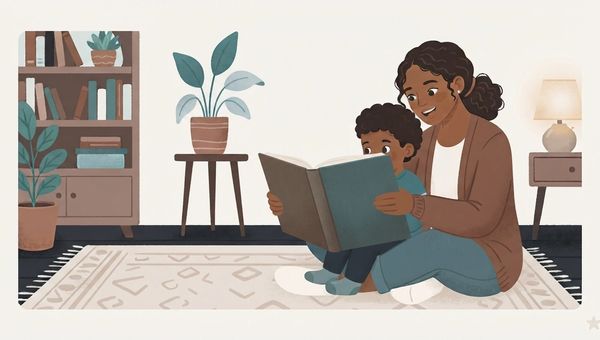
An illustration in a soft, textured storybook style depicting a Black mother and her young son sitting comfortably on a patterned rug in a living room. The mother, with her hair in a bun and wearing a brown cardigan and blue jeans, sits behind the boy, smiling warmly as they both look at an open, dark-green book held in their hands. The son, with curly hair and wearing a blue sweater, is nestled in her lap, also engaged with the book. In the background on the left is a tall, dark-wood bookshelf filled with books and a potted plant. To the right, a large potted plant sits on a wooden stand, and a lit table lamp rests on a small nightstand. The overall color palette is composed of warm, muted tones: creams, deep teals, terracotta, and soft browns. A small, stylized star icon is subtly placed in the bottom right corner.
children's books research

Why Books Are Such a Powerful Way to Teach Kids About Real Life

Your kid understands situations they've never lived through, and a lot of that understanding came from characters who lived through them first.

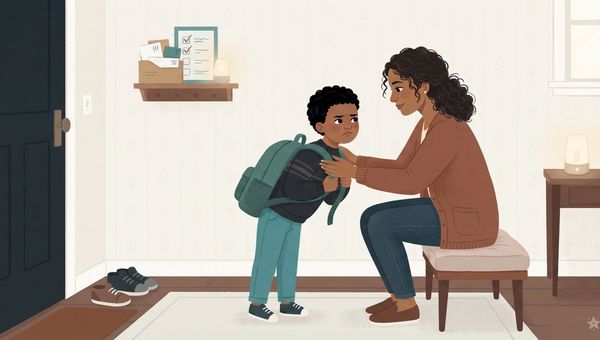
An illustration in a soft, textured storybook style depicting a moment of emotional connection in a home entryway. A young Black boy with curly hair and a distressed, reluctant expression stands facing the viewer, wearing a green backpack and a striped sweater. He is looking down and away from the adult. Seated on a cream-colored bench is an adult Black woman with dark curly hair, wearing a brown cardigan and jeans. She is leaning forward with a gentle, empathetic expression, holding the boy's shoulders and looking directly at him with a reassuring, listening posture.  The entryway features a dark front door on the left, with a pair of shoes on a mat nearby. On the wall is a wooden shelf with mail, a simple daily checklist, and a small glowing nightlight. A second small glowing lamp is on a side table on the right. The background wall has a subtle patterned wallpaper. The overall color palette is composed of warm, muted tones: creams, deep blues, terracotta, and soft browns. The lighting is warm and domestic. A small, stylized star icon is in the bottom right corner.
connection before correction

Why "You Hate It Right Now" Helps More Than Trying to Talk Them Out of It

Trying to talk your kid out of hating school rarely works. Naming that they hate it right now often does.

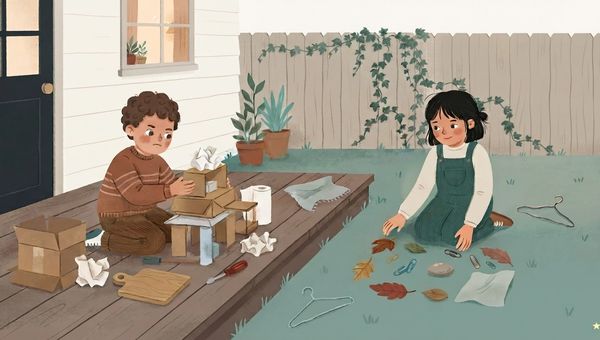
An illustration in a soft, textured storybook style depicting a backyard scene with two children. On the left, a boy with curly brown hair, wearing a striped sweater and brown corduroy pants, kneels on a wooden deck, focused on building a structure out of cardboard boxes, paper towels, screwdrivers, and other found objects. On the right, a girl with a black bob haircut and teal overalls sits cross-legged on the grass, carefully arranging a collection of leaves, paperclips, a stone, and fabric scraps into a pattern. Scattered around the children are various everyday items like paper bags, a cutting board, and metal hangers. The background features a white house with a window and a black door, potted plants, and a wooden fence covered in ivy. The lighting is soft and natural, and a small, stylized star icon is in the bottom right corner.
unstructured play

Why an Empty Afternoon Isn't Wasted Time

The clumsy, boring middle part of an unplanned afternoon isn't the problem. It's close to the entire point.

A warm, inviting illustration of a mother and daughter reading together on a sofa. The mother, a Black woman with dark curly hair pulled back with a blue headband and wearing a blue-grey sweater, is sitting on a mustard-yellow couch, smiling warmly. The daughter, a young Black girl with similar curly hair and a matching headband, is sitting beside her, looking at the book with a curious expression and wearing a striped yellow and cream shirt. They are holding an open, oversized picture book with a colorful, friendly illustration of a green and red dinosaur on the pages. The mother is pointing at something in the book with her right index finger.  The background shows a cozy living room. To the left is a wooden bookshelf filled with books and two potted plants. In the foreground, there is a small side table with a neat stack of books. To the right, a floor lamp with a cream shade stands near the sofa. The overall art style is clean, flat, and gentle, with a soft, warm color palette. The lighting is natural and comforting.
same book over and over

Why Does My Child Want the Same Book Over and Over? What Repetition Really Means

Reading the same dinosaur book for the 47th time? Good news: that "again!" is one of the smartest things your kid does.

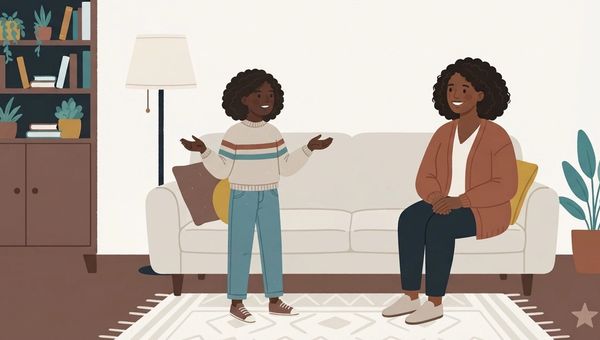
An illustration in a flat, cozy vector art style depicting a mother and daughter in a warmly lit living room. On the left, the daughter, a young Black girl with curly hair wearing a striped sweater and blue jeans, stands facing the mother, gesturing with both hands in an explanatory or conversational pose. She has a cheerful, engaging expression. On the right, the mother, a Black woman with textured curly hair wearing a brown cardigan and dark pants, sits comfortably on a cream-colored sofa, smiling warmly and listening intently with her hands clasped. The background features a tall bookshelf filled with books and potted plants, a floor lamp with a cream shade, a large potted plant on the floor, a patterned rug, and cushions on the sofa. The overall color palette is composed of warm, muted tones: creams, terracottas, deep browns, and teals. The lighting is soft and domestic.
child disclosure

5 Signs Your Kid Actually Feels Safe Telling You Things

The random, unprompted story is often a bigger sign of trust than the direct answer to a direct question.

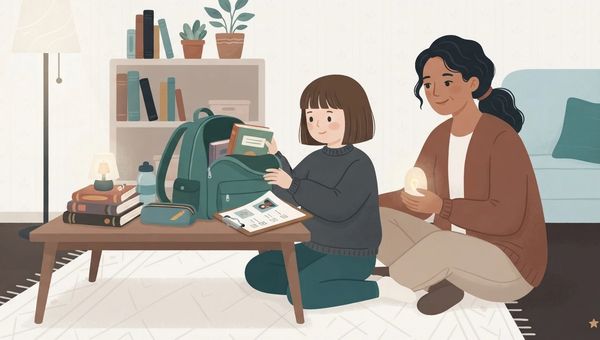
An illustration in a warm, textured vector art style depicting an evening school-prep scene in a cozy living room. A young girl with short brown hair, wearing a dark sweater and pants, sits cross-legged on a light-colored rug beside a low wooden coffee table, carefully packing books into an open green backpack. A picture checklist lies on the table next to a pencil case and a stack of books. To her right, an adult woman with dark hair tied back, wearing a brown cardigan, sits on the floor watching supportively while holding a small glowing nightlight. In the background, a bookshelf filled with books and potted plants sits against a wall, next to a floor lamp and a comfortable couch. The color palette features soft creams, dark charcoal, muted teal, and warm earthy browns.
backpack packing routine

Packing the School Backpack: Night Before, Morning, or Together? What Actually Builds the Skill

The forgotten library book isn't just a morning headache. It might be exactly where the learning happens.

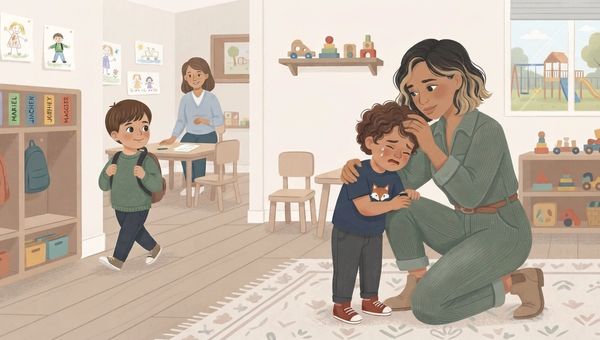
An illustration in a warm, textured vector art style depicting a preschool drop-off scene. On the right, a mother with shoulder-length dark hair featuring blonde highlights, wearing a dark green jumpsuit and boots, is kneeling on the floor to comfort her young son who is crying, sobbing, and clutching his hands together in distress. In the background to the left, another young boy wearing a green sweater and backpack walks calmly and happily into the classroom without a backward glance, while a teacher sits at a table. The cozy classroom features cubbies, shelves with toys, children's drawings on the walls, and a window showing a playground outside. The color palette utilizes soft creams, deep greens, and warm earth tones.
separation anxiety

Why Does Only My Child Cry at Drop-Off, When Everyone Else Seems Fine?

One twin cries every drop-off. The other walks right in. Here's what preschool temperament research says is actually going on.

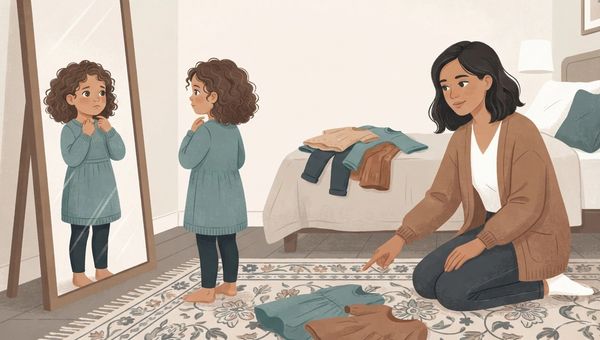
An illustration in a warm, muted vector art style depicting a child and an adult in a cozy bedroom. On the left, a young girl with curly brown hair, wearing a green tunic and dark leggings, stands in front of a large floor-length mirror, looking at her reflection with a thoughtful, hesitant expression. On the right, a woman with dark wavy hair tied back, wearing a brown cardigan and jeans, is kneeling on a patterned rug next to a bed with a pile of clothes on it, gently pointing toward clothing spread out on the floor while looking empathetically toward the girl. The color palette features soft creams, charcoal, teal, and warm browns, creating a soft, tender, and domestic atmosphere.
body image

What to Say When Your Kid Looks in the Mirror and Says "I'm Fat"

She looked in the mirror before the first day of school and said "I'm fat." Here's the response that helps, and the well-meaning one that doesn't.

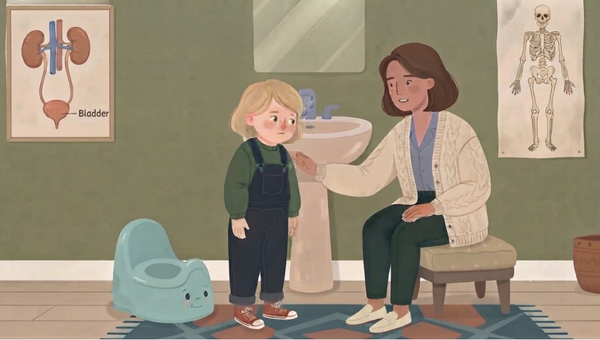
An illustrated scene in a textured, earthy color palette shows a worried-looking young blonde child in dark overalls and red sneakers standing in a bathroom. A comforting adult figure with short brown hair, wearing a cream-colored cardigan and green pants, sits on a stool next to the child, resting a hand gently on the child's shoulder. Behind them is a pedestal sink and a small light-blue potty with a face drawn on it. On the muted green wall hang two educational posters with anatomical diagrams of the digestive and urinary tracts, with labels for the colon ("Coloin") and bladder ("Blagti"). A patterned rug covers the floor, and a wicker basket is in the corner. The overall impression is one of supportive care during potty training.
potty training refusal

"Potty Refusal" Might Not Be Refusal at All: When to Relax and When to Get It Checked

What looks like stubborn refusal is, in a large share of cases, a body that physically can't do what it's being asked to do yet.

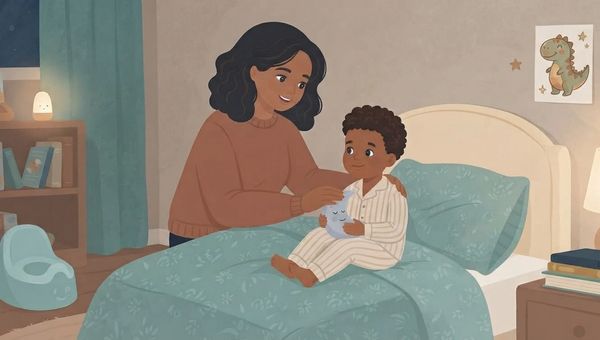
A cozy illustrated scene of a mother with dark, curly hair wearing a brown sweater, smiling as she sits on the edge of a bed and tucks in a young boy of color in striped pajamas, who is holding a small plush moon. The bed has a teal patterned comforter and a cream-colored headboard. In the background to the left, there is a bookshelf with children's books and a small nightlight, and a light blue potty chair on the floor. To the right, a bedside table with a stack of books and a lamp. On the wall above the bed, there is a framed picture of a friendly dinosaur. The art style is warm, textured, and soft, with a muted color palette.
nighttime potty training

Nighttime Dryness Runs on a Different Clock, and Rushing It Can Backfire

Dropping the nighttime diaper after three good nights feels exciting. Waiting for two solid weeks avoids an unnecessary setback.

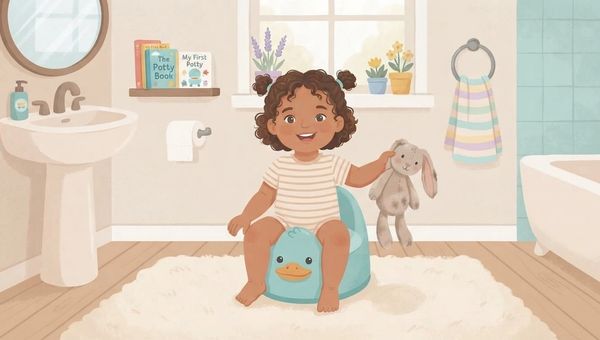
A charming, hand-drawn children's book illustration showing a happy toddler of color, with curly brown hair in pigtails and wearing a striped onesie, sitting confidently on a blue duck-shaped potty in a bright, pastel bathroom. They hold a worn plush bunny. The background features a pedestal sink with a round mirror, a shelf with books titled "The Potty Book" and "My First Potty," a window with potted plants, a toilet paper roll, and a towel ring with a striped towel. A clawfoot tub is partially visible on the right, and a soft cream rug covers the light wood floor. The style is soft, cozy, and encouraging, with a warm, light color palette.
potty training methods

Cold Turkey or Gradual? When to Actually Drop the Diapers

The research suggests the debate over cold turkey versus gradual matters less than most parents think, and timing matters more.

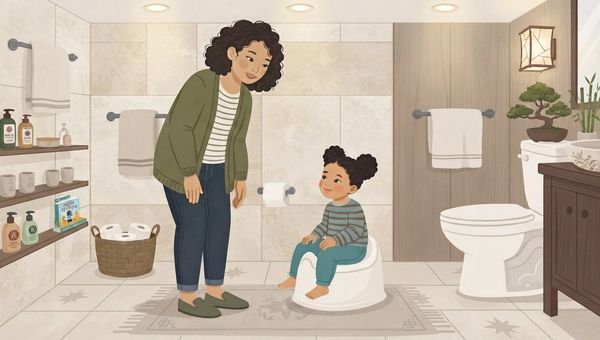
An illustrated scene in a clean, modern bathroom shows an adult woman with curly brown hair, wearing a green cardigan and jeans, standing and smiling down at a young girl with dark hair in puff buns, who is sitting on a white potty chair. The girl wears a striped shirt and teal pants and is also smiling. The bathroom features light-colored tiled walls, a wooden vanity with a sink and bonsai tree, a toilet, a wicker basket of toilet paper, and shelves stocked with toiletries. A patterned rug is on the floor, and towels are on racks. The art style is gentle and illustrative.
starting potty training

You've Spotted the Signs. Here's Where to Actually Start.

Noticing the signs is the easy part. Here's the actual sequence for what comes next.

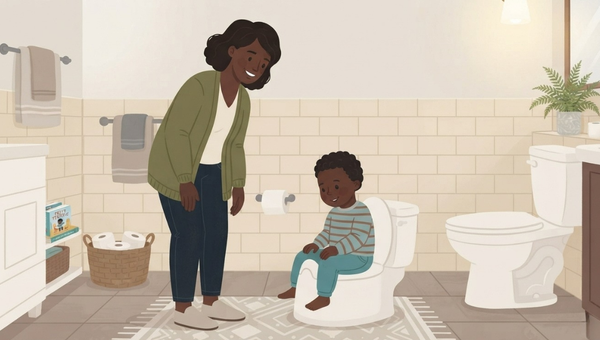
An illustrated scene in a bathroom shows a smiling Black mother watching her young son sitting barefoot on a white potty training toilet. Both are on a patterned rug. The bathroom has beige subway tiles, two vanities, a full-size toilet, towel racks, and a basket of toilet paper rolls. The style is gentle and illustrated.
potty training readiness

Signs Your Toddler Is Actually Ready for Potty Training

The calendar is one of the least reliable ways to know when to start. Here's what actually predicts readiness.

An illustration of a mother and toddler sitting on a bathroom floor. The mother, with short ginger hair, wears a cream sweater and patterned light-blue pajama pants. She holds a Black toddler in her lap, who is also wearing a matching patterned light-blue onesie. They are looking at each other, smiling.  Next to them is a small stool with a stack of books, a basket of towels, potted plants on a windowsill, a sink, and a toilet. The style is gentle and illustrated, with warm colors.
attachment-based potty training

The Attachment-Based Approach to Potty Training

This approach treats the relationship as the foundation potty training is built on, not a separate thing to protect while training happens.

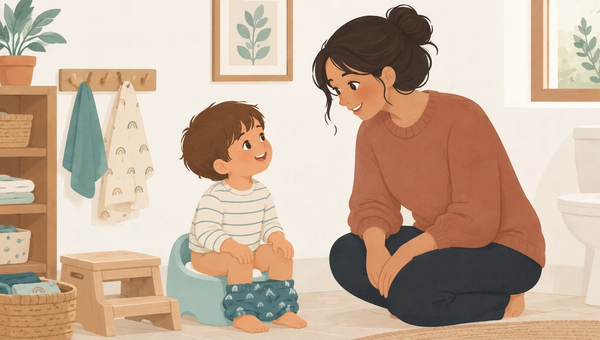
A mother gently supports her toddler during Montessori-inspired toilet learning in a warm, calm bathroom, with a child-sized potty, step stool, baskets, towels, and natural botanical decor.
Montessori potty training

The Montessori Approach to Potty Training

Montessori educators don't call it potty training. The word they use instead says a lot about the whole approach.

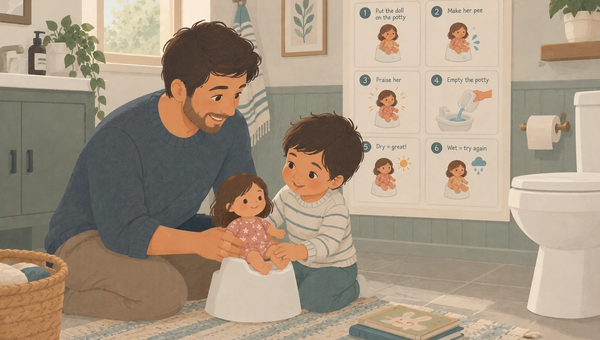
A father and young boy practice toilet training with a doll on a small potty in a cozy bathroom, while an illustrated step-by-step chart shows the doll practice routine. The warm pastel scene emphasizes learning through modeling, repetition, and positive encouragement.
Azrin and Foxx method

The Azrin and Foxx Method: Potty Training in Less Than a Day

A doll that can "wet" itself is doing more work in this method than it looks like at first glance.

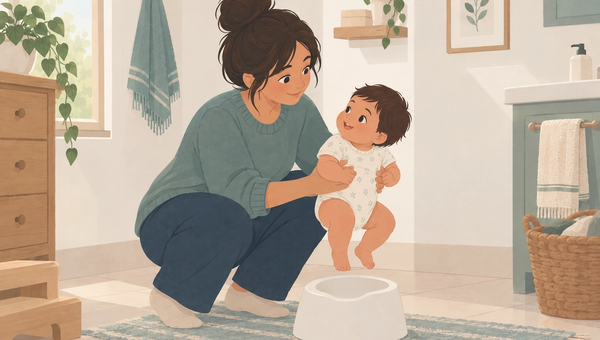
A caregiver gently supports a baby over a small potty in a cozy, softly lit bathroom, illustrating elimination communication and infant potty training.
elimination communication

Elimination Communication: The Approach That Starts Before Your Baby Can Walk

Some families start "potty training" before their baby can even sit up unsupported, and it's not as unusual globally as it sounds.

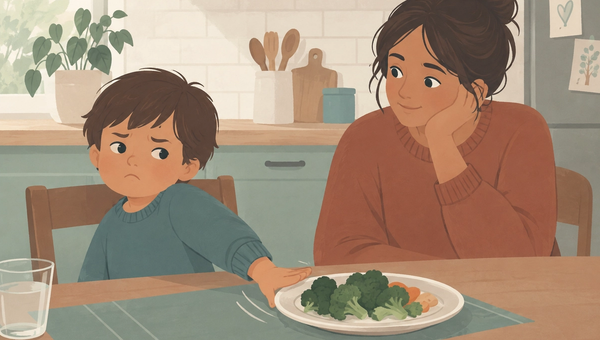
A child pushes away a plate of broccoli at the dinner table while their mother watches calmly, illustrating the challenges of introducing new foods to children.
picky eating

Why It Takes 8 to 15 Tries Before Your Kid Accepts a New Food

The food you crossed off the list after try number three might have needed twelve more chances.

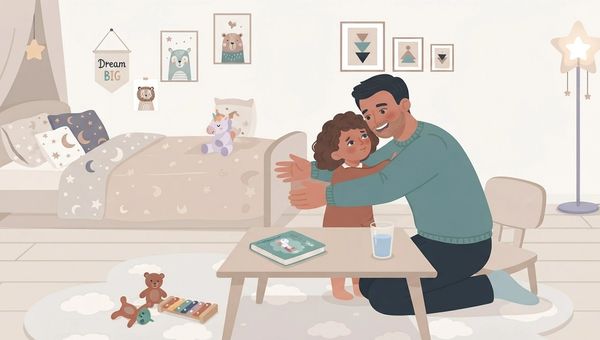
A 2D flat vector illustration of a warm, safe indoor scene in a child's bedroom. An adult father, wearing a muted green sweater and dark pants, kneels on a cloud-patterned rug and is giving a warm, enveloping hug to his young daughter, who has curly brown hair and is wearing a brown dress. The daughter is nestled securely in his embrace, looking up at him with a peaceful and trusting expression. They are positioned next to a low wooden coffee table. On the table rests a closed, softbound children's book and a clear glass of water. In the background is a twin bed with moon-and-star patterned bedding, a canopy, and several plush animal toys, including a unicorn. The walls are decorated with framed animal art prints (bears, owls) and a pennant banner that reads "Dream Big". A distinctive star-shaped floor lamp stands in the corner, casting a soft, warm glow. The overall atmosphere is intimate, caring, and secure.
Shefali Tsabary research

The Feigner: When "Everything's Fine" Becomes the Whole Strategy

The bright smile and quick exit from a public meltdown might be managing the audience more than the actual moment.

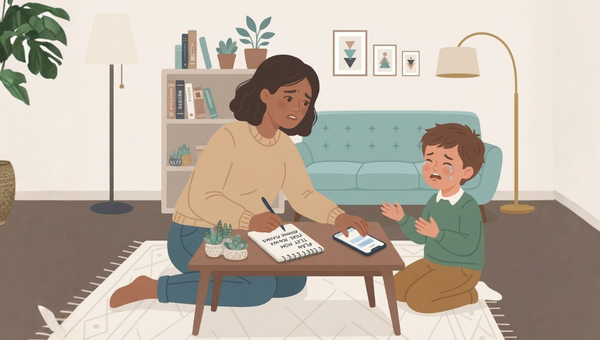
A 2D flat vector illustration in a warm corporate art style. An adult woman with dark curly hair and a concerned expression sits on a light-colored rug in a cozy living room, writing in a notebook that says "PLAN: TEXT MOM". A crying young boy with brown hair and a green sweater kneels next to her, gesturing with his hands. The room features a light blue sofa, a bookshelf filled with books and plants, a floor lamp, and wall art.
Shefali Tsabary research

The Fixer: When Rescuing Your Kid Becomes the Problem

Solving your kid's problem before they've finished describing it might be quieting your anxiety more than helping them.Solving your kid's problem before they've finished describing it might be quieting your anxiety more than helping them.

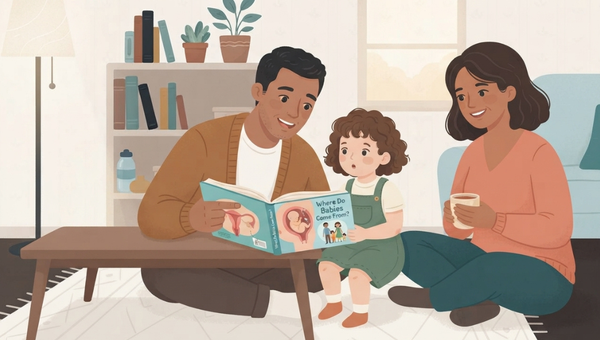
An illustrated family scene in a warm, textured digital art style, depicting a Black man and a Black woman sitting on a patterned rug in a cozy living room, reading an open picture book with a young curly-haired child. The man, on the left, wears a brown cardigan and is holding the book, which is open to pages with illustrations of a human uterus and a developing fetus. The book cover title, clearly visible in English, reads: "Where Do Babies Come From?". The child sits in the middle, wearing green overalls and looking intently at the book with a curious expression. The woman, on the right, wears an orange-pink sweater and is sitting cross-legged, holding a mug of coffee and smiling warmly at the book. The background includes a wooden bookshelf filled with books and potted plants, a window, a floor lamp, and a light blue armchair. The entire composition has a gentle, inviting, and educational atmosphere. A small, subtle star icon is in the bottom right corner.
talking to kids about bodies

How to Talk to Your Kid About Bodies and Where Babies Come From

The bath time question every parent dreads eventually gets asked. Here's how to answer it without freezing up.

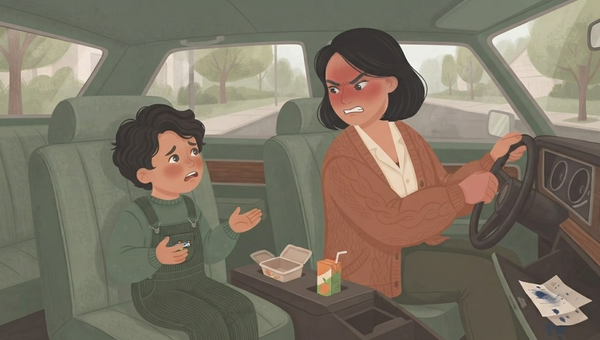
An illustration in a soft, textured storybook style depicts a tense domestic moment inside the cabin of a vintage car. A woman, with short black hair and a flushed, angry expression, is in the driver's seat, gripping the steering wheel and glaring back at a young boy in the rear passenger seat. The boy, with curly brown hair and wearing green overalls, looks back at her with a distressed, pleading expression, his hands raised in a gesture of explanation or defense. Between them on the center console sits an open cardboard snack box and a juice box. The glove compartment is slightly ajar, with a few scattered papers and a small red star icon visible on the dashboard below it. Through the car windows, a blurry, tree-lined suburban street is visible. The overall color palette is composed of muted greens, warm browns, and soft creams. The illustration has a warm, hand-drawn texture.
Shefali Tsabary research

When Your Anger Shows Up Faster Than You Do

The size of your anger, not the size of what triggered it, is usually the real clue.

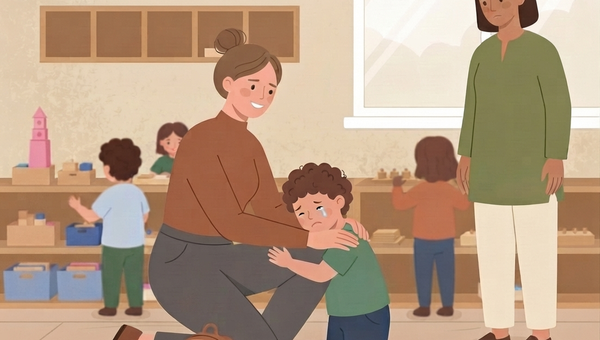
An illustration of a classroom drop-off scene. A mother with her hair in a bun, wearing a brown sweater and grey pants, is kneeling on a patterned rug, comforting her young son. The boy, wearing a green t-shirt and shorts, is crying and clinging to his mother, with tear streaks visible on his cheek. A small brown backpack sits on the rug beside them. In the background, a smiling female teacher in a green tunic stands watching. Other children are visible on shelves, with one boy playing with a pink tower and another girl near a window. The room has warm-toned walls, wooden shelving units filled with toys and supplies, and a large window providing natural light. The art style is clean vector illustration with flat colors.
personalized stories

Separation Anxiety on the First Day of Daycare

Why does your calm, capable kid turn into a barnacle at drop off? A Montessori-inspired look at what's really behind first day separation anxiety, and what actually helps.

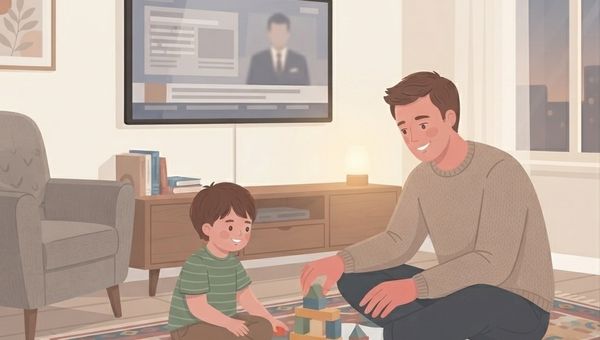
An illustration in a warm, muted vector art style depicting a father and his young son playing with wooden blocks on a patterned rug in a cozy living room. The father, a man with short brown hair wearing a beige sweater, sits cross-legged on the rug, actively placing a block on a small tower. The son, a young boy with brown hair wearing a green striped shirt and brown pants, sits opposite him, smiling and reaching for a block. In the background, mounted on a clean wall, is a large flat-screen TV displaying a news program with a blurred male anchor. Below the TV is a wooden media console with a few books and a small, glowing lamp. To the left, a grey armchair and two framed botanical prints are visible. To the right, a large window shows a soft twilight city view. The entire scene has a clean, flat-color look with soft, diffused light.
background television

Does Background TV Affect Your Toddler's Language Development?

A TV nobody's watching still changes how much you talk to your toddler. Here's what researchers actually found.

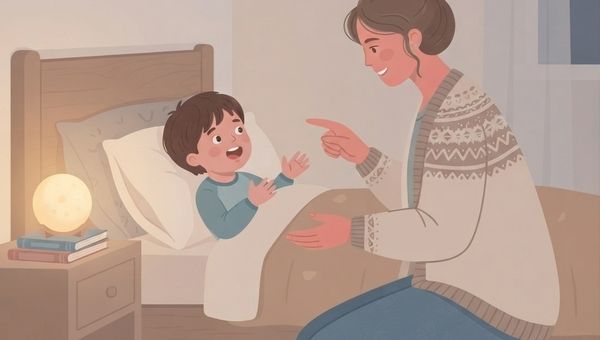
An illustration in a warm, muted color palette depicting a mother and her young son in a cozy bedroom at bedtime. The son, a boy with short brown hair, is lying comfortably propped up by pillows in a simple wooden bed, looking towards the mother with an animated, happy expression and his hands raised slightly. The mother, with her brown hair tied in a bun and wearing a distinctive patterned knit cardigan and jeans, is kneeling on the patterned rug beside the bed, leaning forward. She has a gentle, listening smile and is pointing a comforting finger towards the son, with her other hand resting near the bed. On a bedside table to the left, there is a stack of books and a warm-glowing, moon-shaped nightlight. The background shows framed art on the wall and a window. The style is flat vector art with clean lines and a soft, textured feel.
bedtime talking

Why Your Kid Says "Nothing" After School but Won't Stop Talking at Bedtime

"Nothing" after school, then a full replay at bedtime. Here's the real reason kids' memories work this way, and how to hear more, sooner.

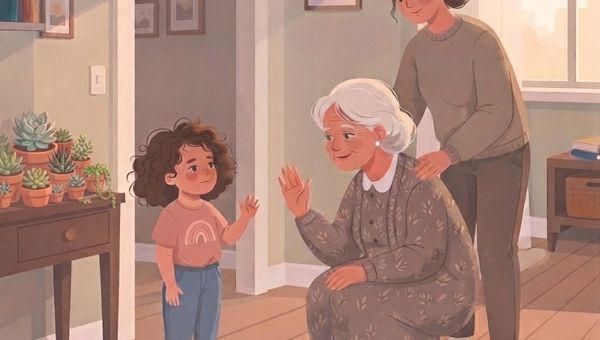
An illustration in a warm, textured art style depicting an indoor scene with three generations. In the foreground, a young girl with curly brown hair, wearing a pink t-shirt and blue jeans, is standing and waving her right hand. Opposite her, an elderly grandmother with white hair, wearing a grey patterned dress, is crouching and waving back with her left hand. A mother with brown hair pulled back, wearing a brown sweater and dark pants, stands behind the grandmother, with her hands resting gently on the grandmother's shoulders. The room features a wooden entryway table to the left covered with several potted succulents, a shelf unit with books and framed art, a doorway leading to another room with more framed art, and a large window to the right providing soft, diffused light. A patterned rug covers the wooden floor. The overall atmosphere is warm and affectionate.
body autonomy

What to Do When Your Kid Won't Hug Goodbye

The hug-or-not moment at the front door is one of the earliest real chances a kid gets to practice having their own boundaries respected.

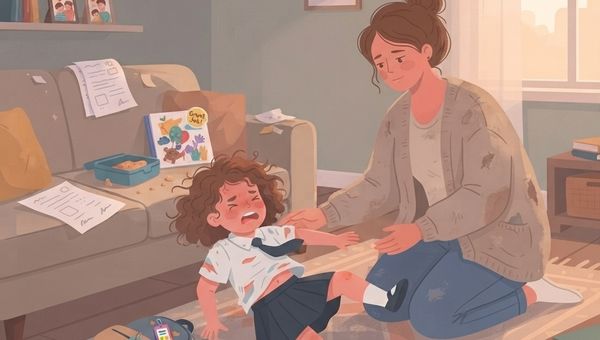
An illustrative, slightly textured vector-style image depicting a messy living room scene. A young child with curly brown hair, wearing a slightly rumpled school uniform (white shirt, dark tie, dark skirt), is lying on a patterned rug, crying dramatically with a flushed face and messy hair. Her mother, with brown hair in a bun and wearing a casual, distressed cardigan and jeans, is kneeling on the rug beside her, looking at the child with a patient, concerned, and slightly tired expression, offering a gentle hand. In the background, a cluttered couch holds scattered school papers, an open lunchbox with crumbs, and a children's book with a colorful cover. A small backpack with a few tags lies near the child on the floor. The room has bookshelves, framed pictures, and a large window letting in warm, diffused light. The overall color palette is warm and muted.
after school restraint collapse

Why Your Kid Melts Down at Home After a Good Day at School

The meltdown the second they walk in the door isn't a bad sign. It might be the clearest sign of trust you're getting all day.

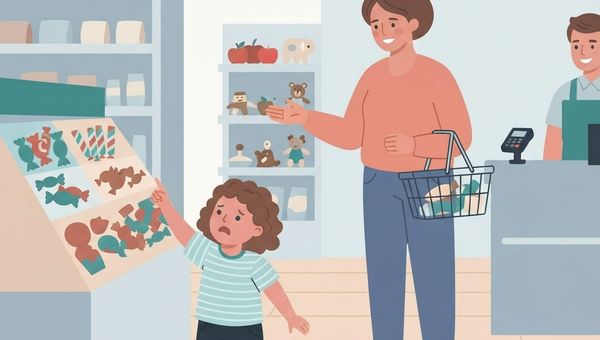
An illustrative vector scene in a grocery store. A young child with curly brown hair, wearing a striped shirt and dark pants, is kneeling on the light wood floor, crying and pointing towards a brightly colored candy display on a shelf. The mother, wearing a peach sweater and blue pants, stands behind the child, smiling gently and gesturing with her open hand. She holds a wire shopping basket containing a few items. Behind a checkout counter to the right, a male cashier in a blue apron is smiling. In the background, there are shelves stocked with various products and apples. The overall style is flat vector art with a muted color palette.
pester power

Endless Requests to Buy Things: What "Pester Power" Research Actually Shows

Nine repeated requests before you give in isn't your imagination. It's the documented average.

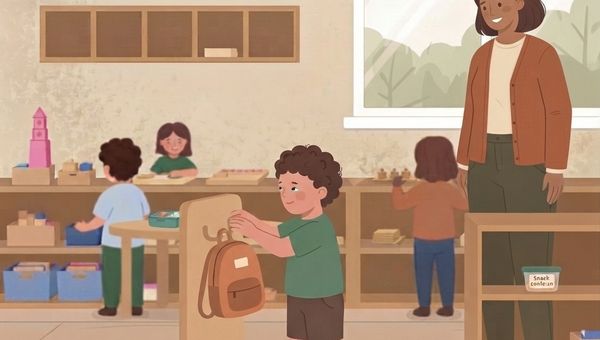
An illustration of a diverse Montessori classroom scene. In the foreground, a young boy with curly brown hair is standing, smiling, and hanging his brown backpack on a low, child-sized wooden coat rack on a patterned rug. He is wearing a green t-shirt and brown shorts. To the right, a female teacher of color, wearing a brown cardigan and green trousers, stands watching with a warm smile. In the background, other children are engaged in activities at shelves filled with educational materials; one boy is at a table with small objects, and a girl is at a shelf unit. The classroom features light-colored wooden shelving, cubbies on the wall, a large window with a view of trees, and a clear plastic bin on a shelf labeled "Snack contain:en". The art style is a clean, friendly vector illustration.
positive parenting

Why Practical Skills Matter More Than Pep Talks

Some first-day anxiety has nothing to do with feelings and everything to do with an unfamiliar snack container.

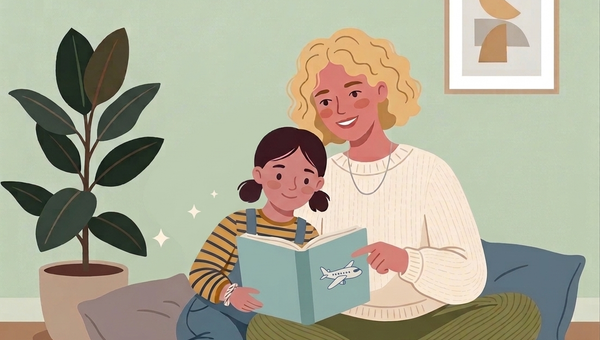
An illustration of a mother and daughter sitting on a rug in a cozy living room, reading a children's book together about airplanes to prepare for a first flight
positive parenting

Your Kid's First Flight: How to Prepare a 3-Year-Old Before You Even Reach the Airport

The meltdown at 30,000 feet usually traces back to something that could have been addressed on the ground.

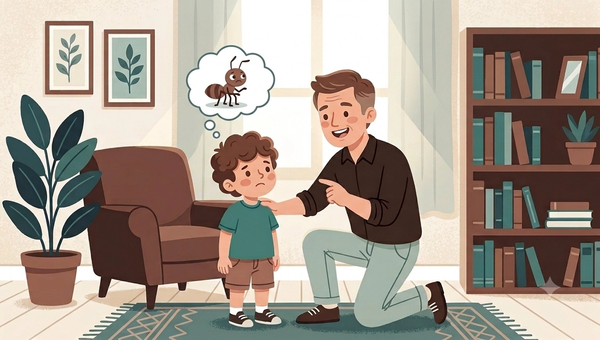
A young child stands in a cozy living room looking worried or upset. Above the child's head is a thought bubble showing an ant, suggesting the child is thinking about or concerned about an ant.  Next to the child, an adult kneels down, gently placing a hand on the child's shoulder while pointing with the other hand, appearing to explain something, offer reassurance, or provide guidance.  The room is bright and welcoming, with a large window, an armchair, potted plants, framed botanical artwork, and a bookshelf filled with books, creating a calm and supportive home environment.
positive parenting

What "ANTs" Are, and How to Teach Your Kid to Spot Them

One missed shot becomes "I'm bad at everything," and there's a simple question that stops the spiral.

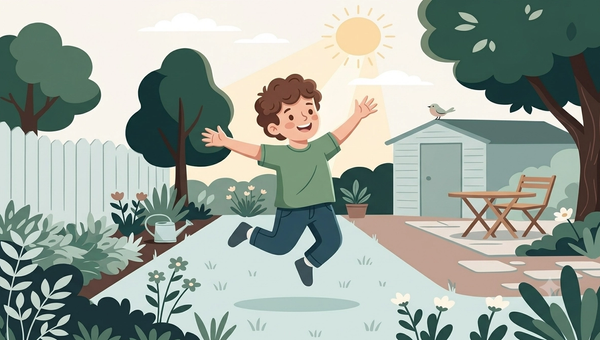
A cheerful child with curly hair jumps joyfully in a sunny backyard, arms outstretched, surrounded by trees, flowers, and a white fence. A small garden shed, patio table and chairs, a bird perched on the shed roof, and a watering can among the plants create a peaceful outdoor scene under a bright sun.
positive parenting

How Physical Movement Improves Your Kid's Brain for Learning

The stuck homework standoff might need less pushing and more jumping jacks.

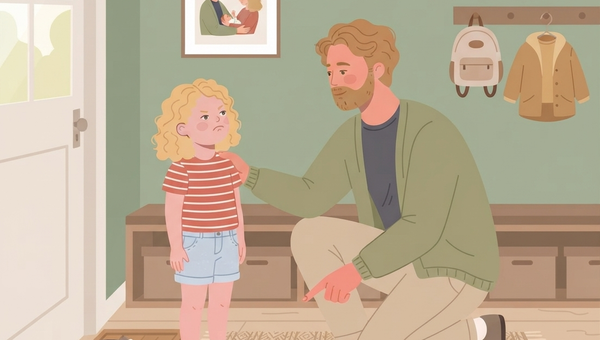
A flat vector illustration in a cozy, sunlit entryway depicts a bearded father in a sage-green cardigan kneeling down and pointing firmly but kindly at a pair of small gray sneakers on a wooden shoe rack. He is making eye contact with his young daughter, who has curly blonde hair and is standing with her arms crossed and a resistant, pouting expression, wearing a striped red and white t-shirt and light-wash denim shorts. The daughter's other sneakers are already on her feet. In the background, there is a white door with a window, a sage-green wall with a framed family portrait (a couple with a child) and an analog clock, a wooden bench with storage boxes below, and a coat rack with a small backpack and a puffer jacket. A patterned rug is on the light wood floor.
positive parenting

"Kind and Firm at the Same Time": How That Actually Works

You don't actually have to choose between being the strict parent and being the warm one.

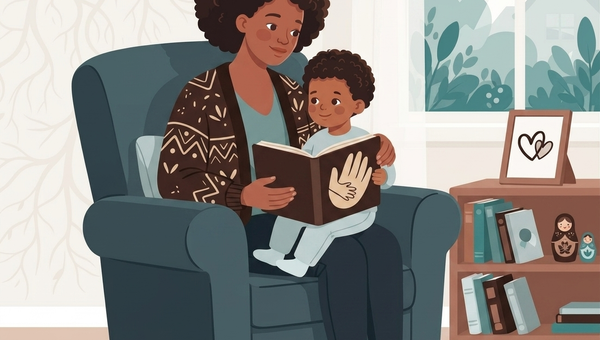
A cozy, flat vector illustration depicts a Black mother and her young son sitting together in a comfortable, sage-green armchair in a bright living room. The mother, with short voluminous black curly hair, wears a warm mustard-yellow cardigan with patterned trim over a blue-green top and blue pants. She is holding an open book on her lap while her son, with short curly hair and wearing a blue top and trousers, sits comfortably on her lap, looking up with a gentle smile as she holds the book. The open book features a simple illustration of holding hands. In the background, a window looks out onto lush green trees, a small bookshelf holds colorful books and nesting dolls, and a framed picture of two overlapping hearts rests on top. The room has light wood floors and a soft cream-colored rug.
positive parenting

What "Resting in Dependence" Actually Means

The kid who wants you to stay a little longer at bedtime isn't behind schedule. According to attachment research, that's exactly how independence gets built.

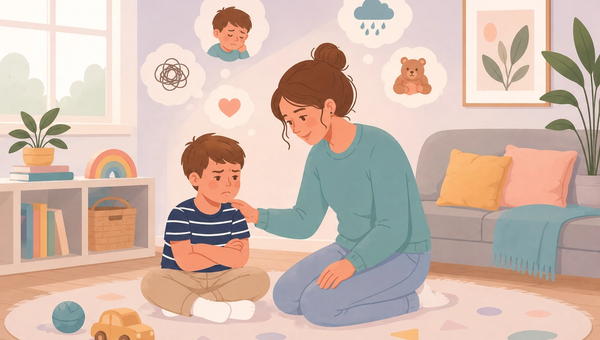
A warm, pastel-style illustration of a mother kneeling beside her upset young son in a cozy playroom. The child sits with crossed arms and a sad expression while the mother gently places a reassuring hand on his shoulder. Thought bubbles showing emotions and comforting symbols represent understanding the feelings behind a child's behavior. The calm, child-friendly room features soft lighting, toys, books, plants, and a comfortable family space, emphasizing empathy, emotional regulation, and gentle parenting.
parenting strategies

Your Kid Probably Isn't Trying to Mess With You

The story you tell yourself about why your kid did something changes how you respond to it, and usually the kinder story is also the more accurate one.

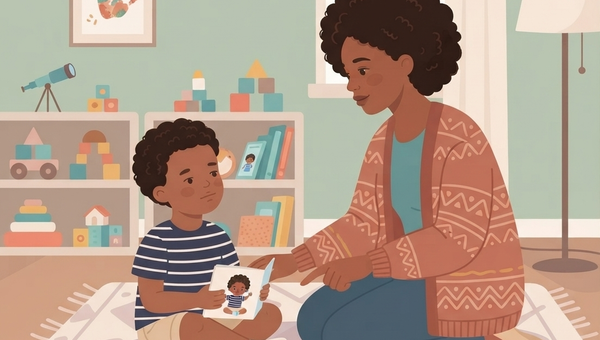
A flat vector illustration shows a Black mother and young son kneeling together on a light-patterned rug in a children's playroom with sage green walls. The mother, with short voluminous black curly hair, wears an orange-red patterned cardigan over a blue-green top and blue pants, and points gently at an open picture book. The son, with short curly hair, wears a blue-and-white striped t-shirt and beige shorts, holding the small book which features illustrations of a child. In the background, white shelving is filled with colorful toys, blocks, and books, a framed handprint artwork hangs on the wall, and a floor lamp stands beside a window with white curtains.
positive parenting

Are You Raising Your Child, or Trying to Fix Your Own Childhood Through Them

Sometimes the thing you want so badly for your kid was actually meant for you, a long time ago.

Your subscription could not be saved. Please try again.
Your subscription has been successful.

Weekly parenting insights you'll actually use.

No spam. Just thoughtful ideas, expert tips, and stories that make a difference.

Protected by reCAPTCHA. Google's Privacy Policy and Terms of Service apply.