Notice the phrase problem right away: Montessori educators don't call this "potty training" at all. They call it toilet learning, and the word choice isn't a minor branding preference. It reflects a genuinely different theory of what's actually happening.
The core idea
"Training" implies an adult teaching a skill through repetition and correction. "Learning" implies a child absorbing a skill through a prepared environment and their own natural drive toward independence, with the adult's role being to set the stage rather than direct the process. Maria Montessori identified what she considered a sensitive period for toilet learning around 12 to 18 months, a window where children are unusually receptive to this specific kind of independence, and the Montessori approach is built around taking advantage of that window rather than waiting for an arbitrary age or a single dedicated training day.
Preparing the environment
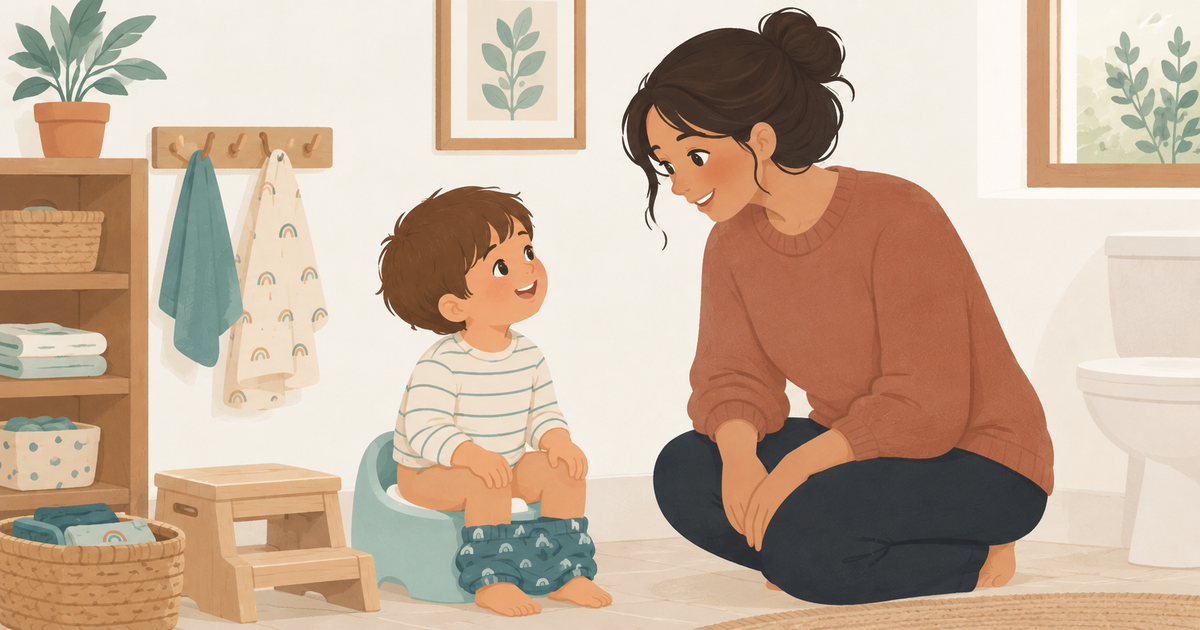
Much of this approach happens before any formal "learning" begins. A low step stool, a child-sized potty, hooks and baskets placed within a toddler's reach, and clothing chosen specifically for independent pulling up and down, elastic waistbands, no buttons, no tight leggings, are all part of what Montessori calls preparing the environment. The goal is removing as many physical barriers to independence as possible, so a toddler can manage the actual mechanics without needing an adult's hands every step of the way.
Cloth training pants instead of disposables
One of the more distinctive pieces of this approach is a preference for cloth training pants over highly absorbent disposable diapers, specifically because cloth lets a child feel wetness directly. That sensory feedback, feeling wet and finding it uncomfortable, is treated as an important part of the learning process itself, one that ultra-absorbent modern diapers can inadvertently delay by keeping a child comfortably dry regardless of what's happened.
No rewards, no punishment
Unlike more structured behavioral methods, the Montessori approach deliberately avoids sticker charts, treats, and any form of correction or disappointment around accidents. The reasoning: toileting is treated as a natural developmental milestone a child is intrinsically motivated to reach, similar to walking or talking, not a behavior that needs to be shaped through external incentives. Accidents are met with a neutral, practical response, "oops, let's clean up," rather than either celebration or disapproval on the successes and failures alike.
Language matters here too
Montessori guidance specifically recommends neutral, matter-of-fact language over question-based prompts. Saying "it's time to use the toilet" rather than "do you need to go potty" removes the option to simply say no, which a toddler asked a yes-or-no question will very often do, not necessarily because it's true, but because refusal itself can feel like an exercise of independence at this age.
What this means for pacing
This approach explicitly rejects the idea of a single "training day." It's described as a gradual process that unfolds over weeks or months, following the child's own pace once the environment and opportunity are in place, with adults observing and adjusting rather than pushing toward a deadline.
A quick, honest note: Montessori's sensitive period concept and this gradual approach work well for many families, though "gradual" also means it may take longer to reach full independence than a single intensive session would, which is worth factoring into your own timeline expectations.
Frequently Asked Questions
What age does the Montessori approach recommend starting toilet learning? Montessori identified a sensitive period around 12 to 18 months, though individual readiness still matters more than hitting an exact age.
Why does Montessori recommend cloth training pants over disposable diapers? Cloth lets a child feel wetness directly, which is considered part of the learning process, while highly absorbent disposables can delay that sensory awareness.
Does the Montessori method use a potty chair or the regular toilet? Typically a small, child-sized potty is introduced first, since it allows more independence than a toilet seat reducer that usually still requires adult lifting or assistance.
Is it normal for Montessori toilet learning to take longer than other methods? Yes, this approach is intentionally gradual and child-paced, so it often unfolds over a longer period than intensive, single-day training methods.
Topics in this article
- Montessori potty training
- toilet learning
- prepared environment
- child independence
- Maria Montessori
- sensitive period toddlers
- gentle potty training
- personalized book
- positive parenting
- personalized book creation
QT
Quilloo Team
Bringing together child development research and thoughtful storytelling for parents.
Weekly parenting insights you'll actually use.
No spam. Just thoughtful ideas, expert tips, and stories that make a difference.