01
This week’s lead story
Shefali Tsabary research

To Bond With Your Kid, Tsabary Says to Stop Trying to Control Them

"It's only 10 percent what the child is doing and 90 percent what the parent is doing."

By Quilloo Team4 min readOctober 12, 2026
Read the full story
A woman with curly hair wearing a green sweater sits on a teal couch, listening attentively and gesturing with her hands while a young boy in a striped shirt reads to her from a white book. The background features a bookshelf and framed botanical art.

“The kid who wants you to stay a little longer at bedtime isn’t behind schedule. That’s exactly how independence gets built.”

Dr. Gordon Neufeld · Attachment Research

More from the blog

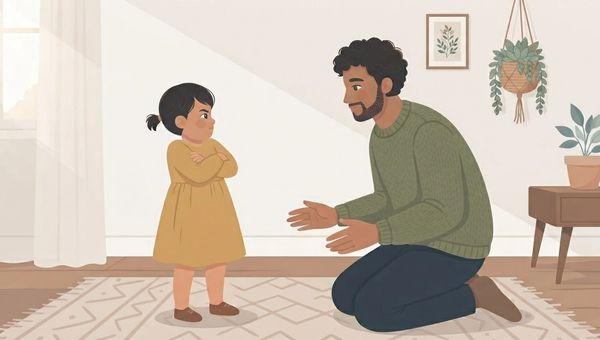
An illustration in a cozy, sunlit living room shows a father kneeling on a patterned rug, facing his young daughter who is standing with her arms crossed and a stubborn expression. The father, with short dark curly hair, a beard, and a green knit sweater, has his hands open in a welcoming, gentle gesture as he looks at her calmly. The little girl, with short dark hair in pigtails and a mustard-yellow dress, stands with a firm, resistant posture. In the background, a white wall features a framed botanical print and a hanging macramé plant holder with a succulent, while a small side table holds a potted plant on the right. Soft natural light streams in from a window on the left, creating a warm and comforting atmosphere. The illustration style is flat, modern, and cozy.
counterwill

Counterwill: Why Kids Say No (and What Gordon Neufeld Suggests You Do)

Your child says no to the very thing she wanted a second ago. Gordon Neufeld calls it counterwill, an automatic resistance to feeling forced, and four small shifts can ease the daily standoffs.

"An illustrative digital drawing in a flat, textured style and warm, muted color palette of teal, orange, and brown, depicting a six-year-old girl with a backpack looking over her shoulder at three other diverse school children who are whispering together. In the foreground, the girl is holding hands with her smiling mother, who offers a reassuring presence. The scene takes place on a sidewalk in front of a stylized school building entrance. No text is present.
peer orientation

Peer Orientation in Kids: What Gordon Neufeld Means and How to Keep Your Child Anchored at Home

Children are wired to follow someone's lead. Gordon Neufeld's idea of peer orientation explains why that someone should still be you, and offers three simple ways to stay your child's first call.

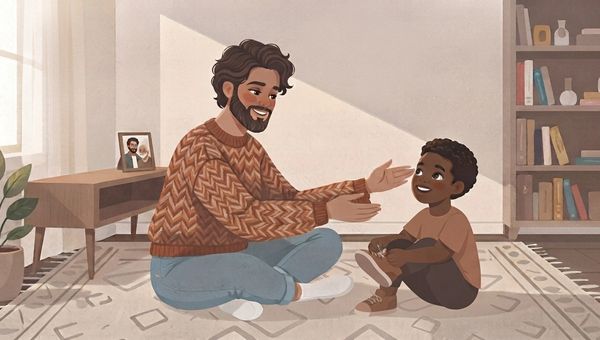
An illustrated interior scene of a cozy living room in a warm, muted color palette. A father with curly dark hair and a beard sits cross-legged on a patterned rug, looking lovingly and smiling at his young son. The son is sitting nearby on the floor, holding and putting on his shoes, looking up at his father with a happy expression. The background features a sofa table with a framed family photo, a potted plant, a bookshelf filled with books, and a window letting in soft light. The style is a flat vector illustration
Shefali Tsabary research

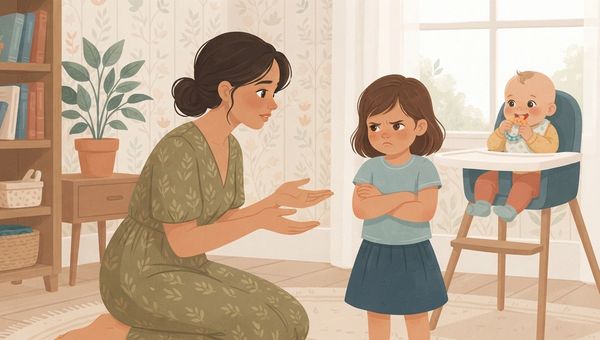
The Power Struggle Was Never Really About the Shoes

"It's only 10 percent what the child is doing and 90 percent what the parent is doing."

An illustrated scene in a soft, textured children's book style, depicting a quiet conflict resolution. A mother, with dark hair in a bun and wearing a green patterned dress, kneels on a patterned rug, her hands extended in an empathetic gesture toward her young daughter. The daughter, with arms crossed and a pouting, scowling expression, stands facing her mother. To the right, a baby sits happily in a highchair, playing with a teething ring, seemingly unaware of the older child's distress. In the background, there is a wooden bookshelf filled with books, potted plants, and a window with soft, natural light. The wallpaper has a delicate floral pattern. The overall mood is gentle but captures the tension between the mother and the upset daughter.
why kids misbehave

Kids Act on What They Believe, Not What's True: Jane Nelsen on the Hidden Stories Behind Behavior

Your child isn't reacting to what happened. They're reacting to what they believe it means. Jane Nelsen explains why that changes everything.

Weekly parenting insights you'll actually use.

No spam. Just thoughtful ideas, expert tips, and stories that make a difference.

Your subscription could not be saved. Please try again.
Your subscription has been successful.

Weekly parenting insights you'll actually use.

No spam. Just thoughtful ideas, expert tips, and stories that make a difference.

Protected by reCAPTCHA. Google's Privacy Policy and Terms of Service apply.