Connection & Trust

Whether a child tells you the hard thing is decided long before the hard thing happens. These articles cover why children open up at bedtime but not after school, the signs a child feels safe disclosing to you, and what trauma research says about the difference between what happens to a child and what happens inside them.

10 articles

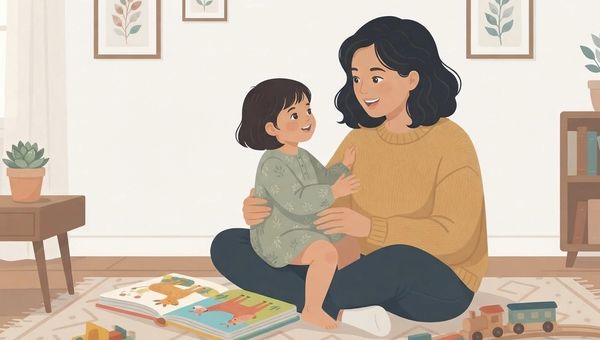
An illustration in a cozy, sunlit living room shows a mother and child sitting on a patterned rug. The mother, with dark, wavy hair and a mustard-yellow knit sweater, holds her young daughter with short dark hair on her lap. The child, wearing a sage-green floral dress, looks up and smiles at her mother, who is smiling back warmly. They are surrounded by toys: an open picture book with illustrations of animals is in front of them, and a wooden train set is to the right. The background features a white wall with framed botanical prints, a wooden side table with a potted succulent, and a small bookshelf filled with books. Soft natural light streams in from a window to the left. The style is flat, modern, and cozy.
attachment instinct

The Attachment Instinct: Why Your Child's Need for Closeness Is a Strength

Following you everywhere, calling "watch me" all day: it can look like too much, but Gordon Neufeld sees an attachment instinct at work. Here is why closeness fuels independence, and how to feed it.
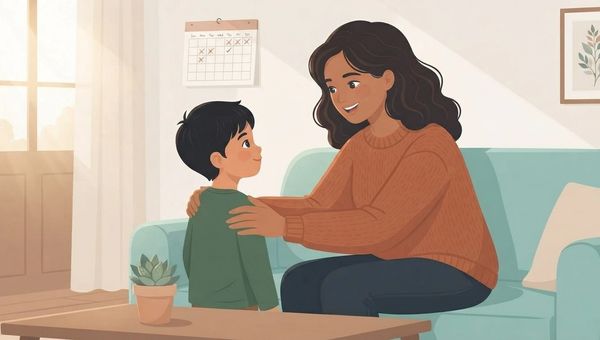
An illustration in a cozy, sunlit living room shows a mother kneeling or sitting slightly behind a young boy, gently placing both hands reassuringly on his shoulders. The mother, with dark wavy hair and a rust-colored knit sweater, looks down at him with a warm, reassuring smile. The young boy, with short dark hair and a green long-sleeved shirt, stands facing her, looking up at her with a calm expression. They are positioned in front of a soft teal sofa. On the wall behind them, a simple calendar hangs, and a framed botanical art print is visible. In the foreground, a wooden coffee table holds a small potted succulent. Soft natural light streams in from a window on the left, creating a warm, comforting atmosphere. The illustration style is flat, modern, and cozy.
caring alpha

The Caring Alpha: Why Kids Feel Safer When Parents Lead With Warmth

Children often feel safest when someone warmly takes the lead. Gordon Neufeld's idea of the caring alpha explains why, and offers three simple phrases that help your child rest in being looked after.

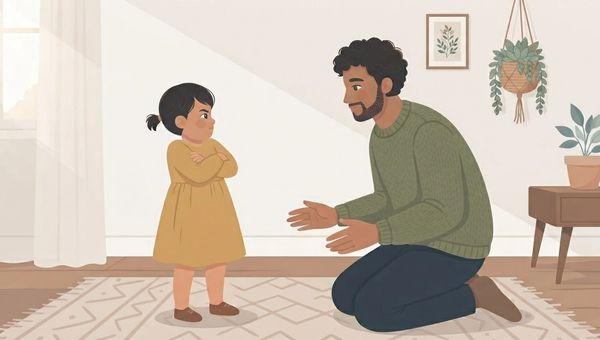
An illustration in a cozy, sunlit living room shows a father kneeling on a patterned rug, facing his young daughter who is standing with her arms crossed and a stubborn expression. The father, with short dark curly hair, a beard, and a green knit sweater, has his hands open in a welcoming, gentle gesture as he looks at her calmly. The little girl, with short dark hair in pigtails and a mustard-yellow dress, stands with a firm, resistant posture. In the background, a white wall features a framed botanical print and a hanging macramé plant holder with a succulent, while a small side table holds a potted plant on the right. Soft natural light streams in from a window on the left, creating a warm and comforting atmosphere. The illustration style is flat, modern, and cozy.
counterwill

Counterwill: Why Kids Say No (and What Gordon Neufeld Suggests You Do)

Your child says no to the very thing she wanted a second ago. Gordon Neufeld calls it counterwill, an automatic resistance to feeling forced, and four small shifts can ease the daily standoffs.

"An illustrative digital drawing in a flat, textured style and warm, muted color palette of teal, orange, and brown, depicting a six-year-old girl with a backpack looking over her shoulder at three other diverse school children who are whispering together. In the foreground, the girl is holding hands with her smiling mother, who offers a reassuring presence. The scene takes place on a sidewalk in front of a stylized school building entrance. No text is present.
peer orientation

Peer Orientation in Kids: What Gordon Neufeld Means and How to Keep Your Child Anchored at Home

Children are wired to follow someone's lead. Gordon Neufeld's idea of peer orientation explains why that someone should still be you, and offers three simple ways to stay your child's first call.

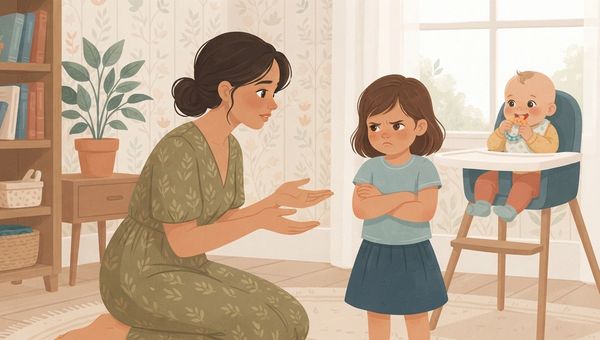
An illustrated scene in a soft, textured children's book style, depicting a quiet conflict resolution. A mother, with dark hair in a bun and wearing a green patterned dress, kneels on a patterned rug, her hands extended in an empathetic gesture toward her young daughter. The daughter, with arms crossed and a pouting, scowling expression, stands facing her mother. To the right, a baby sits happily in a highchair, playing with a teething ring, seemingly unaware of the older child's distress. In the background, there is a wooden bookshelf filled with books, potted plants, and a window with soft, natural light. The wallpaper has a delicate floral pattern. The overall mood is gentle but captures the tension between the mother and the upset daughter.
why kids misbehave

Kids Act on What They Believe, Not What's True: Jane Nelsen on the Hidden Stories Behind Behavior

Your child isn't reacting to what happened. They're reacting to what they believe it means. Jane Nelsen explains why that changes everything.

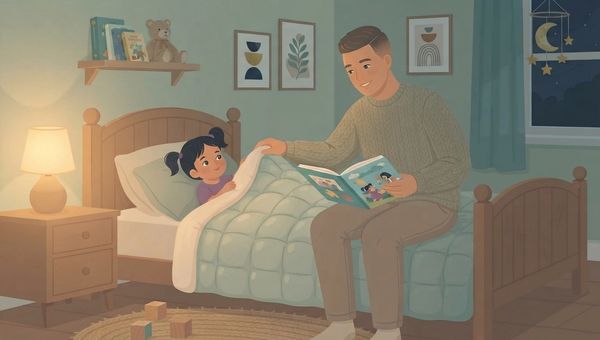
An illustrated scene in a child's bedroom at night. A man, wearing a sage green knitted sweater and beige pants, sits on the edge of a twin bed, smiling and holding an open picture book. He is tucking a young girl, who has dark pigtails and is wearing a purple top, under a textured, quilted blanket. The girl is also smiling up at the man. The room is dimly lit by a warm-glowing lamp on a wooden bedside table. On the wall behind them is a shelf with children's books and a teddy bear, and two framed abstract geometric prints. A window with a dark night sky and a moon and stars mobile is visible to the right. On the wooden floor is a round jute rug and a few wooden blocks. The overall style is cozy and warm.
bedtime routine

Why Kids Open Up at Bedtime (and How to Make the Most of It)

That moment at 8 p.m. when your kid finally tells you everything? It's not a coincidence. Here's why bedtime is your golden hour.

An illustrative vector scene shows an outdoor playground at dusk with soft, natural lighting. In the center, a young girl with twin pigtails wearing a purple dress is dramatically lying facedown on the wood chips, crying and throwing a tantrum. Standing right next to her is a concerned mother with dark curly hair, wearing a denim jacket, white top, and dark pants, looking down with a stressed and empathetic expression with her hands held out in a gesture of gentle helplessness. In the background, there is a wooden playground structure with climbing equipment and slides, set against a soft evening sky. The overall art style is warm, flat, and gentle with textured shading.
two things are true

You Can Say No and Still Say "I Get It": The Two Things Are True Approach

The park meltdown doesn't have to be a choice between caving and "stop crying." Dr. Becky Kennedy offers a third way.

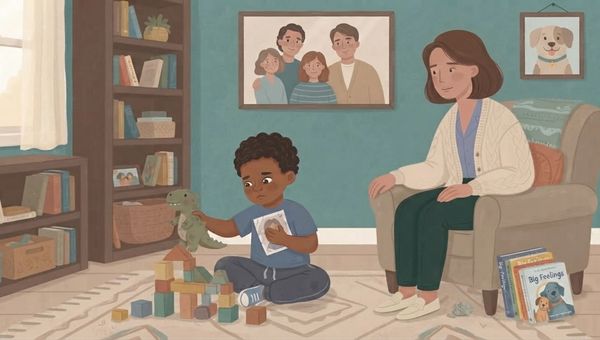
An illustrated scene in a muted, textured color palette shows a young boy of color with curly dark hair, wearing a blue t-shirt and grey sweatpants, sitting cross-legged on a patterned rug. He is holding a small, crinkled photo of an adult's face in one hand and a worn, small green plush dinosaur in the other, looking up with a concerned expression. A woman with short brown hair, wearing a cream-colored knitted cardigan and dark green pants, is seated in a beige armchair to the right, looking at the boy with a supportive expression and gently resting a hand on his shoulder. The setting is a cozy, muted-green bathroom with a pedestal sink, a round mirror, and a stack of books (one titled "Big Feelings") on a stool. A small, light-blue potty chair with a face on it sits in the foreground to the left. On the wall are two illustrated posters of the digestive and urinary tracts, with labels for "Coloin" and "Blagti". The overall style is warm, hand-drawn, and emotionally resonant.
Gabor Maté research

Trauma Isn't What Happened to Your Kid. It's What Happens Inside Them

Two kids can go through the exact same hard moment and come out completely differently, and that gap is the whole point.

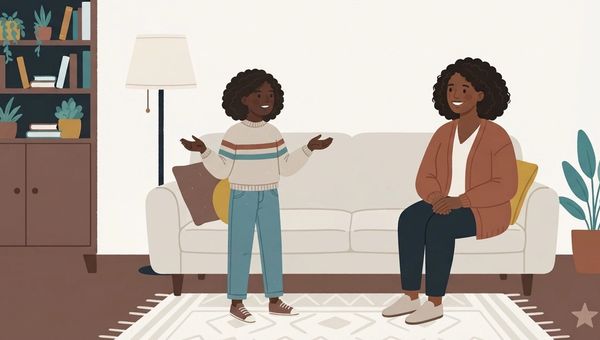
An illustration in a flat, cozy vector art style depicting a mother and daughter in a warmly lit living room. On the left, the daughter, a young Black girl with curly hair wearing a striped sweater and blue jeans, stands facing the mother, gesturing with both hands in an explanatory or conversational pose. She has a cheerful, engaging expression. On the right, the mother, a Black woman with textured curly hair wearing a brown cardigan and dark pants, sits comfortably on a cream-colored sofa, smiling warmly and listening intently with her hands clasped. The background features a tall bookshelf filled with books and potted plants, a floor lamp with a cream shade, a large potted plant on the floor, a patterned rug, and cushions on the sofa. The overall color palette is composed of warm, muted tones: creams, terracottas, deep browns, and teals. The lighting is soft and domestic.
child disclosure

5 Signs Your Kid Actually Feels Safe Telling You Things

The random, unprompted story is often a bigger sign of trust than the direct answer to a direct question.

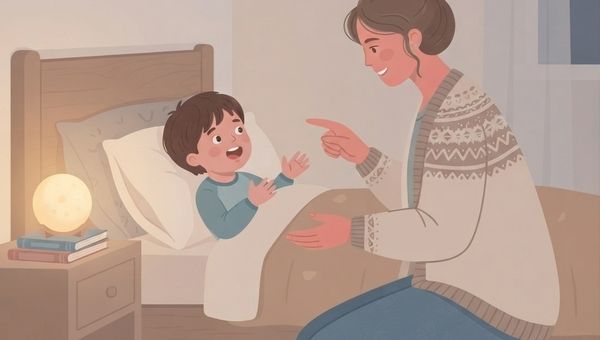
An illustration in a warm, muted color palette depicting a mother and her young son in a cozy bedroom at bedtime. The son, a boy with short brown hair, is lying comfortably propped up by pillows in a simple wooden bed, looking towards the mother with an animated, happy expression and his hands raised slightly. The mother, with her brown hair tied in a bun and wearing a distinctive patterned knit cardigan and jeans, is kneeling on the patterned rug beside the bed, leaning forward. She has a gentle, listening smile and is pointing a comforting finger towards the son, with her other hand resting near the bed. On a bedside table to the left, there is a stack of books and a warm-glowing, moon-shaped nightlight. The background shows framed art on the wall and a window. The style is flat vector art with clean lines and a soft, textured feel.
bedtime talking

Why Your Kid Says "Nothing" After School but Won't Stop Talking at Bedtime

"Nothing" after school, then a full replay at bedtime. Here's the real reason kids' memories work this way, and how to hear more, sooner.

Your subscription could not be saved. Please try again.
Your subscription has been successful.

Weekly parenting insights you'll actually use.

No spam. Just thoughtful ideas, expert tips, and stories that make a difference.

Protected by reCAPTCHA. Google's Privacy Policy and Terms of Service apply.