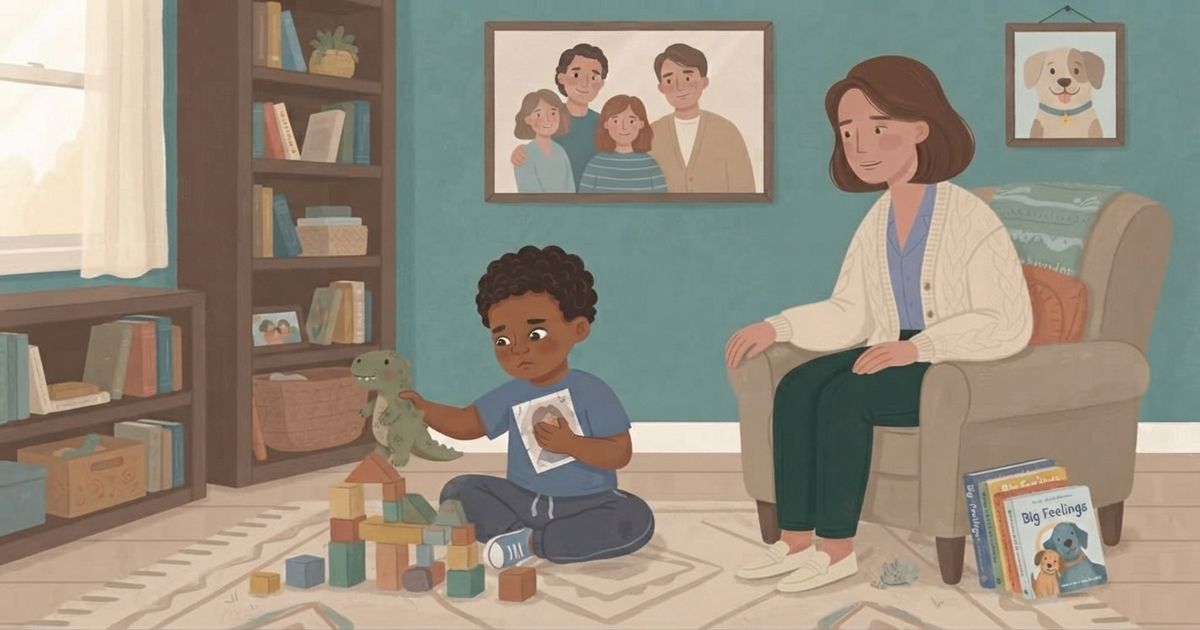
Two kids go through the same scary moment, a bad fall, a scary dog, a loud fight between parents down the hall, and come out the other side completely differently. One shakes it off within a day. The other flinches at similar situations for months. According to one of the most repeated ideas from physician Gabor Maté, that difference tells you something important about what trauma actually is.
The reframe that changes what you're looking for
Maté, whose work spans addiction, stress, and child development, is known for a definition of trauma that surprises a lot of parents: trauma is not the event itself. It's what happens inside a person as a result of it. Two kids can experience the exact same difficult event and end up with very different internal impacts, depending on their temperament, their support system, and whether they had someone to help them process what happened afterward. This means the goal isn't just protecting a child from hard things happening, which is often impossible anyway, but paying attention to what's happening inside them afterward.
The two needs that sometimes pull in opposite directions
Maté, building on attachment theory alongside longtime collaborator Gordon Neufeld, describes children as having two core, competing needs. Attachment, the need for connection and closeness with caregivers, and authenticity, the need to be genuinely themselves, including expressing emotions like anger or sadness that might not always be welcome. When these two needs conflict, when being authentic feels like it might threaten the connection, kids often unconsciously choose attachment, suppressing their real feelings to stay connected to the people they depend on. Over time, that suppression is part of what can turn a difficult event into something that lingers.
A small, concrete tool for actual separations
One very practical piece of advice that comes up in Maté's conversations about attachment is almost disarmingly simple. When a child is heading into a period of separation, daycare, a hospital stay, time with another caregiver, giving them something physical to hold onto, literally, like a photo of the parent, can ease the gap. It's a small stand-in for the connection, keeping the attachment thread present even when the parent physically isn't.
Play with no goal is doing more than it looks like
Maté also emphasizes the importance of free, spontaneous play, play with no winner, no purpose, no external goal, as something children need in order to safely process big emotions like rage, grief, or fear. Not structured games with rules to master, but open-ended play where a child can work through whatever they're carrying internally at their own pace.
A story gives that same processing a shape
A story where a character goes through something hard and gets to feel the full range of what that brings up, scared, angry, sad, without being rushed past it, offers a low-pressure version of the same processing space Maté describes. It's not free play, but it shares the same core function: giving a child room to feel something difficult all the way through, with support, rather than needing to push it down to stay connected.
Frequently Asked Questions
Does this mean any hard experience automatically causes trauma? No, this framework specifically emphasizes that it's the internal impact, shaped heavily by support and processing afterward, not the event itself, that determines whether something becomes lasting trauma.
What's the difference between attachment and authenticity in this model? Attachment is the need for connection and closeness with caregivers, while authenticity is the need to be genuinely oneself, including expressing real emotions, even when they're inconvenient.
Why would a child suppress their real feelings? When being authentic feels like it threatens closeness with a caregiver, children often prioritize maintaining that connection, sometimes at the cost of expressing what they truly feel.
How does giving a child a photo help during separation? It offers a concrete, physical reminder of the relationship, helping maintain a sense of connection even when the parent isn't physically present.
Sources:
- Neufeld, G., & Maté, G. (2004). Hold On to Your Kids: Why Parents Need to Matter More Than Peers.
- Maté, G. Public commentary and interviews on trauma, attachment, and authenticity in child development.
Topics in this article
- Gabor Maté research
- trauma
- attachment theory
- authenticity
- child emotional development
- separation
- free play
- emotional processing
- resilience
- personalized book creation
- children's books
- positive parenting
QT
Quilloo Team
Bringing together child development research and thoughtful storytelling for parents.
Weekly parenting insights you'll actually use.
No spam. Just thoughtful ideas, expert tips, and stories that make a difference.