
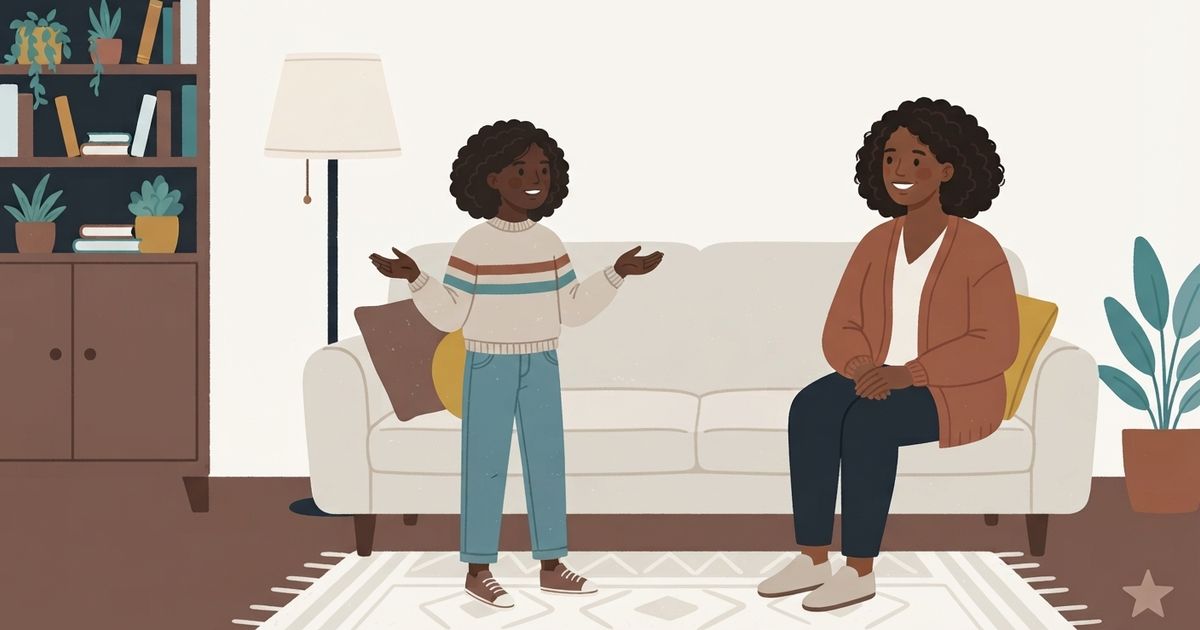
You ask "how was your day" and get one word back, every single time. Then one random Tuesday, completely unprompted, your kid launches into a ten-minute story about a lunchroom disagreement nobody asked about. That gap between the question that goes nowhere and the story that comes out of nowhere is worth paying attention to.
Why this matters more than most parents realize
A foundational study by researchers Håkan Stattin and Margaret Kerr followed roughly 1,000 Swedish 14-year-olds and their parents, measuring how much parents actually knew about their kids' lives, and where that knowledge came from. The finding that reshaped how psychologists think about this: a child's voluntary disclosure, choosing to share information on their own, was a far stronger predictor of parental knowledge than active questioning or rule-setting, and disclosure was also the single strongest predictor of how well-adjusted the child was. Asking more questions or setting more rules didn't move the needle nearly as much as whether a child chose to open up in the first place.
1. They tell you the boring stuff, not just the big stuff
A child who only reports major news, a fight, a grade, an injury, is often reporting because the event was too big to hide, not necessarily because they feel safe sharing. A kid who mentions a mildly annoying interaction at lunch, an unremarkable observation about a teacher, or a random thought mid-car-ride is practicing the low-stakes version of disclosure, which tends to predict whether the bigger stuff gets shared later too.
2. They tell you about their own mistakes before you find out elsewhere
One of the specific behaviors measured in disclosure research involves whether a child turns to a parent after getting into trouble, rather than concealing it. A kid who comes to you first with "I did something and I need to tell you" is showing exactly the pattern this research identifies as protective, choosing disclosure over concealment even when the news isn't flattering.
3. They circle back to finish a conversation later
A kid who returns to something hours or days later, "actually, remember when I said that thing was fine, it wasn't really," is demonstrating that the channel stayed open even after the first conversation ended. That kind of follow-up suggests they trusted the reaction they got enough to risk a second, more honest pass.
4. They're comfortable being mad at you, directly
This one runs against instinct, but attachment research consistently associates a child's willingness to express frustration or anger toward a parent, directly and without excessive fear, with a secure relationship, not a disrespectful one. Kids who feel safe tend to protest more openly, not less, because they trust the relationship can absorb it.
5. They ask if you'll tell someone else, but tell you anyway
A kid who asks "are you going to tell Dad" or "please don't tell my teacher" before sharing something is weighing real risk and choosing disclosure despite it. That hesitation isn't a red flag. It's often a sign they're actively practicing the exact behavior this research identifies as most protective, just with appropriate caution attached.
A quick, honest note: no child discloses everything all the time, and some privacy, especially as kids get older, is developmentally normal and healthy. These signs are about a general pattern of openness over time, not a test any single day needs to pass.
Frequently Asked Questions
Does my child need to tell me everything to be considered securely attached? No, some privacy is normal and increases with age. These signs point to an overall pattern of trust, not full disclosure of every detail.
What if my child used to talk openly and has recently gone quiet? This is common, especially around major transitions or early adolescence, and doesn't necessarily indicate a broken relationship, though a sustained, significant shift is worth gently checking in about.
Does asking more questions help or hurt disclosure? Research suggests active questioning matters less than the overall relationship climate, and that pressuring for details can sometimes reduce a child's willingness to volunteer information later.
Is expressing anger at a parent really a healthy sign? Yes, according to attachment research, a child who feels safe enough to express frustration directly, without excessive fear of the relationship breaking, is generally showing a secure pattern, not disrespect.
Sources:
Topics in this article
- child disclosure
- parent-child trust
- Stattin Kerr research
- secure attachment
- open communication
- parenting relationship
- adolescent development
- family trust
- personalized book creation
QT
Quilloo Team
Bringing together child development research and thoughtful storytelling for parents.
Weekly parenting insights you'll actually use.
No spam. Just thoughtful ideas, expert tips, and stories that make a difference.