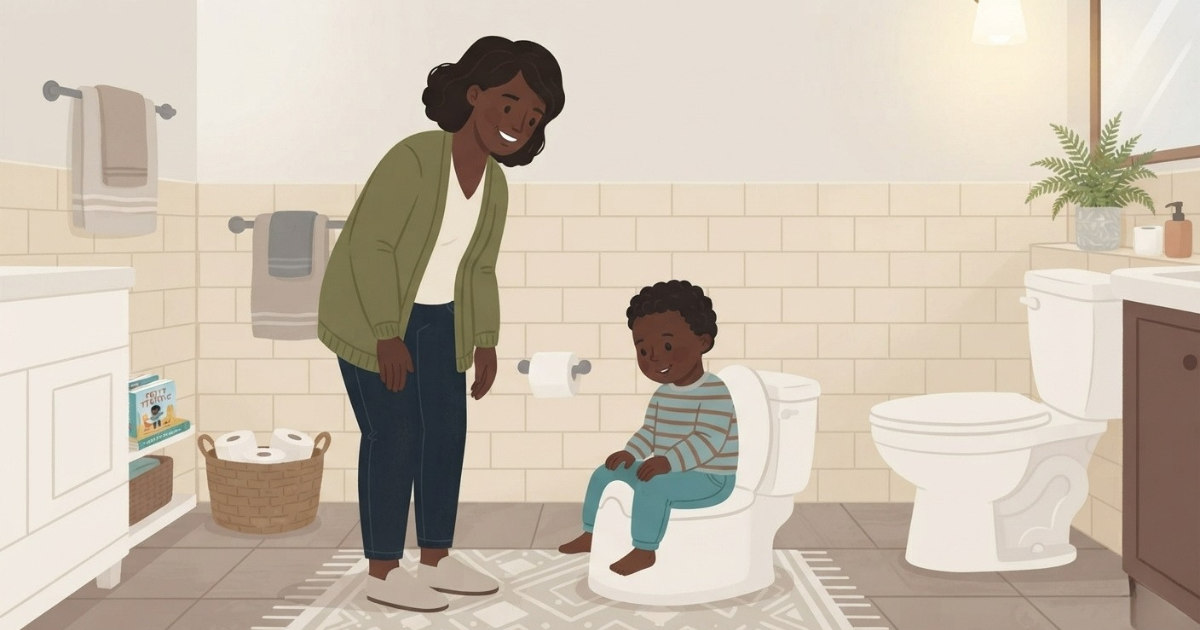
The age on the calendar is one of the least reliable ways to decide when to start potty training. Two kids can be exactly the same age, months apart in readiness, and pushing before a child is actually ready tends to slow the whole process down rather than speed it up. Here's what to look for instead of a number.
Physical signs
The most concrete readiness signs are physical. A toddler staying dry for stretches of an hour or two, rather than needing constant diaper changes, suggests their bladder is developing the capacity to hold urine, a physiological prerequisite that simply isn't optional to skip. Predictable, somewhat regular bowel movements, rather than completely random timing, are another physical marker worth noting. Some toddlers also start physically hiding or going still during a bowel movement, an early sign of body awareness around the process.
Behavioral signs
Beyond physical readiness, behavior offers real clues too. Interest in the bathroom itself, wanting to watch a parent or sibling use the toilet, asking questions about it, or showing curiosity about the potty as an object, all suggest a toddler is starting to mentally engage with the concept. Discomfort with a dirty or wet diaper, wanting it changed immediately rather than seeming unbothered, is another commonly cited sign, since it suggests growing awareness of the sensation itself.
Cognitive and communication signs
A toddler needs enough language and instruction-following ability to participate in the process, not necessarily full sentences, but enough to understand and follow simple two-step instructions like "pull down your pants, then sit down." Some toddlers begin communicating, verbally or through gesture, right before or right after they've gone, which is a meaningful marker even before they can predict and communicate the need in advance.
The desire for independence
Many toddlers around this age show a broader surge in wanting to do things themselves, dressing, feeding, climbing without help. This general drive toward independence often extends naturally to toileting once the physical pieces are in place, and it's one of the more reliable underlying signs across nearly every potty training approach, regardless of which specific method a family eventually chooses.
What readiness does not require
It's worth being clear about what isn't a prerequisite. A toddler doesn't need to be able to fully undress and redress independently, doesn't need to have zero interest in diapers beforehand, and doesn't need to be a particular age. Readiness is a cluster of signs appearing together, not a single milestone or a birthday.
What if only some signs are present
Most toddlers don't show every sign at once, and that's normal. Generally, a combination of staying dry for longer stretches, some interest in the bathroom, and basic instruction-following ability together is considered a reasonable starting point, even if communication around the need itself is still developing.
A quick, honest note: readiness signs are a helpful guide, not a strict checklist every child needs to pass perfectly. Some toddlers show partial readiness and still do fine once training begins, while others show every sign and still need extra patience.
Frequently Asked Questions
What's the average age these signs typically appear? Most toddlers show a meaningful cluster of readiness signs somewhere between 18 months and 3 years, though the range varies significantly by individual child.
Does showing interest in the potty mean my toddler is fully ready? Interest is one positive sign, but ideally it appears alongside physical signs like staying dry for stretches and basic instruction-following ability.
What should I do once I notice most of these signs? Once readiness signs are present, the next step is choosing an approach that fits your family and beginning gradually rather than waiting for every single sign to appear at once.
Is it possible to miss the "right" window if I wait too long? Not really. Unlike a strict developmental window, most children can begin successfully at a range of ages once genuine readiness signs are present, even if that's later than average.
Topics in this article
- potty training readiness
- toddler development signs
- when to start potty training
- toilet training signs
- developmental readiness
- toddler independence
- potty training approaches
- personalized book creation
- positive parenting
QT
Quilloo Team
Bringing together child development research and thoughtful storytelling for parents.
Weekly parenting insights you'll actually use.
No spam. Just thoughtful ideas, expert tips, and stories that make a difference.