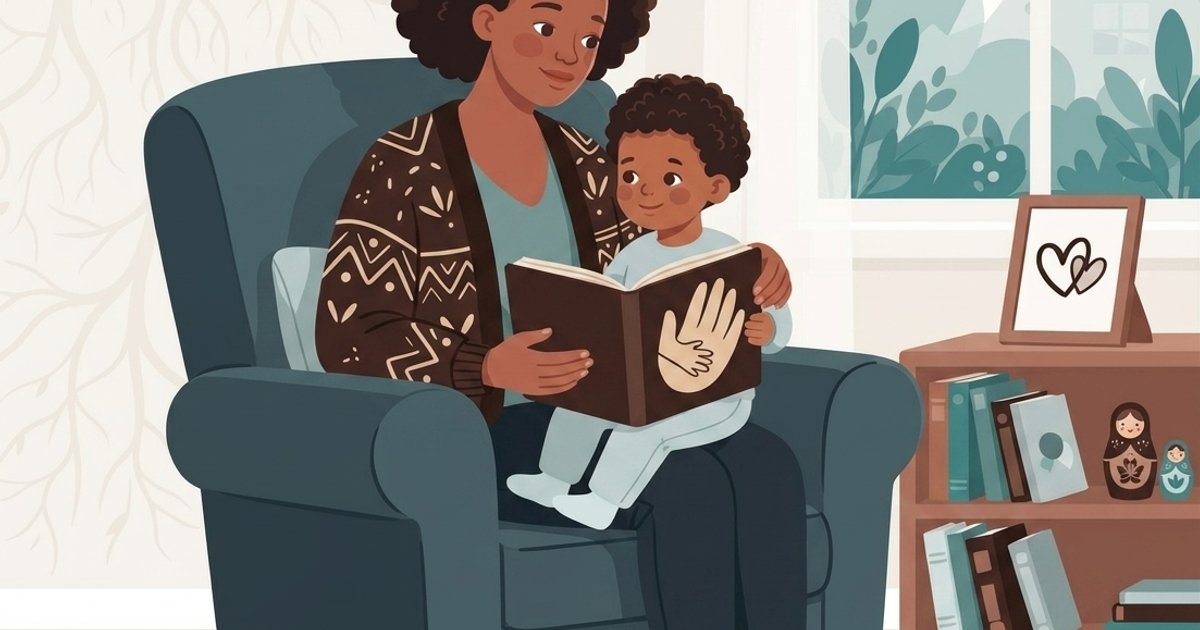
Your four-year-old wants you to sit next to her while she falls asleep, again, and a small voice in your head says she should be able to do this alone by now. Somewhere along the way, "independent" became one of the highest compliments you can give a kid. One influential framework in attachment-based parenting suggests that instinct might be working against you.
The idea, stated plainly
Developmental psychologist Gordon Neufeld built decades of work around a principle that sounds almost backwards at first. To become genuinely independent, a child first needs to be allowed to fully depend, without having to earn that closeness or prove they deserve it. In his framing, kids don't become secure by being pushed out of the nest early. They become secure by resting completely in a relationship, and independence grows naturally out of that security later, at its own pace.
Why pushing early can slow things down instead
The concern with rushing independence isn't just that it feels harsh. According to Neufeld, a child who has to constantly work to maintain a parent's attention or approval, who senses that closeness has to be earned, ends up spending energy managing the relationship instead of using that energy to actually grow. Security isn't a bonus that comes after independence. In this model, it's the foundation independence is built on.
What this looks like at home tonight
If your kid is asking for more closeness at bedtime, more sitting together, more "just five more minutes," than you expected at their age, try treating that request as reasonable rather than as a problem to phase out quickly. Sit with her a little longer tonight without a running mental clock on when she "should" be doing this alone. The version of independence you're hoping for tends to show up more reliably once the closeness feels unconditional, not rationed.
Frequently Asked Questions
Does this mean I shouldn't encourage independence at all? No, it means independence tends to grow more naturally out of a secure, dependable relationship rather than being forced ahead of a child's own readiness.
At what age should a child be sleeping or handling things independently? This varies widely by child. This framework suggests focusing less on a fixed timeline and more on whether the child feels securely connected first.
Isn't there a risk of a child becoming too dependent if I give in too much? This approach generally argues the bigger risk is the opposite, that not enough secure closeness actually slows down a child's path toward real independence.
How do I know if my child is asking for closeness out of genuine need or just habit? There's no perfect test, but responding warmly rather than suspiciously tends to be the safer default, since the cost of extra closeness is usually much lower than the cost of withholding it too early.
Sources:
- Neufeld, G., & Maté, G. (2004). Hold On to Your Kids: Why Parents Need to Matter More Than Peers.
- Neufeld, G. Writing on attachment and dependence, Neufeld Institute.
Topics in this article
QT
Quilloo Team
Bringing together child development research and thoughtful storytelling for parents.
Weekly parenting insights you'll actually use.
No spam. Just thoughtful ideas, expert tips, and stories that make a difference.