Posts tagged “child development”

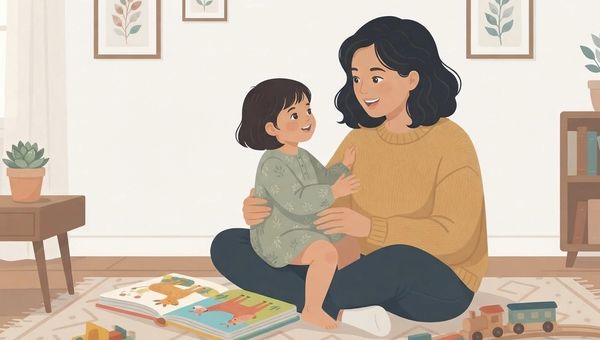
An illustration in a cozy, sunlit living room shows a mother and child sitting on a patterned rug. The mother, with dark, wavy hair and a mustard-yellow knit sweater, holds her young daughter with short dark hair on her lap. The child, wearing a sage-green floral dress, looks up and smiles at her mother, who is smiling back warmly. They are surrounded by toys: an open picture book with illustrations of animals is in front of them, and a wooden train set is to the right. The background features a white wall with framed botanical prints, a wooden side table with a potted succulent, and a small bookshelf filled with books. Soft natural light streams in from a window to the left. The style is flat, modern, and cozy.
attachment instinct

The Attachment Instinct: Why Your Child's Need for Closeness Is a Strength

Following you everywhere, calling "watch me" all day: it can look like too much, but Gordon Neufeld sees an attachment instinct at work. Here is why closeness fuels independence, and how to feed it.
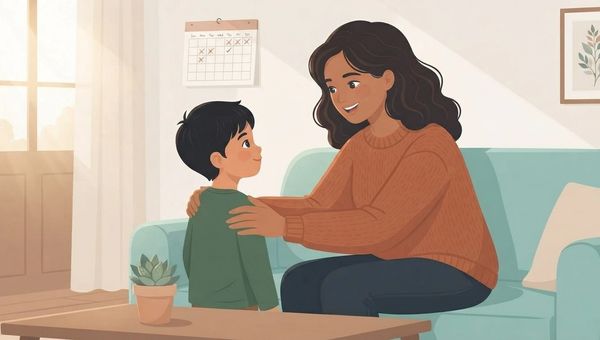
An illustration in a cozy, sunlit living room shows a mother kneeling or sitting slightly behind a young boy, gently placing both hands reassuringly on his shoulders. The mother, with dark wavy hair and a rust-colored knit sweater, looks down at him with a warm, reassuring smile. The young boy, with short dark hair and a green long-sleeved shirt, stands facing her, looking up at her with a calm expression. They are positioned in front of a soft teal sofa. On the wall behind them, a simple calendar hangs, and a framed botanical art print is visible. In the foreground, a wooden coffee table holds a small potted succulent. Soft natural light streams in from a window on the left, creating a warm, comforting atmosphere. The illustration style is flat, modern, and cozy.
caring alpha

The Caring Alpha: Why Kids Feel Safer When Parents Lead With Warmth

Children often feel safest when someone warmly takes the lead. Gordon Neufeld's idea of the caring alpha explains why, and offers three simple phrases that help your child rest in being looked after.

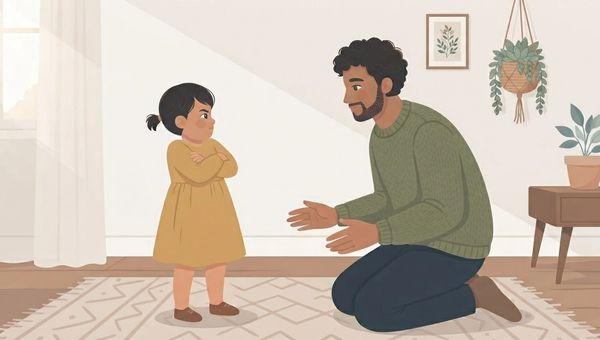
An illustration in a cozy, sunlit living room shows a father kneeling on a patterned rug, facing his young daughter who is standing with her arms crossed and a stubborn expression. The father, with short dark curly hair, a beard, and a green knit sweater, has his hands open in a welcoming, gentle gesture as he looks at her calmly. The little girl, with short dark hair in pigtails and a mustard-yellow dress, stands with a firm, resistant posture. In the background, a white wall features a framed botanical print and a hanging macramé plant holder with a succulent, while a small side table holds a potted plant on the right. Soft natural light streams in from a window on the left, creating a warm and comforting atmosphere. The illustration style is flat, modern, and cozy.
counterwill

Counterwill: Why Kids Say No (and What Gordon Neufeld Suggests You Do)

Your child says no to the very thing she wanted a second ago. Gordon Neufeld calls it counterwill, an automatic resistance to feeling forced, and four small shifts can ease the daily standoffs.

"An illustrative digital drawing in a flat, textured style and warm, muted color palette of teal, orange, and brown, depicting a six-year-old girl with a backpack looking over her shoulder at three other diverse school children who are whispering together. In the foreground, the girl is holding hands with her smiling mother, who offers a reassuring presence. The scene takes place on a sidewalk in front of a stylized school building entrance. No text is present.
peer orientation

Peer Orientation in Kids: What Gordon Neufeld Means and How to Keep Your Child Anchored at Home

Children are wired to follow someone's lead. Gordon Neufeld's idea of peer orientation explains why that someone should still be you, and offers three simple ways to stay your child's first call.

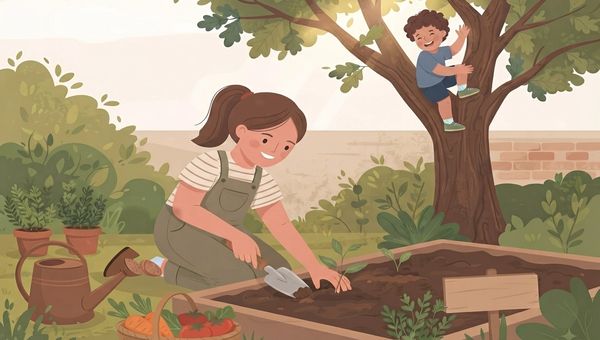
An illustrated scene in a garden. In the foreground, a woman with brown hair in a ponytail, wearing a striped shirt and green overalls, is kneeling beside a wooden raised garden bed, using a small trowel to plant a seedling. To her left, a rustic watering can rests on the grass, and a wicker basket overflows with carrots and tomatoes. In the background, a large tree stands on the right, and a small, smiling boy is happily climbing its lower branches, waving with one hand. More potted herbs and lush bushes surround them. The overall style is friendly and flat-colored, with soft, warm sunlight filtering through the leaves. A blank wooden signpost is on the right side of the garden bed.
Angeline Lillard research

Kids Actually Prefer Real Activities Over Pretend Play, Says the Research

Kids don't automatically prefer make-believe. Given a real choice, most of them pick real life, consistently.

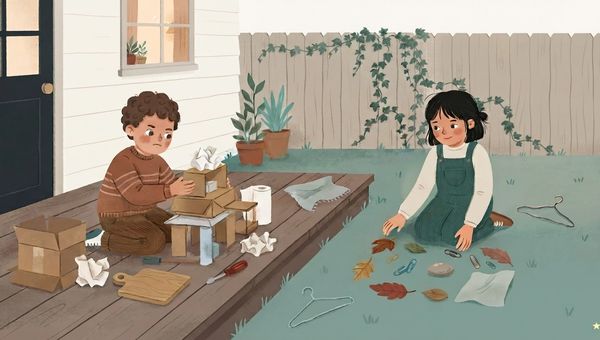
An illustration in a soft, textured storybook style depicting a backyard scene with two children. On the left, a boy with curly brown hair, wearing a striped sweater and brown corduroy pants, kneels on a wooden deck, focused on building a structure out of cardboard boxes, paper towels, screwdrivers, and other found objects. On the right, a girl with a black bob haircut and teal overalls sits cross-legged on the grass, carefully arranging a collection of leaves, paperclips, a stone, and fabric scraps into a pattern. Scattered around the children are various everyday items like paper bags, a cutting board, and metal hangers. The background features a white house with a window and a black door, potted plants, and a wooden fence covered in ivy. The lighting is soft and natural, and a small, stylized star icon is in the bottom right corner.
unstructured play

Why an Empty Afternoon Isn't Wasted Time

The clumsy, boring middle part of an unplanned afternoon isn't the problem. It's close to the entire point.

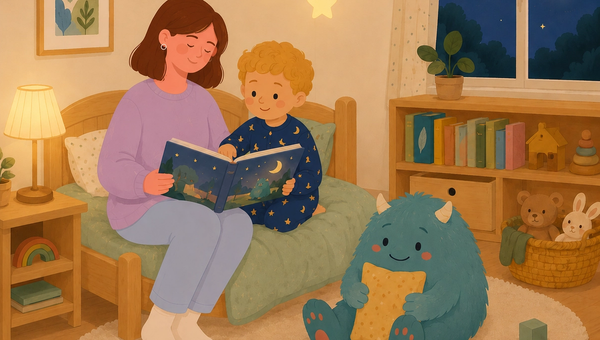
A mother reads a bedtime story with her son in a cozy bedroom while a friendly fluffy monster hugs a pillow nearby, creating a warm, comforting atmosphere under the moonlit night sky.
positive parenting

The Playground Versus the 10 Minutes Before Bed

Sometimes 10 focused minutes matter more than an entire hour at the playground.

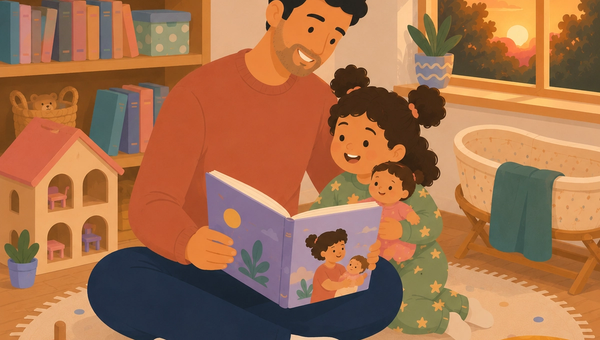
Father reading a personalized storybook with his young daughter in a cozy Scandinavian-style playroom at sunset. The girl smiles while cuddling a baby doll, imagining herself as a proud big sister. Warm golden light streams through the window, illuminating a bookshelf, dollhouse, baby bassinet, and children's toys. A teal feather appears on the spine of a book on the shelf as a subtle Quilloo signature. Flat Corporate Memphis (Alegria) illustration with soft pastel colors and no visible text.
personalized stories

An Only Child Becoming a Big Sibling: Their Changing Identity

Becoming a big sibling is more than welcoming a new baby, it's a major shift in your child's identity. Discover what developmental research says about this transition and how personalized stories can help children see themselves as confident, caring big siblings before the baby even arrives.

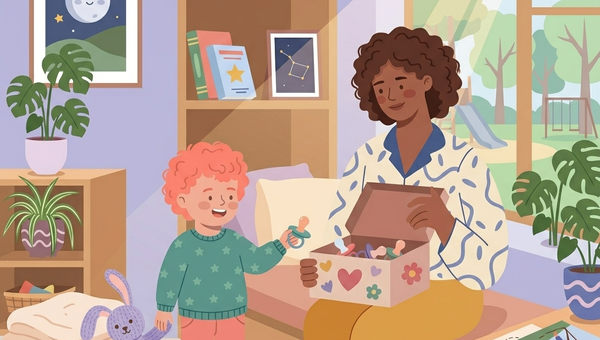
Child saying goodbye to their pacifier by placing it in a keepsake box with a parent's support, illustrating a gentle and positive pacifier weaning journey.
positive parenting

Giving Up the Pacifier: Turning It From "Taken Away" Into "Achieved"

Giving up the pacifier doesn't have to be a battle. Learn what pediatric experts recommend, why gradual weaning works best, and how personalized stories can help children feel confident about this important milestone.

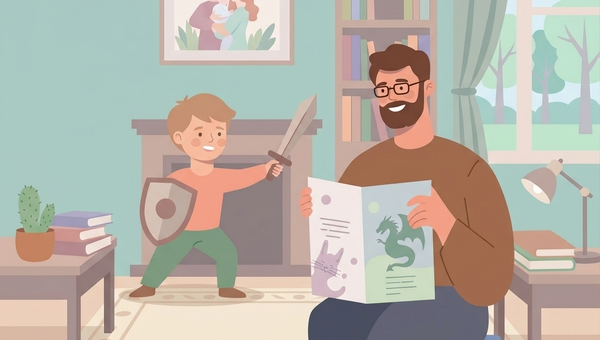
A father reads a personalized storybook while his child confidently pretends to be a brave knight with a toy sword and shield, illustrating how storytelling builds confidence and imagination in children.
positive parenting

How Stories Build Real Confidence in Kids (Not Just a Feel-Good Line)

How stories build real self-confidence in children, Bandura's self-efficacy theory (1977) and why a story where the child is the hero works better than any other.

Parent gently supporting a toddler during potty training in a cozy bathroom, illustrating a child-led potty training approach.
positive parenting

Potty Training: Why Waiting for Readiness Beats Pushing for It

Potty training - what Dr. Brazelton's approach (Pediatrics, 1962) says about waiting for your child's readiness, and why pushing too early can backfire.

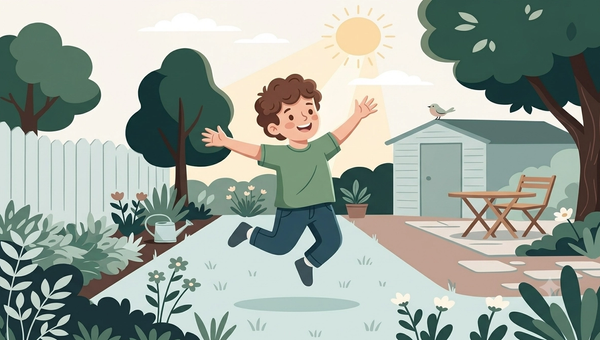
A cheerful child with curly hair jumps joyfully in a sunny backyard, arms outstretched, surrounded by trees, flowers, and a white fence. A small garden shed, patio table and chairs, a bird perched on the shed roof, and a watering can among the plants create a peaceful outdoor scene under a bright sun.
positive parenting

How Physical Movement Improves Your Kid's Brain for Learning

The stuck homework standoff might need less pushing and more jumping jacks.

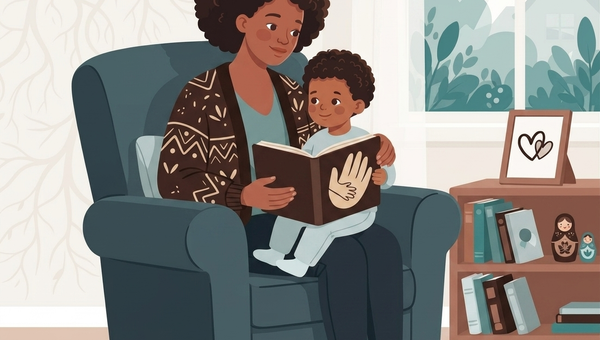
A cozy, flat vector illustration depicts a Black mother and her young son sitting together in a comfortable, sage-green armchair in a bright living room. The mother, with short voluminous black curly hair, wears a warm mustard-yellow cardigan with patterned trim over a blue-green top and blue pants. She is holding an open book on her lap while her son, with short curly hair and wearing a blue top and trousers, sits comfortably on her lap, looking up with a gentle smile as she holds the book. The open book features a simple illustration of holding hands. In the background, a window looks out onto lush green trees, a small bookshelf holds colorful books and nesting dolls, and a framed picture of two overlapping hearts rests on top. The room has light wood floors and a soft cream-colored rug.
positive parenting

What "Resting in Dependence" Actually Means

The kid who wants you to stay a little longer at bedtime isn't behind schedule. According to attachment research, that's exactly how independence gets built.

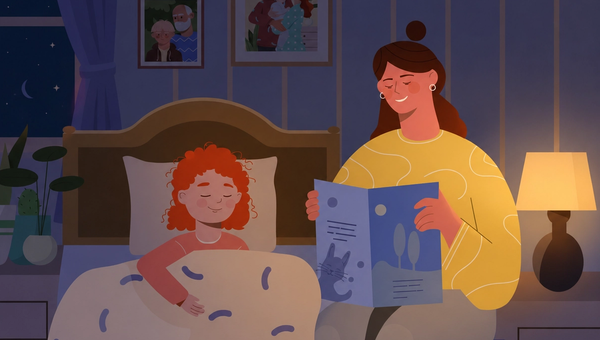
A gentle, classic children's book illustration of a mother and her young daughter reading a story together in bed, illuminated by a warm and cozy nightlight.
personalized stories

Why 15 Minutes of Bedtime Reading Beats Any Educational Toy

Why 15 minutes of bedtime reading matters more than any educational toy, the research behind shared reading, and how a personalized story deepens the effect.

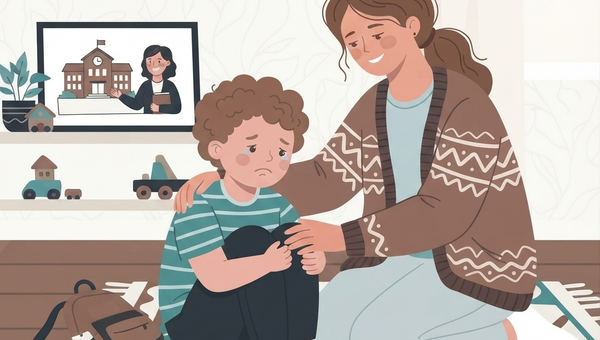
A flat vector illustration shows a mother comforting her young son, who is sitting on a patterned rug in a living room and crying, with tears visible on his cheek. He has curly brown hair and is wearing a teal striped t-shirt and dark blue pants. The mother, with her brown hair tied back, kneels beside him, wearing a brown patterned cardigan over a teal shirt and grey pants, with a gentle smile as she puts her arm around his shoulder and holds his knee. A small backpack and a green lunchbox sit on the floor nearby. In the background, a wooden shelf holds potted plants, toy cars, and a framed picture depicting a smiling female teacher standing in front of a school building. A window is on the far right. The overall style is warm, graphic, and gentle.
positive parenting

First Day of School Anxiety: The Physical Stress Response, Explained

Your kid's first-day meltdown isn't just emotional. There's a measurable hormone spike behind it, and a real timeline for it settling down.

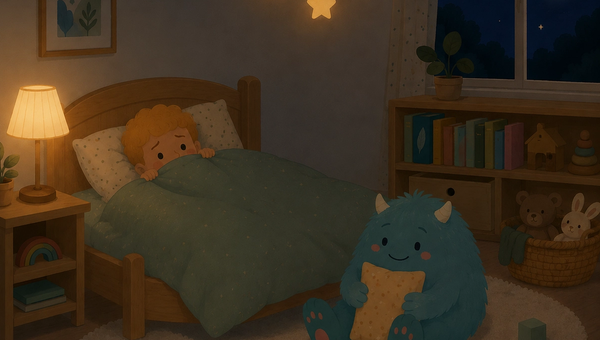
A young child lies tucked under a soft sage-green duvet in a cozy Scandinavian-style bedroom at night, peeking over the blanket with a worried expression. Beside the bed, a small fluffy teal monster with tiny horns sits peacefully on the rug, hugging a pillow with a gentle smile. Warm bedside lighting, glowing hanging star lights, wooden Montessori furniture, children's books, plush toys, and a moonlit window create a calm, comforting atmosphere that helps transform bedtime fears into feelings of safety and reassurance.
personalized stories

Afraid of the Dark: How a Story Turns the Room Into a Safe Place

A child peeks nervously from under a blanket while a friendly fluffy monster hugs a pillow nearby in a cozy, moonlit bedroom, showing how bedtime stories can turn fear into comfort.

Your subscription could not be saved. Please try again.
Your subscription has been successful.

Weekly parenting insights you'll actually use.

No spam. Just thoughtful ideas, expert tips, and stories that make a difference.

Protected by reCAPTCHA. Google's Privacy Policy and Terms of Service apply.