"I don't want to sleep with the light off." That sentence sounds so simple, but behind it can hide an entire night of negotiation, a nightlight that stays on "just for tonight," and a door that absolutely must stay open exactly 10 centimeters. So what's actually happening in that small head of theirs?
It's not really about the dark at all
A qualitative study looking at how preschoolers make sense of fear of the dark found something interesting. Kids almost never feared the darkness itself, as a physical thing. They feared what "lives" there, what "could happen" there, and the feeling that darkness "just is scary, that's how it is." In other words, the fear isn't about the absence of light. It's about everything their imagination invents to fill up that empty space.
The trial that sounds a lot like what's already happening at your house
A review looking at decades of research on nighttime fears found that behavioral and cognitive approaches, including bibliotherapy and bedtime stories, led to meaningful improvement in fears and sleep quality in children ages 3 to 12. There's also a registered clinical trial testing this exact idea: parents read their child a book and play games tied to each chapter, over several weeks at home, combining gradual exposure, calming techniques, and a character in the story who models how to cope.
That's basically already what happens at your house every night. It just has a scientific name now.
How to turn the scariest room in the house into the safest one
If the fear really comes from a child's imagination filling in the dark, then trying to "prove" there are no monsters almost never works. What does work is giving your child a new version of that same room, one where they already know what's there, because they've already "been there" in a story.
When you create a Quilloo story about fear of the dark, your child doesn't just hear about someone else overcoming it. They see themselves, with their own name, in a room that looks like their real one, checking corner after corner, and discovering every time that there's nothing scary there. Next time they walk into their actual room in the dark, they already "remember" the feeling that everything's fine, because they've lived it once already, through themselves.
Turning the fear itself into a shared joke
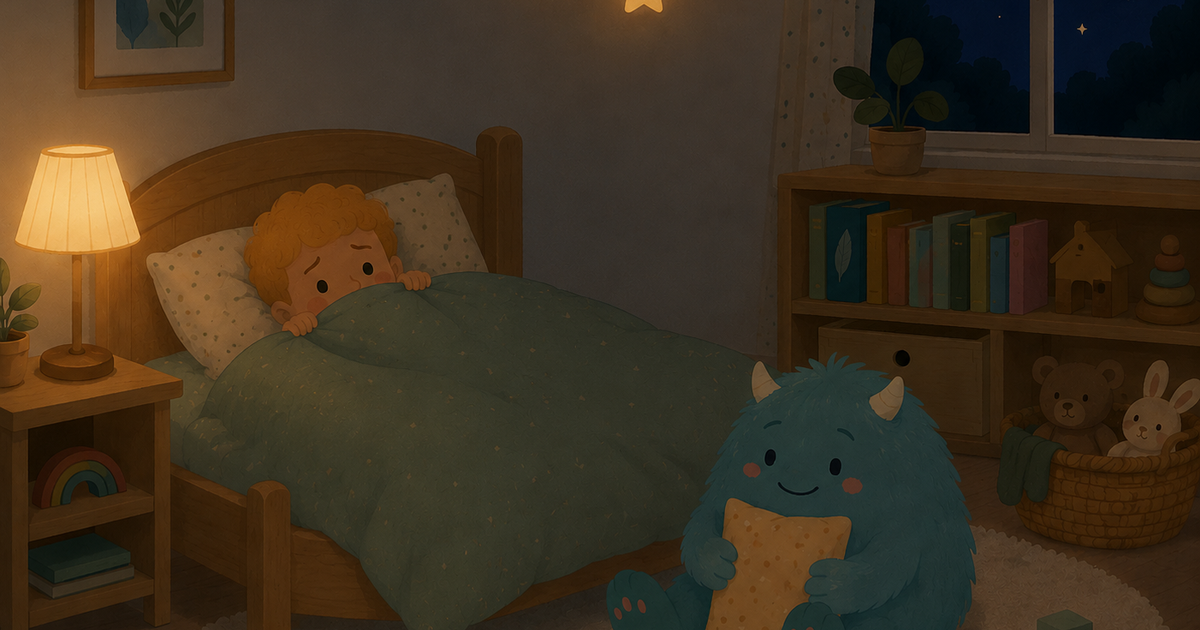
Sometimes the best way to deal with a fear isn't to ignore it, but to ask your child exactly what they're imagining, and then give it a slightly funny answer. If they're convinced there's a monster in the room, you can discover together that this particular monster actually loves cookies more than anything in the world, and leave a few cookies by the bed "just in case." If they're afraid of a snake slithering in, you can explain that snakes happen to be terrified of dragons, and put a small dragon toy on the shelf. Humor doesn't erase the fear, but it gives it a different place to live, one that's a bit lighter and less threatening. And when you turn all of it into a funny story you read together at bedtime, your child doesn't just fall asleep smiling. They also get a real sense of control over their own room.
Frequently Asked Questions
At what age do kids typically start being afraid of the dark? It's very common starting around preschool age, roughly 3 to 5, when imagination develops faster than the ability to tell what's real from what isn't.
Should I leave a light on at night? It can help in the short term, but it works best combined with tools that build real confidence, like conversation, a story, or gradually practicing being in a dimmer room.
Is it better to explain there are no monsters, or just not bring it up at all? Usually it's better to neither ignore it nor argue about it, but instead give your child a tool to feel safe on their own, like a story where they discover that for themselves.
When should I bring in a professional for fear of the dark? If the fear lasts a long time, seriously affects sleep, or comes along with high general anxiety, it's worth consulting a professional alongside any other approach.
Want to help your child discover their room really is a safe place, through a story where they're the hero?
Topics in this article
- personalized stories
- child development
- mindful parenting
- bedtime stories
- childhood fears
QT
Quilloo Team
Bringing together child development research and thoughtful storytelling for parents.
Weekly parenting insights you'll actually use.
No spam. Just thoughtful ideas, expert tips, and stories that make a difference.