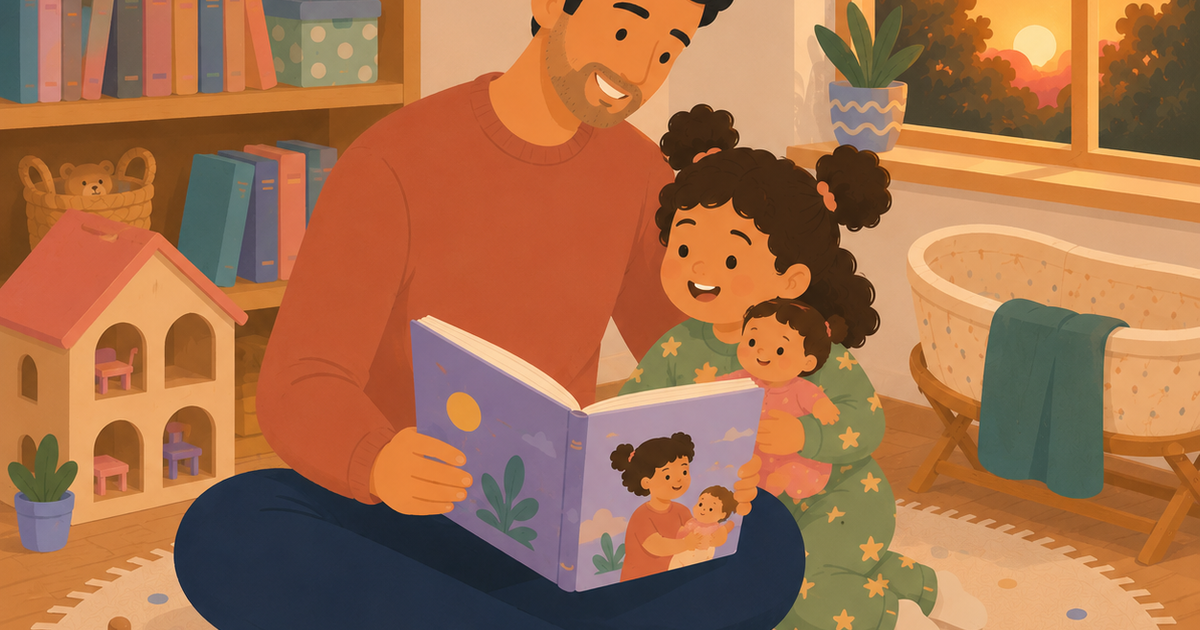
Up until now, he's been "the kid." The baby of the family, the one everyone looks after, comforts, puts at the center. And suddenly, almost overnight, he's supposed to become "the big brother." That's not just an addition to the family; it's a deeper question: who am I now, if I'm not the only one anymore?
What the research says about this shift
Developmental psychologist Dr. Judy Dunn, who has studied sibling relationships extensively, found something fascinating: the birth of a sibling gives the older child a real opportunity to take on a new identity, instead of only being the one who seeks comfort from parents, they become someone who can give comfort, take care, be "the big one." This doesn't happen automatically or at the same pace for every child, but this opportunity is linked in the research literature to the development of empathy and social skills over time.
It's worth being fair here: this isn't a one-sided picture. The same child gaining this new "identity opportunity" is also dealing with a real loss of status; they're no longer at the center alone. Both things are true at the same time.
So how do you help a child "try out" the new identity in advance?
This is exactly where a story can do work that a verbal explanation often can't: letting your child experience, in advance, what it feels like to be "the big one who takes care", not just hearing that they'll "become a big sibling," but seeing themselves already there, already functioning in the new role, and discovering they're good at it.
Where Quilloo fits in
When you create a Quilloo story about this transition, your child doesn't just hear "another book about a new baby"; they see themselves, with their own name and their own likeness, already inside the new role: helping, protecting, teaching the little one something. That turns the new identity into something concrete and inviting, instead of an abstract concept that's hard to grasp at age 3 or 4. Your child doesn't just "know" they'll be a big sibling; they already "are" one, at least in the story, before they even have to be one in real life.
Frequently Asked Questions
How do I help an only child prepare to become a big sibling? One recommended approach is to give them opportunities to "practice" the new role in advance, through play, conversation, or a story where they're already "the big one who takes care."
Is becoming a big sibling always a positive experience? Not necessarily right away. There's both an opportunity (a new identity, a meaningful role) and a loss (their status as the "only" child), both are real and can exist at the same time.
At what age can a child understand the concept of "becoming a big sibling"? Even from ages 2-3, children can start to grasp the concept concretely, especially when it's introduced through tangible examples rather than abstract explanations.
What if my child struggles to accept the new identity? Give them time, don't force the role, and reinforce every small moment where they choose to "be the big one" on their own initiative, without pressure for it to happen right away.
Want to help your child see themselves already in the role of big sibling, before they even have to be one?
Topics in this article
QT
Quilloo Team
Bringing together child development research and thoughtful storytelling for parents.
Weekly parenting insights you'll actually use.
No spam. Just thoughtful ideas, expert tips, and stories that make a difference.