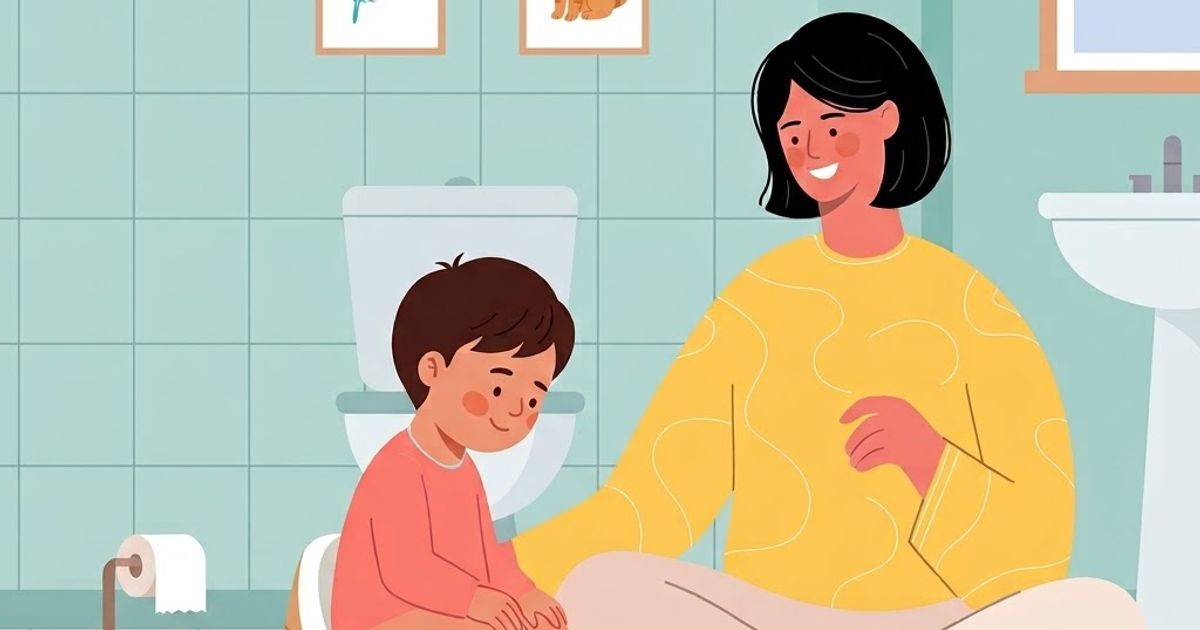
There's a moment when every parent starts asking themselves: "Should we be starting potty training by now?" There's social pressure, comparisons to other kids at daycare, and a nagging feeling that if you don't start now, you're somehow behind. But one of the most influential studies in the field says the opposite: pause, watch your child, and wait.
The approach that's still leading nearly 65 years later
In 1962, pediatrician Dr. T. Berry Brazelton published a study in the journal Pediatrics that followed 1,170 children in his practice over a decade. He found that a method based on waiting for the child's physiological and emotional readiness cues, rather than a fixed schedule, led to initial success in about 80% of children, at an average age of roughly 27.7 months.
His approach, known as the "child-oriented method," is still supported today by the American Academy of Pediatrics (AAP), which explicitly recommends not forcing a child to start training before they're behaviorally, emotionally, and developmentally ready.
Being honest: there's no single "right" method
A systematic review by the U.S. government research agency AHRQ found that research in this area is fairly limited, and there's no strong evidence for a single "correct" way to potty train. What the review did find: both Brazelton's child-oriented approach and other methods (like intensive, parent-led training) can work well for most children, it depends a lot on the child's temperament and the family.
What this actually means for you as a parent
It means there's no reason to panic if your friend's kid is already trained and yours isn't. The signs worth watching for: your child showing interest in the toilet, understanding and following simple instructions, and showing discomfort with a wet diaper.
How a personalized story turns this into something your child wants, not just something they have to do
Part of what makes the child-oriented approach work is that it turns potty training into the child's own achievement, not the parent's project. A story where your child sees themselves succeeding, feeling proud, "already big", can reinforce exactly that feeling, giving them the confidence that they're ready for the next step, at their own pace.
Frequently Asked Questions
At what age should potty training start? Most guidelines, including the AAP's, recommend not starting before 18 months, and generally finishing somewhere between ages 2 and 3, depending on your child's individual pace.
How do I know if my child is ready for potty training? Common signs include interest in the toilet, the ability to understand and follow simple instructions, longer dry stretches, and visible discomfort with a wet diaper.
What if my child resists potty training? According to the child-oriented approach, the answer isn't to push harder; it's to step back and wait for more readiness cues. Pushing too early can actually prolong the process rather than speed it up.
How long does potty training usually take? It varies a lot from child to child. Some children are trained within a few days once they're truly ready, while for others it's a more gradual process over several weeks.
How Can a Personalized Story Help? Potty training is about more than learning a new skill; it's about building confidence. A personalized story lets your child see themselves as the hero of the journey, making the experience feel exciting instead of stressful. By celebrating small successes through storytelling, children can feel more motivated, capable, and ready to take the next step at their own pace.
Ready to make potty training an adventure? Create a personalized Quilloo story that helps your child build confidence - one page at a time.
Want to turn potty training into an adventure your child actually looks forward to?
Topics in this article
QT
Quilloo Team
Bringing together child development research and thoughtful storytelling for parents.
Weekly parenting insights you'll actually use.
No spam. Just thoughtful ideas, expert tips, and stories that make a difference.