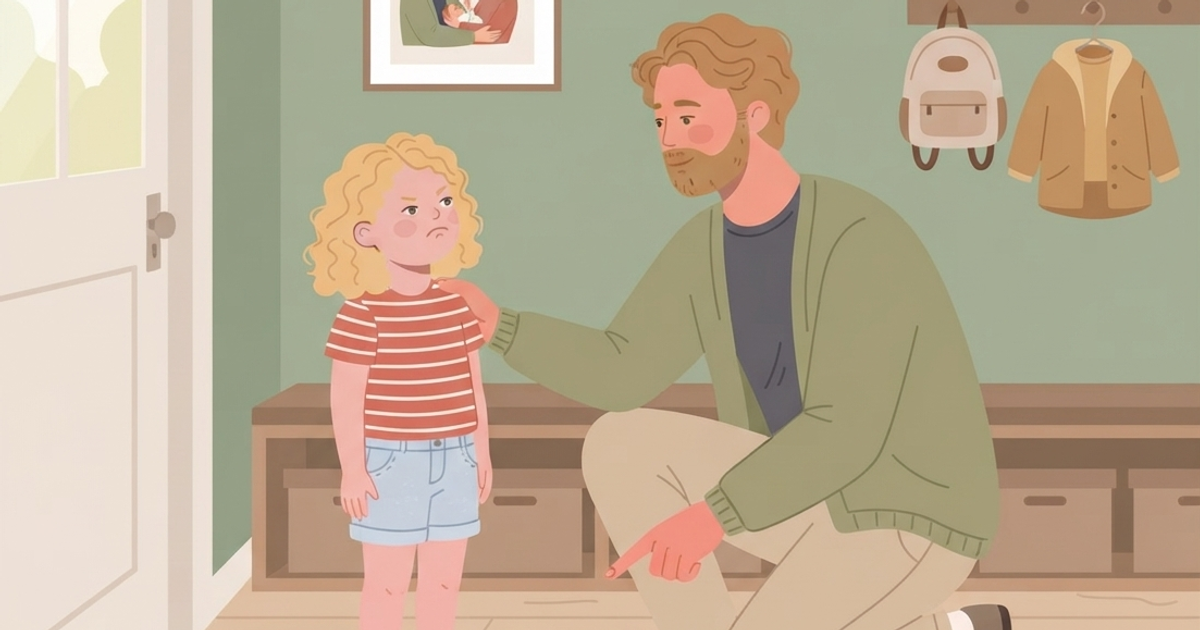
Your kid refuses to put shoes on, and you're stuck between two instincts. Get stern and just make it happen, or soften up and let it slide because the whining is exhausting. Most parenting advice makes this feel like a choice between two teams. One well-known framework in parenting psychology argues that's a false choice entirely.
The idea, in one phrase
Psychologist and educator Jane Nelsen built her Positive Discipline approach around a simple combination: kind and firm, at the same time. Not kind first and firm later. Not firm, then softened with some kindness after. Both, together, in the same sentence, the same moment. Her argument is that strict, punishment-heavy parenting and permissive, boundary-free parenting are actually the same mistake in two different outfits, since both skip half of what a kid needs.
Why "just be firm" or "just be nice" both miss something
Being firm without kindness tends to produce compliance without connection, a kid who does what's asked but feels controlled rather than respected. Being kind without firmness tends to produce a kid who's comfortable but unclear on where the actual boundary is. Nelsen's framework argues you don't have to trade one for the other, and that the combination, uncomfortable as it can feel to hold both at once, is what actually works.
What this looks like at home tonight
With the shoe standoff, kind and firm sounds less like negotiating and less like barking an order, and more like: "I know you don't want to put shoes on right now, and we do need to leave in five minutes." Said calmly, once, without repeating it ten times or escalating your tone. The warmth (acknowledging the feeling) and the boundary (we're leaving in five minutes) show up in the same breath, not as two separate moves fighting each other.
Frequently Asked Questions
Isn't it hard to be both kind and firm in the same moment? It takes practice, especially in the moment when patience is thin, but the two aren't actually in conflict, they're meant to work together rather than trade off.
What if my child doesn't respond even when I'm kind and firm? Consistency over time matters more than any single interaction. This approach tends to show results through repeated, predictable use, not one perfect conversation.
Does "kind" mean giving in to what my child wants? No, kindness here refers to tone and respect, not changing the actual boundary or expectation being held.
How is this different from just being consistent? Consistency is part of it, but the specific combination of warmth and a clear boundary delivered together is what distinguishes this approach from simply repeating a rule firmly.
Sources:
- Nelsen, J. (1981, revised editions through 2024). Positive Discipline: The Classic Guide to Helping Children Develop Self-Discipline, Responsibility, Cooperation, and Problem-Solving Skills.
Topics in this article
QT
Quilloo Team
Bringing together child development research and thoughtful storytelling for parents.
Weekly parenting insights you'll actually use.
No spam. Just thoughtful ideas, expert tips, and stories that make a difference.