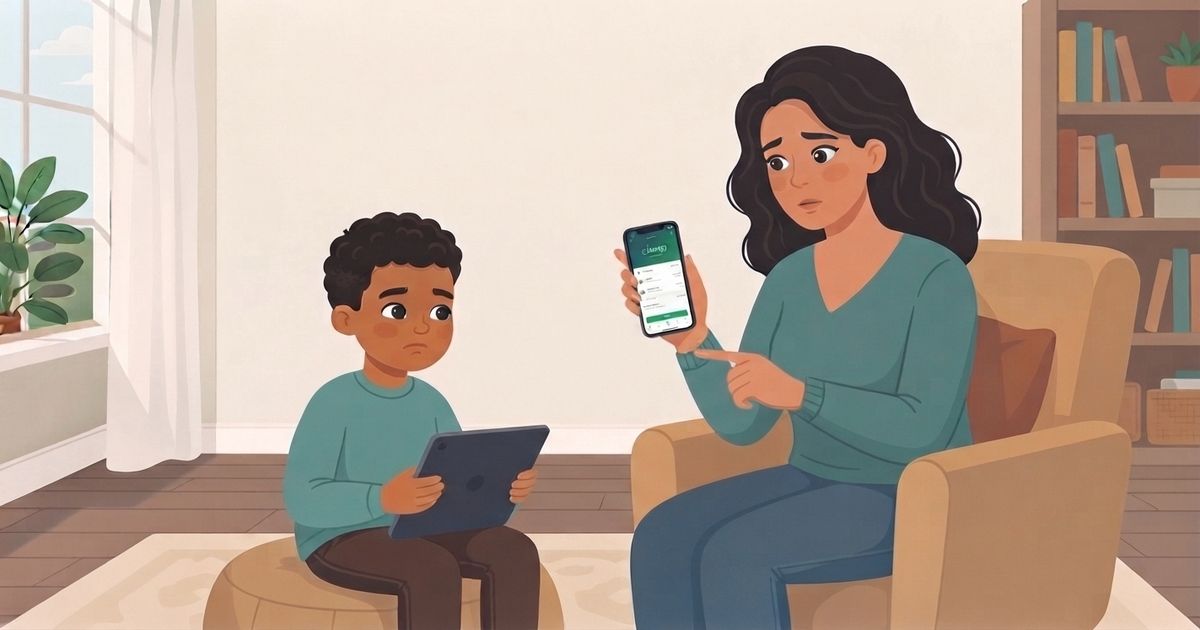
The game was free to download. Somehow there's now a charge on your card for something called a "battle pass," and your kid genuinely didn't seem to understand that the glowing gems they were spending were connected to real money at all.
Why this isn't really about self-control
A research report from academics at Newcastle and Loughborough Universities, led by Dr. James Ash, examined paid reward systems in games, including loot boxes and similar mechanics, and found that children struggle to track in-game spending and often fail to connect virtual currency with real-world value. The report specifically noted that games increasingly borrow techniques from gambling design to encourage repeat purchases, and that this isn't a matter of a particular child lacking discipline. It's a structural feature of how these systems are built.
The disconnect is the whole mechanism
Part of what makes in-game spending different from a store purchase is the extra layer between a child and their actual money. Buying "gems" or "V-Bucks" with a card once, then spending that virtual currency repeatedly inside the game, breaks the direct link between spending and loss that helps anyone, kids especially, feel the weight of a purchase. A study commissioned by the UK regulator Ofcom, involving 93 children ages 8 to 16, found that a third of kids regretted money they'd spent gaming, and many specifically said they hadn't realized what they were buying at the time.
Why this happens even to careful, sensible kids
This isn't a matter of some kids being naturally more impulsive. Games are frequently designed to time purchase prompts with moments of high emotional excitement, right after a loss, right before a big challenge, when the part of the brain responsible for careful evaluation is least engaged. This applies to adults too, but it's particularly relevant for kids, whose ability to pause and evaluate value is still developing.
What actually helps
Removing saved payment details from devices and accounts is one of the most consistently recommended first steps, since it reintroduces a real decision point before any purchase can go through. Setting up a PIN specifically for purchases, and having a direct conversation about how virtual currency connects to real money before handing over a device, both show up repeatedly in guidance from researchers and child safety organizations alike.
Frequently Asked Questions
Do kids really not understand that in-game currency is real money? Research suggests many kids genuinely struggle to connect virtual currency with real-world spending, not just younger kids, but a significant portion of the 8 to 16 age range studied.
Is this mainly a problem in specific types of games? Free-to-play games with loot boxes, battle passes, or virtual currency systems are the most commonly cited concern, since they're specifically designed around repeat purchases.
What's the single most effective step to prevent accidental spending? Removing saved payment information from the device or account is the most frequently recommended first step, since it adds a real barrier before any purchase.
Should I ban in-game purchases entirely? Some families choose this, though many researchers suggest that clear, transparent conversation about cost paired with practical safeguards can work as well as an outright ban.
Sources:
- Ash, J., Gordon, R., & Mills, S. (2022). Between Gaming and Gambling: Children, Young People, and Paid Reward Systems in Digital Games. Newcastle University and Loughborough University, ESRC-funded. Link
- Ofcom-commissioned study (Discovery research) on children's online spending, ages 8-16 (no direct public link found; referenced via 5Rights Foundation summary).
Topics in this article
- in-game purchases
- loot boxes
- kids and gaming
- digital spending
- microtransactions
- screen time
- family technology
- personalized book creation
- children's books
- positive parenting
QT
Quilloo Team
Bringing together child development research and thoughtful storytelling for parents.
Weekly parenting insights you'll actually use.
No spam. Just thoughtful ideas, expert tips, and stories that make a difference.