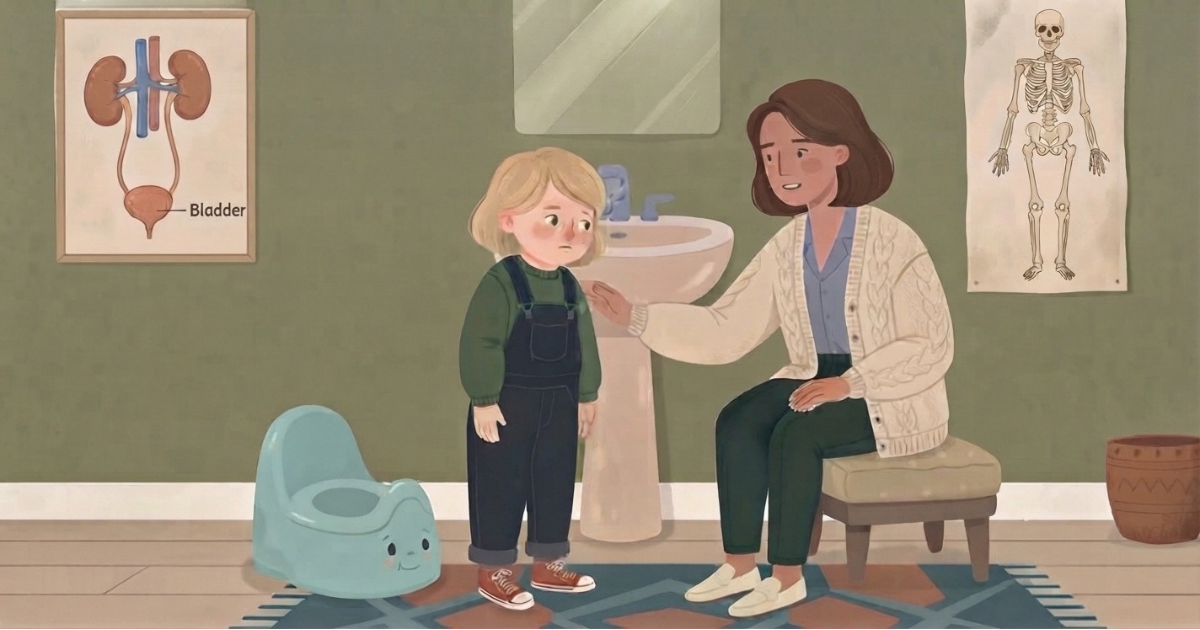
A child who suddenly won't use the toilet, or seems to be regressing after doing fine for weeks, gets labeled quickly: stubborn, difficult, going through a phase. Pediatric urologist Dr. Steve Hodges argues that label is very often wrong, and that getting it wrong can mean months or years of frustration that had a simple, physical explanation the whole time.
The finding that reframes "refusal" entirely
A study published in Pediatrics followed nearly 400 children and found that more than 24 percent developed what researchers call stool toileting refusal. Here's the detail that matters most: 93 percent of those children showed signs of constipation, hard bowel movements, pain when pooping, before the so-called refusal ever started. In other words, a large majority of these kids weren't being willful. They'd started training with a physical condition that made using the toilet comfortably close to impossible, and the resulting avoidance got mislabeled as behavioral defiance.
Why constipation and "refusal" look so similar from the outside
A backed-up colon sits directly behind the bladder, and the pressure from retained, hardened stool can make it physically harder for a child to control urination too, which is part of why constipation shows up not just as poop avoidance but as unexplained pee accidents as well. A child in this situation isn't choosing to resist. Their body has genuinely lost some of the normal sensation and muscle tone needed to recognize and respond to the urge, according to Hodges' clinical explanation of the mechanism.
When this is genuinely just a normal, temporary phase
Most potty training setbacks are developmental, not medical, and stress is the single most common trigger behind a real regression. A new sibling, a new daycare or babysitter, a move, or even a change in routine can all be enough to throw a toddler off track temporarily. According to guidance from the American Academy of Pediatrics, this kind of stress-related regression typically resolves on its own within a few weeks, especially when parents respond calmly rather than with frustration or pressure.
The specific red flags worth actually checking
A combination of signs points toward getting a pediatrician involved rather than waiting it out: pain during urination or bowel movements lasting more than a day or two, stool withholding lasting more than two months, especially alongside hard stools or leaking, no daytime dryness by age 4 despite consistent effort and clear earlier readiness, bedwetting after age 7 happening at least twice a week, or a sudden regression that doesn't resolve within a few weeks, particularly if it comes with pain or noticeable behavioral changes.
Who to actually go to
The American Academy of Pediatrics recommends starting with your child's regular pediatrician any time regression or refusal shows up, specifically to rule out a physical cause like a urinary tract infection or constipation before assuming it's purely behavioral. If constipation is confirmed and doesn't resolve with initial treatment, or if the pattern strongly resembles what's described above, a referral to a pediatric urologist or pediatric gastroenterologist, specialists who deal directly with these bowel and bladder mechanics, is the appropriate next step, rather than continuing to treat it as a training or willpower issue at home.
A quick, honest note: most potty training struggles really are ordinary and temporary, and this isn't meant to send every family into a medical panic over normal ups and downs. It's about recognizing the specific pattern that's worth a real conversation with a doctor.
Frequently Asked Questions
How can I tell if my child is constipated if they're still having daily bowel movements? Frequency alone isn't the full picture. Painful, hard stools, or small amounts of liquid stool leaking around a blockage, can occur even with what looks like regular bowel movements.
Is it normal for potty regression to happen after a family change like a new sibling? Yes, this is one of the most common and well-documented triggers, and it typically resolves within a few weeks without medical intervention.
Should I try to fix constipation at home before seeing a doctor? It's reasonable to start with basics like increased fiber and fluids, but persistent symptoms, especially pain or stool withholding beyond a couple of months, warrant a pediatrician's involvement rather than continued at-home management alone.
Does bedwetting after age 5 always need medical attention? No, occasional bedwetting up to age 7 is still considered within a normal range by the AAP. Twice-weekly bedwetting after age 7 is the point worth raising with a pediatrician.
Sources:
- Taubman, B., Blum, N. J., & Nemeth, N. (2003). Stool toileting refusal: A prospective intervention targeting parental behavior. Archives of Pediatrics & Adolescent Medicine.
- Hodges, S. Pediatric urologist, Wake Forest University School of Medicine, clinical writing on constipation and misdiagnosed potty refusal. Link
- American Academy of Pediatrics, HealthyChildren.org, guidance on potty training regression. Link
Topics in this article
- potty training refusal
- potty training regression
- constipation in toddlers
- Steve Hodges research
- when to see a doctor
- pediatric urologist
- stool toileting refusal
- bedwetting red flags
- personalized book creation
- children's books
- positive parenting
QT
Quilloo Team
Bringing together child development research and thoughtful storytelling for parents.
Weekly parenting insights you'll actually use.
No spam. Just thoughtful ideas, expert tips, and stories that make a difference.