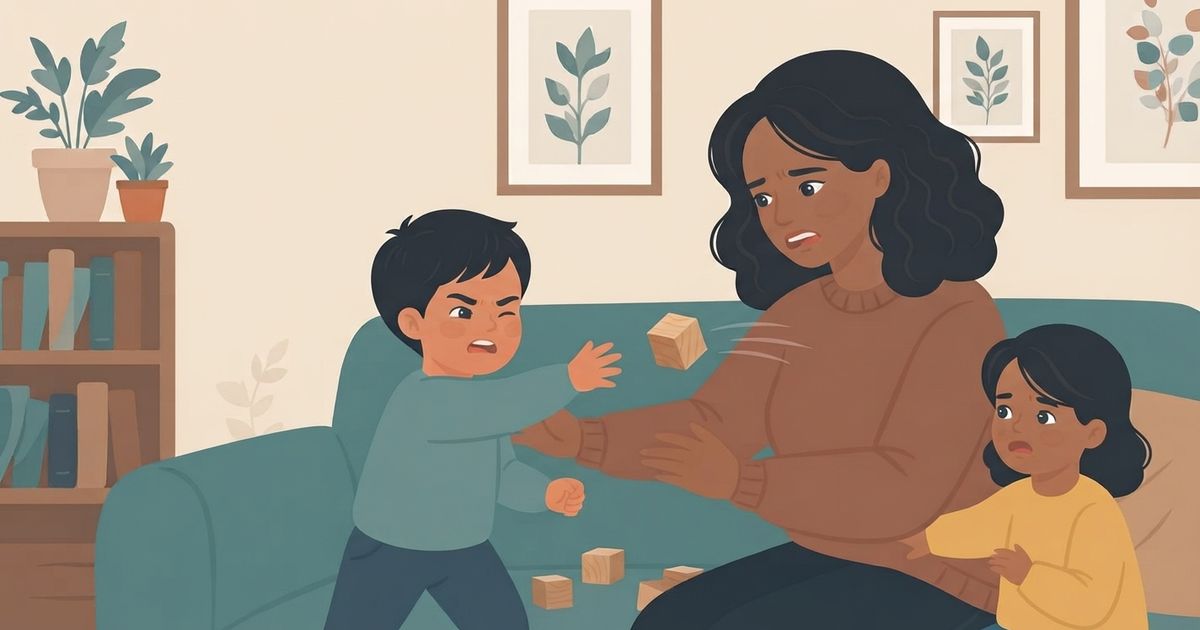
Your four-year-old just threw a wooden block at his little sister, and now two kids are crying and one parent is trying very hard not to. Somewhere in the back of your mind, a quiet and scary question pops up: what kind of kid does that? And maybe right behind it, an even scarier one: what kind of parent raises a kid who does that?
Dr. Becky Kennedy has a one-sentence answer to both questions, and it's the foundation of everything else she teaches.
The idea, in one sentence
Your child is a good kid having a hard time, not a bad kid, and the same is true of you as a parent.
This is the first principle in Good Inside: A Guide to Becoming the Parent You Want to Be (Harper Wave, 2022), the #1 New York Times bestseller by Kennedy, a clinical psychologist with a PhD from Teachers College, Columbia University. The whole book is built on the belief that kids and adults are good at their core, even when their behavior is not. Her framework draws on attachment theory, mindfulness, and Internal Family Systems therapy. It's a clinical approach from her practice, not the result of a single study.
Why the label matters so much
It might seem like a small shift in wording. It isn't. The story a parent believes about a child quietly shapes every response that follows.
If the story is "he's mean," the natural response is to stamp out the meanness with punishment, a lecture, or a stern time-out. If the story is "he's a good kid who is struggling with something," the natural response is to figure out what the struggle is. Maybe he's jealous of the attention his sister gets. Maybe he's exhausted. Maybe he just doesn't have the skill yet to handle frustration without his body taking over.
Kids also absorb the story. A child who keeps hearing, directly or through tone, that he's "bad" starts to believe it. And children who see themselves as bad tend to act the part. Kennedy's view is that behavior changes more easily when a child's sense of goodness stays intact, because a kid who feels good inside has something solid to build on.
Good inside is not the same as "anything goes"
This is the most common misunderstanding. Seeing your child as good inside doesn't mean the block-throwing is fine. It means you separate who your child is from what your child did.
You still stop the throwing. You still protect the sister. You still hold the line firmly. What changes is the message underneath: "I won't let you throw blocks, and you're still a good kid." That's very different from "Why would you do something so awful?"
The first message says the behavior needs to change. The second message says the child is the problem. Only the first one gives a kid somewhere to go.
The same goes for you
Kennedy is just as insistent that this principle applies to parents. Every parent has moments they're not proud of: the yelling, the slammed cupboard, the threat they'd never actually follow through on. After those moments, it's easy to slip into "I'm a terrible parent."
Kennedy's alternative is a sentence she calls her ultimate reminder, and she urges parents to commit it to memory: I am a good parent having a hard time. Not an excuse, and not a free pass. As she puts it, separating what you do from who you are means recognizing that you're good and that you can do the hard work to improve. Just a more accurate description, and a much more useful place to start fixing things from. A parent drowning in shame rarely has the energy left to change. A parent who knows they're good inside can look at a bad moment honestly and do better next time.
Say the sentence out loud
The next time your child's behavior makes your stomach drop, try this before you respond.
1. Say it to yourself first. Silently: "Good kid. Hard time." It takes two seconds, and it interrupts the "what is wrong with this child" spiral before it steers your reaction.
2. Stop the behavior, calmly. "I won't let you throw blocks." Move the blocks, step between the kids, whatever's needed. Firm hands, calm voice.
3. Say it to your child. Once things are safe, get close and say it out loud: "You're a good kid having a hard time. I'm right here." You'll often see a child's body soften when they hear it, because it answers the question they were silently asking too.
4. Then get curious. Later, when everyone is calm, wonder about the hard time. "Something about your sister playing with your tower was really tough, huh?"
Frequently Asked Questions
What does "good inside" mean in parenting? It's Dr. Becky Kennedy's core principle: children and parents are good at their core, even when their behavior is not. Seeing a child as good inside helps parents respond to the struggle behind the behavior.
Doesn't calling a misbehaving child "good" reward bad behavior? No. Kennedy separates the child's identity from their actions. You still stop and address the behavior firmly, while making it clear the child isn't bad.
What should I say after my child hits someone? Stop the hitting first ("I won't let you hit"), then, once things are calm, reassure your child: "You're a good kid having a hard time." Talk about what was hard later.
Sources
- Becky Kennedy, Good Inside: A Guide to Becoming the Parent You Want to Be (Harper Wave, 2022), Chapter 1 "Good Inside" and Chapter 2 "Two Things Are True" (source of "I am a good parent having a hard time"). Book, clinical framework. Author's summary
Topics in this article
- good inside
- good kid having a hard time
- Becky Kennedy
- Dr. Becky
- gentle parenting
- sturdy parenting
- toddler hitting
- child shame
- parent guilt
- personalized book creation
- children's books
- positive parenting
QT
Quilloo Team
Bringing together child development research and thoughtful storytelling for parents.
Weekly parenting insights you'll actually use.
No spam. Just thoughtful ideas, expert tips, and stories that make a difference.