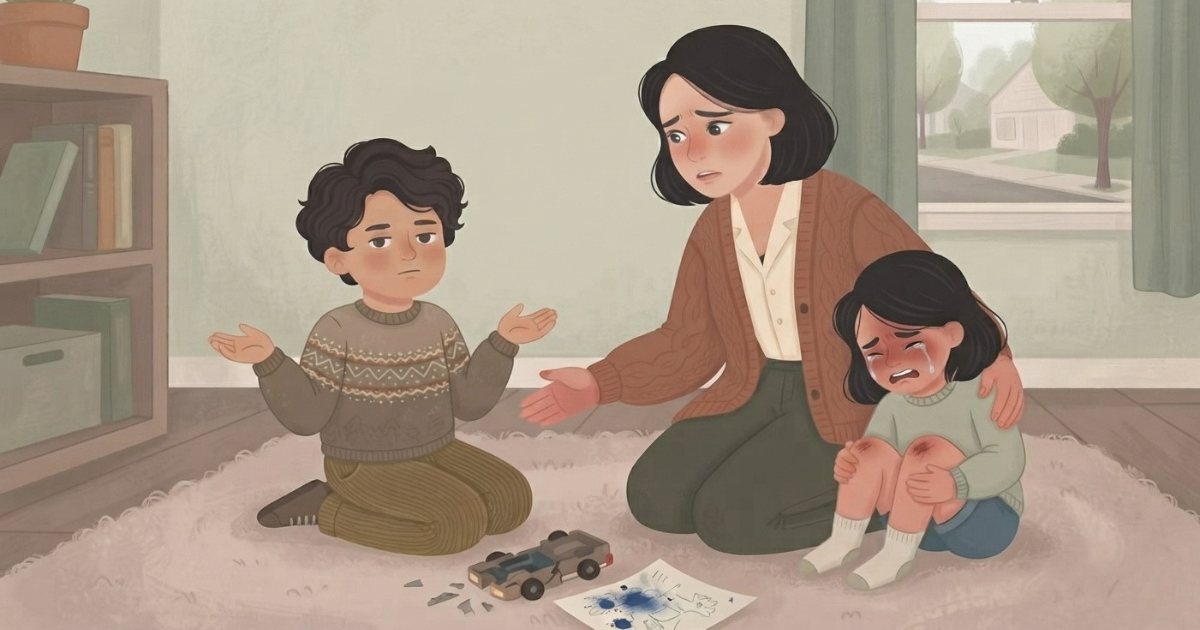
Your kid does something that genuinely hurts someone, a sibling, a classmate, a pet, and shows almost nothing afterward. No guilt, no real reaction, maybe even a shrug. It's a frightening thing to witness in your own child, and it's the kind of moment that sends a lot of worried parents searching for scary words late at night. Before going further down that road, it's worth knowing what researchers who actually study this closely have found.
The real clinical term, and why it matters
Clinical psychologist Paul Frick, at the University of New Orleans, has spent decades researching what's called callous-unemotional traits, or CU traits, a specific pattern involving limited empathy, a lack of guilt, and a shallow display of emotion in some children with significant, ongoing behavior problems. This research is serious and well established, included as a specifier in the DSM-5 for conduct disorder. But it's worth being precise about what it is and isn't: CU traits describe a pattern researchers study in children with persistent, significant conduct problems. They are not the same thing as a child "being a psychopath," a label that isn't clinically applied to children and tends to create far more fear than clarity.
What actually distinguishes this from normal childhood behavior
Every young child, at some point, has a moment that looks callous: not seeming sorry after hurting a sibling, a flat reaction to another kid's tears, a shrug where you expected remorse. On its own, an occasional moment like this reflects normal, still-developing empathy, not an underlying trait pattern. What Frick's research focuses on is a consistent, ongoing pattern, occurring alongside genuinely serious and persistent behavior problems, not an isolated incident or an off day.
The finding that matters most for worried parents
Here's the detail worth holding onto if this is genuinely on your mind: Frick's own research explicitly states that while CU traits show real stability over time in some kids, they are not immutable. They can and do change, particularly with the right kind of intervention. Research specifically testing empathy-focused emotion recognition training with kids showing complex conduct problems has found meaningful positive outcomes. This is a research area actively focused on what helps, not simply on labeling and predicting doom.
What actually helps, according to this research
Frick's broader body of work points toward warm, consistent parenting paired with specific attention to emotion recognition and empathy-building, rather than harsh punishment, which research in this area has found tends to be less effective for kids showing these patterns and can sometimes make things worse. Structured, consistent positive reinforcement for prosocial behavior, alongside direct teaching of recognizing others' emotional states, shows up repeatedly as a more promising direction.
When to actually seek a professional evaluation
If what you're seeing is a consistent pattern, not an occasional moment, combined with ongoing, significant behavior problems that concern you, a child psychologist experienced with conduct and emotional development is the right resource, not a search engine and not a lay label. An evaluation can clarify what's actually happening far better than a scary word ever could, and connect you with the specific, research-backed interventions this field has actually found to help.
A quick, honest note: this is sensitive territory, and worrying about it doesn't mean something is seriously wrong. Most kids who occasionally seem to lack empathy are simply still developing it. This information is meant to inform, not to diagnose your own child from behind a screen.
Frequently Asked Questions
Does an occasional lack of remorse mean my child has callous-unemotional traits? No, isolated moments like this are a normal part of developing empathy in childhood. Researchers focus on persistent patterns alongside significant, ongoing behavior problems, not single incidents.
Is "psychopath" ever an appropriate word to use for a child? No, psychopathy is not a diagnosis applied to children. Researchers use the term callous-unemotional traits specifically because it's a more accurate, developmentally appropriate description.
Can callous-unemotional traits actually change over time? Yes, research specifically notes these traits are not fixed, and targeted interventions, particularly those focused on empathy and emotion recognition, have shown meaningful positive results.
What should I do if I'm genuinely worried about a persistent pattern in my child? Consulting a child psychologist experienced in this specific area is the appropriate next step, rather than relying on internet searches or self-diagnosis.
Sources:
- Frick, P. J., Ray, J. V., Thornton, L. C., & Kahn, R. E. (2014). Annual research review: A developmental psychopathology approach to understanding callous-unemotional traits in children and adolescents with serious conduct problems. Journal of Child Psychology and Psychiatry. Link
- Dadds, M. R., Cauchi, A. J., Wimalaweera, S., Hawes, D. J., & Brennan, J. (2012). Outcomes, moderators, and mediators of empathic-emotion recognition training for complex conduct problems in childhood. Psychiatry Research, 199, 201-207.
- Frick, P. J. Research profile and publications on callous-unemotional traits, University of New Orleans / LSU. Link
Topics in this article
- callous-unemotional traits
- Paul Frick research
- child empathy development
- conduct problems
- child psychology
- emotional development
- parenting concerns
- when to seek help
- positive parenting
- personalized book creation
QT
Quilloo Team
Bringing together child development research and thoughtful storytelling for parents.
Weekly parenting insights you'll actually use.
No spam. Just thoughtful ideas, expert tips, and stories that make a difference.