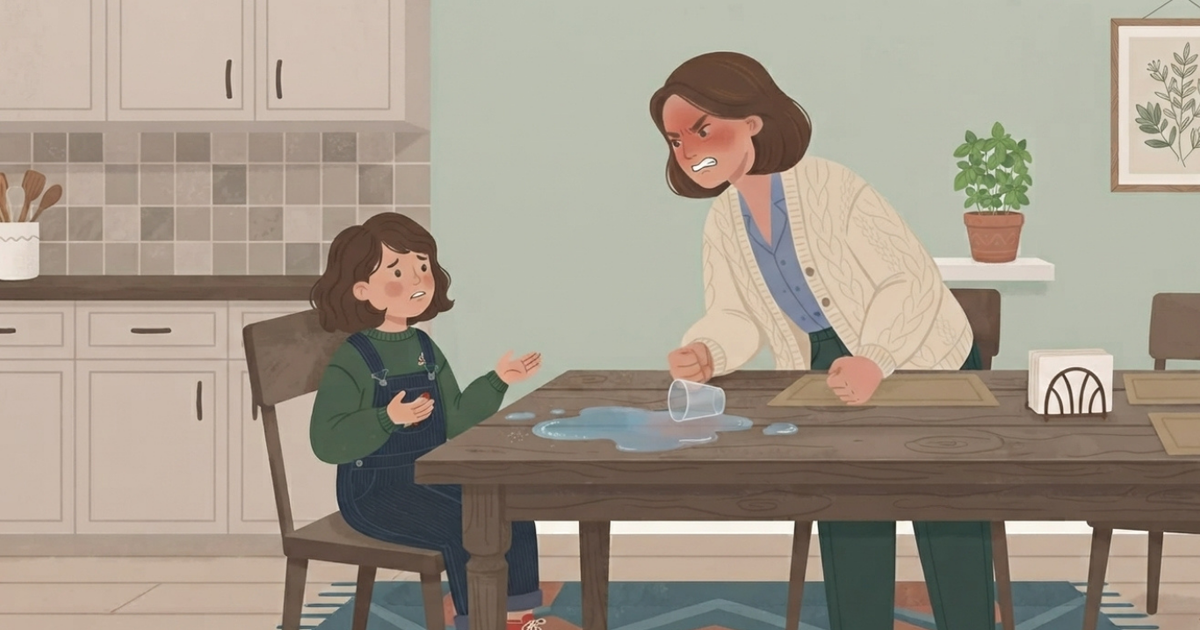
Your kid spills water on the counter, again, and something in you goes from zero to furious in under a second, way past what a spilled cup of water actually warrants. Afterward, you're left wondering where that came from. Clinical psychologist Dr. Shefali Tsabary has a specific answer for moments exactly like this, and it comes with a full map of what these reactions tend to look like.
The idea, in plain terms
Tsabary, author of The Conscious Parent and The Parenting Map, argues that a lot of what parents label as "discipline" is really the parental ego reacting on autopilot, an old, automatic pattern firing off before any real thought happens. In her more recent book, she breaks this down into five specific ego patterns, each driven by a different underlying emotion the parent likely absorbed in their own childhood, often without ever noticing it happening. Once you know the five, it becomes much easier to catch yourself mid-reaction and recognize which pattern is actually running the moment, instead of assuming the reaction is simply "how you are."
The Fighter
Driven by anger. This is the reaction that shows up as yelling, snapping, or losing your temper, often over something objectively small, a lost backpack, misplaced keys, spilled water. Tsabary points out that this pattern is frequently inherited quite literally, from watching a parent explode over minor logistics growing up, which normalizes explosive anger as the default response to everyday frustration. Underneath the anger, she suggests, is usually fear the fighter hasn't fully identified yet.
The Fixer
Driven by anxiety. Fixers rush in to solve problems, smooth over conflict, and rescue their kids from discomfort before the child has a chance to sit with it themselves. It looks caring on the surface, and often is well-intentioned, but Tsabary notes it comes at a real cost: it leaves the parent emotionally drained from constant vigilance, and it quietly teaches the child to expect someone else to manage their frustration or stress rather than building that capacity themselves.
The Feigner
Driven by a need for attention, validation, and approval, often expressed as a focus on how the family looks from the outside. A feigner tends to prioritize the appearance that everything is fine, sometimes papering over real problems rather than addressing them directly, because the underlying drive is less about the actual issue and more about maintaining an image of success or togetherness.
The Freezer
Driven by avoidance. This is the parent who emotionally checks out once a situation feels like too much, going quiet, shutting down, or mentally leaving the room even while physically present. Tsabary describes this as a coping mechanism for emotions that feel overwhelming to face directly, avoidance standing in for a response the parent doesn't feel equipped to have.
The Fleer
Driven by fear of abandonment. A fleer tends to withdraw first, becoming emotionally absent before they can be the one left or rejected. It's a preemptive move, pulling away from connection in anticipation of loss, rather than a response to anything the child has actually done.
Why naming the pattern changes what happens next
Tsabary's point isn't to sort parents into a fixed personality type. Most people recognize themselves in more than one pattern, often depending on the specific stressor. The value is in the noticing itself: once you can name "that was the fixer" or "that was the fighter" in the moment right after it happens, you've created a small gap between the automatic reaction and your sense of who you are, which is exactly the gap needed to eventually respond differently next time.
What this looks like at home tonight
Next time you catch a reaction that feels bigger, or more avoidant, or more image-focused than the actual moment calls for, try naming it silently to yourself using one of these five words. Not as self-criticism, just as information: "that was the fixer jumping in again," or "that was the freezer shutting down." You don't need to resolve where the pattern came from on the spot. Simply noticing which one showed up, consistently, over time, tends to loosen its grip more than trying to white-knuckle a different reaction in the moment ever does.
A quick, honest note: this framework comes from Tsabary's clinical and published work rather than a formal, peer-reviewed academic study, and it's offered here as a framework worth considering, not a clinically validated diagnostic tool.
Frequently Asked Questions
Can a parent be more than one of these five types? Yes, Tsabary notes most people recognize elements of themselves in multiple patterns, often shifting depending on the specific situation or stressor involved.
Is one of these patterns worse than the others? Tsabary doesn't rank them as better or worse. Each reflects a different underlying emotional driver, and each comes with its own real cost to the parent-child relationship if left unexamined.
How do I figure out which pattern I default to? Paying attention to your body and reaction in the moment right after something triggers you, rather than trying to analyze it in the abstract, tends to reveal the pattern more clearly over time.
Does identifying my pattern actually change my behavior? Tsabary frames naming the pattern as the necessary first step, not the whole solution, with the deeper work involving understanding where the pattern originated and gradually building a different response.
Sources:
- Tsabary, S. (2023). The Parenting Map: Step-by-Step Solutions to Consciously Create the Ultimate Parent-Child Relationship.
- Tsabary, S. (2010). The Conscious Parent: Transforming Ourselves, Empowering Our Children.
- Interview with Dr. Shefali Tsabary on the five ego patterns, TODAY.com. Link
- Summary of the five ego patterns and underlying emotional drivers, Momwell. Link
Topics in this article
- Shefali Tsabary research
- conscious parenting
- parental ego
- five ego patterns
- emotional triggers
- reactive parenting
- self-awareness
- parenting patterns
- positive parenting
- personalized book creation
QT
Quilloo Team
Bringing together child development research and thoughtful storytelling for parents.
Weekly parenting insights you'll actually use.
No spam. Just thoughtful ideas, expert tips, and stories that make a difference.