Blog

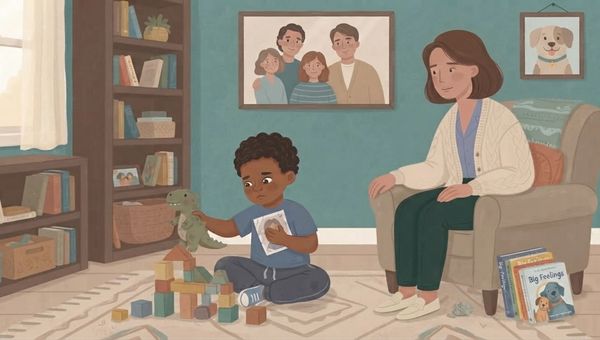
An illustrated scene in a muted, textured color palette shows a young boy of color with curly dark hair, wearing a blue t-shirt and grey sweatpants, sitting cross-legged on a patterned rug. He is holding a small, crinkled photo of an adult's face in one hand and a worn, small green plush dinosaur in the other, looking up with a concerned expression. A woman with short brown hair, wearing a cream-colored knitted cardigan and dark green pants, is seated in a beige armchair to the right, looking at the boy with a supportive expression and gently resting a hand on his shoulder. The setting is a cozy, muted-green bathroom with a pedestal sink, a round mirror, and a stack of books (one titled "Big Feelings") on a stool. A small, light-blue potty chair with a face on it sits in the foreground to the left. On the wall are two illustrated posters of the digestive and urinary tracts, with labels for "Coloin" and "Blagti". The overall style is warm, hand-drawn, and emotionally resonant.
Gabor Maté research

Trauma Isn't What Happened to Your Kid. It's What Happens Inside Them

Two kids can go through the exact same hard moment and come out completely differently, and that gap is the whole point.
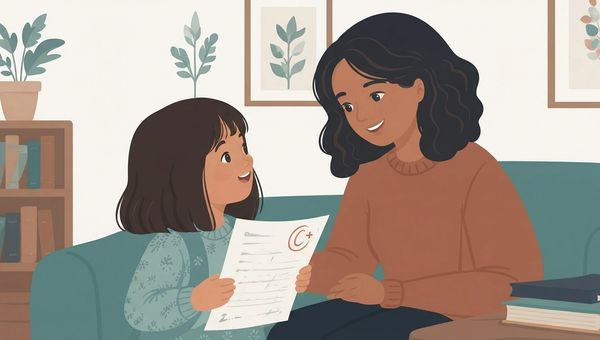
"A digital illustration shows a young girl with a patterned blue sweater holding up a paper with a red 'C+' grade. She looks with a joyful and expectant expression at an older woman, presumably her mother, who is sitting on a teal sofa and smiling warmly back at her. The mother has dark, wavy hair and wears a terracotta-colored sweater. They are in a cozy living room with a wooden bookshelf filled with books and plants to the left, and two framed botanical art prints on the wall behind them. A stack of books rests on a wooden side table to the right."
learned optimism

5 Signs Your Kid Handled That Bad Grade Better Than They Think

The exact words your kid uses after a bad grade might matter more than the grade itself.
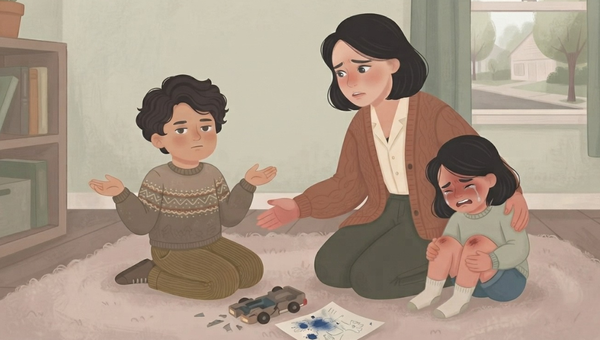
An illustrative scene in a soft, textured storybook style shows a family moment on a fluffy rug in a living room. A mother, with dark hair and wearing a rust-colored knit cardigan and green pants, kneels in the center. She looks with concern at a young boy on the left, who is also kneeling and gesturing with his hands upward in a shrug, wearing a patterned sweater and brown pants. The boy looks slightly defiant or confused. In front of them on the rug are the broken pieces of a small wooden toy vehicle and a crayon drawing of a blue figure. On the right, a younger girl, with dark hair, is sitting with her knees up, crying with tear-streaked cheeks, wearing a light-green sweater and socks. The mother has her right arm around the crying girl's shoulder and her left hand extended toward the boy. The background features a wooden bookshelf with books on the left, a window looking out onto a residential street on the right, and a soft, warm color palette of muted greens, browns, and creams. The overall mood is one of distress and conflict resolution. The lighting is diffused and gentle. A small, subtle artist's signature is in the bottom right corner.
callous-unemotional traits

When Your Child Seems to Lack Empathy: What "Callous-Unemotional Traits" Actually Means

The word you're searching for at 2am probably isn't the right one, and the actual research is more hopeful than it feels right now.
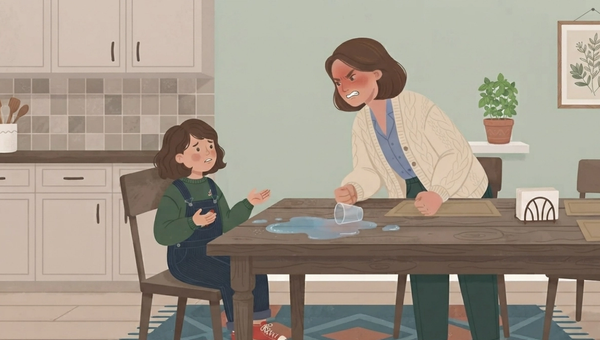
An illustrated scene in a warm, textured storybook style, depicting a tense domestic moment between a mother and her young daughter in a kitchen and dining area. A woman, with short brown hair and a flushed, angry face, wearing a cream knit cardigan over a blue shirt, is standing and leaning over a dark wood dining table, her fists clenched, looking furiously down at the girl. The girl, with wavy brown hair and wearing a green sweatshirt and denim overalls with a red patch, is sitting on a chair to the left, looking up at her mother with a pleading, worried expression, her hands open and palms up in a gesture of explanation or defense. Between them on the table, there is a large, spreading puddle of spilled water and a tipped-over, empty plastic cup. The background features light gray kitchen cabinets, a tiled backsplash, a counter with utensils, a window with a potted plant, and a framed botanical illustration on the wall. A patterned rug (blue, orange, cream geometric design) is on the light wood floor. The overall color palette is composed of muted greens, warm browns, and soft creams. A small star icon is in the bottom right corner. The lighting is even and gentle, contrasting with the emotional intensity of the figures. The style is illustrative, with visible brushstroke and fabric textures.
Shefali Tsabary research

Your Reaction to Your Kid Might Not Actually Be About What They Just Did

The fury over spilled water was never really about the water, and there are five specific ways it tends to show up.
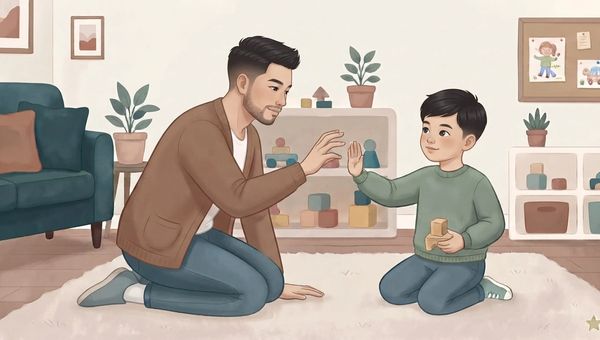
An illustration in a soft, textured storybook style depicting an Asian father and son on a fluffy rug in a cozy living room. The father, wearing a brown cardigan and jeans, is kneeling on the left, looking gently at the boy and extending a hand towards him with a gesture like a gentle tap or tickle. The son, wearing a green sweater and jeans, is kneeling on the right, smiling and raising his hand in a matching gesture, while holding a small wooden block in his other hand. In the background, there is a teal sofa, potted plants on a side table, shelves with various wooden and colorful toys, and a bulletin board with children's drawings. The overall atmosphere is warm and playful. A small stylized star icon is in the bottom right corner.
preschool aggression

My Kid Keeps Getting Hit at Preschool: What to Teach Besides "Tell a Grown-Up"

"Walk away" and "hit back" aren't the only two options. There's a third one research actually recommends.
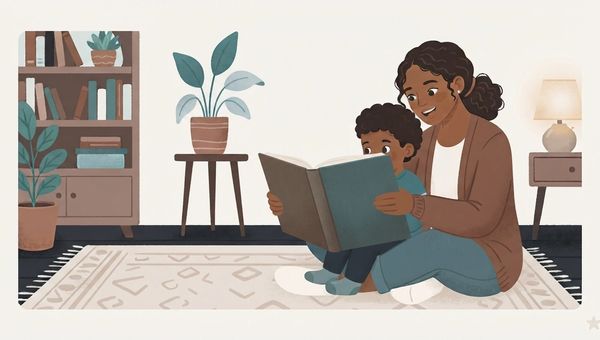
An illustration in a soft, textured storybook style depicting a Black mother and her young son sitting comfortably on a patterned rug in a living room. The mother, with her hair in a bun and wearing a brown cardigan and blue jeans, sits behind the boy, smiling warmly as they both look at an open, dark-green book held in their hands. The son, with curly hair and wearing a blue sweater, is nestled in her lap, also engaged with the book. In the background on the left is a tall, dark-wood bookshelf filled with books and a potted plant. To the right, a large potted plant sits on a wooden stand, and a lit table lamp rests on a small nightstand. The overall color palette is composed of warm, muted tones: creams, deep teals, terracotta, and soft browns. A small, stylized star icon is subtly placed in the bottom right corner.
children's books research

Why Books Are Such a Powerful Way to Teach Kids About Real Life

Your kid understands situations they've never lived through, and a lot of that understanding came from characters who lived through them first.
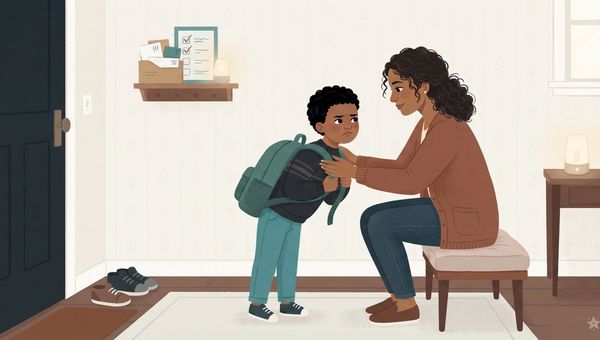
An illustration in a soft, textured storybook style depicting a moment of emotional connection in a home entryway. A young Black boy with curly hair and a distressed, reluctant expression stands facing the viewer, wearing a green backpack and a striped sweater. He is looking down and away from the adult. Seated on a cream-colored bench is an adult Black woman with dark curly hair, wearing a brown cardigan and jeans. She is leaning forward with a gentle, empathetic expression, holding the boy's shoulders and looking directly at him with a reassuring, listening posture.  The entryway features a dark front door on the left, with a pair of shoes on a mat nearby. On the wall is a wooden shelf with mail, a simple daily checklist, and a small glowing nightlight. A second small glowing lamp is on a side table on the right. The background wall has a subtle patterned wallpaper. The overall color palette is composed of warm, muted tones: creams, deep blues, terracotta, and soft browns. The lighting is warm and domestic. A small, stylized star icon is in the bottom right corner.
connection before correction

Why "You Hate It Right Now" Helps More Than Trying to Talk Them Out of It

Trying to talk your kid out of hating school rarely works. Naming that they hate it right now often does.
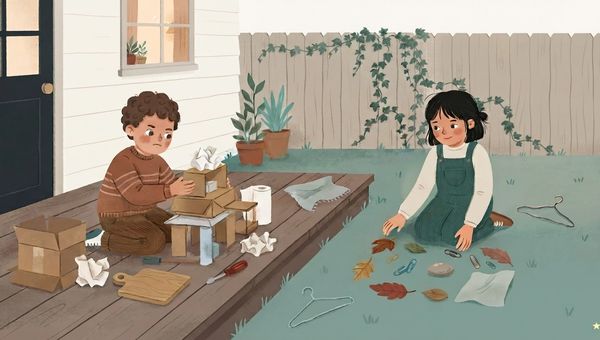
An illustration in a soft, textured storybook style depicting a backyard scene with two children. On the left, a boy with curly brown hair, wearing a striped sweater and brown corduroy pants, kneels on a wooden deck, focused on building a structure out of cardboard boxes, paper towels, screwdrivers, and other found objects. On the right, a girl with a black bob haircut and teal overalls sits cross-legged on the grass, carefully arranging a collection of leaves, paperclips, a stone, and fabric scraps into a pattern. Scattered around the children are various everyday items like paper bags, a cutting board, and metal hangers. The background features a white house with a window and a black door, potted plants, and a wooden fence covered in ivy. The lighting is soft and natural, and a small, stylized star icon is in the bottom right corner.
unstructured play

Why an Empty Afternoon Isn't Wasted Time

The clumsy, boring middle part of an unplanned afternoon isn't the problem. It's close to the entire point.
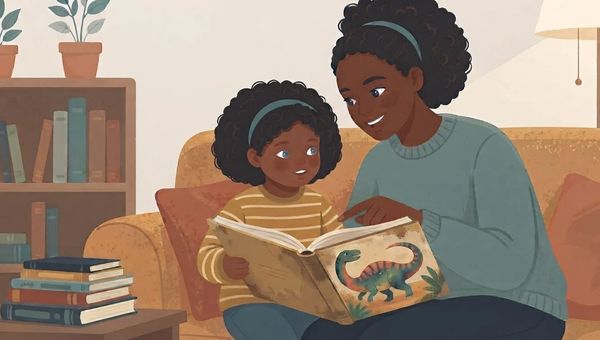
A warm, inviting illustration of a mother and daughter reading together on a sofa. The mother, a Black woman with dark curly hair pulled back with a blue headband and wearing a blue-grey sweater, is sitting on a mustard-yellow couch, smiling warmly. The daughter, a young Black girl with similar curly hair and a matching headband, is sitting beside her, looking at the book with a curious expression and wearing a striped yellow and cream shirt. They are holding an open, oversized picture book with a colorful, friendly illustration of a green and red dinosaur on the pages. The mother is pointing at something in the book with her right index finger.  The background shows a cozy living room. To the left is a wooden bookshelf filled with books and two potted plants. In the foreground, there is a small side table with a neat stack of books. To the right, a floor lamp with a cream shade stands near the sofa. The overall art style is clean, flat, and gentle, with a soft, warm color palette. The lighting is natural and comforting.
same book over and over

Why Does My Child Want the Same Book Over and Over? What Repetition Really Means

Reading the same dinosaur book for the 47th time? Good news: that "again!" is one of the smartest things your kid does.

Your subscription could not be saved. Please try again.
Your subscription has been successful.

Weekly parenting insights you'll actually use.

No spam. Just thoughtful ideas, expert tips, and stories that make a difference.

Protected by reCAPTCHA. Google's Privacy Policy and Terms of Service apply.