
It's the morning after the birthday party. The living room looks like a toy store exploded: a light-up robot, three plastic ponies, a slime kit that is already on the rug. By lunchtime, your child is playing with the cardboard box. Sound familiar? It's a good moment to ask what actually makes a gift for kids last.
More toys, less play
This isn't an anti-toy article. Toys are wonderful, and play is how young children learn. But research suggests that the number of toys matters more than we'd think.
In a 2018 study in Infant Behavior and Development, researchers at the University of Toledo, led by Carly Dauch, invited 36 toddlers aged 18 to 30 months to play in a room with either 4 toys or 16 toys. With fewer toys, children played with each one for longer and in more varied, creative ways. With 16, they hopped from toy to toy without going deep with any of them.
So when a new toy joins an already crowded shelf, it's often competing for a slice of attention that keeps getting thinner. The shiny new thing usually wins for a week. Then it joins the pile.
Things fade, experiences stick
Grown-up research offers a useful clue here. In a 2017 paper in the Journal of Consumer Research, Cindy Chan and Cassie Mogilner ran a series of studies on real gift exchanges between adults. They compared material gifts (things you keep) with experiential gifts (things you live through). Experiential gifts strengthened the relationship between giver and receiver more, largely because of the emotions people felt while actually using them. It worked even when the giver wasn't present for the experience.
These studies were done with adults, not children, so it's a clue rather than a proof. But the principle travels well. The gifts that matter most tend to be the ones that create moments, not just objects.
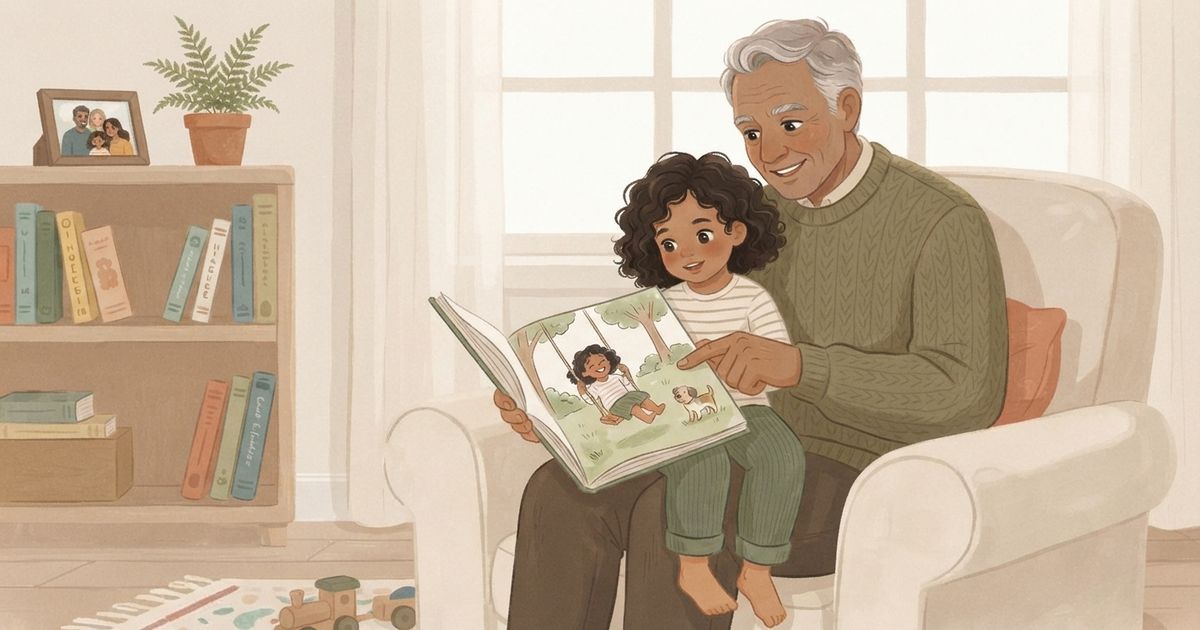
A book sits in an interesting middle spot. It's a thing you can hold, but its real value is the experience: being read to, curled up with someone you love, again and again. A personalized book pushes that further, because the experience is about the child. In a small study of toddlers, researcher Natalia Kucirkova and colleagues found that personalized books drew more smiles and laughs from children than comparable non-personalized ones. That's a lot of joy from something that doesn't need batteries.
How to choose a gift that stays
Whether you choose a book, a toy, or something else entirely, a few questions help separate the keepers from the clutter:
Will it invite time together? A gift that brings a parent, grandparent, or sibling into the activity tends to be used longer and remembered better.
Does it grow with the child? A toy that's thrilling at 3 is often forgotten at 4. A story about who they were at 3 becomes more precious at 10, and maybe even more at 30.
Is it about them, specifically? A generic gift says "I got you something." A personal one says "I thought about you." Kids notice.
Can it be revisited? Things that invite repetition, like a favorite book, a board game, or a family photo album, earn their space over years, not days.
Does it add a little meaning? A handwritten inscription on the first page, a date, a short note from the giver. These small touches are often what turns an object into a keepsake.
And a practical tip for relatives: if the toy shelf is overflowing, suggest rotating toys, putting some away and bringing them back later. The Toledo findings suggest fewer toys at a time can lead to deeper play, and "old" toys feel new again after a break.
How a story helps
A story is one of the few gifts that gets richer with use. Every reading adds a layer: a shared laugh, a question, a memory of who was on the couch that night. When the story is built around the child, it becomes a record of who they were at that age, their name, their interests, maybe their pet or best friend. Years later, that book can carry the feeling of being known and loved in a way few toys can.
Frequently Asked Questions
What is a meaningful gift for a child? A meaningful gift invites connection, reflects the child's real interests, and can be revisited over time. Books, shared experiences, and personalized keepsakes often outlast trendy toys in both use and memory.
Do kids have too many toys? Many do. One study found toddlers with 4 toys played longer and more creatively than toddlers with 16. Rotating toys and keeping fewer out at once can improve play quality.
Are personalized books good gifts for kids? They can be excellent gifts, especially for ages 1 to 8. Research suggests children engage more with personalized content, and the book becomes a keepsake that captures who they were at that age.
Sources
- Dauch, C., Imwalle, M., Ocasio, B., & Metz, A. E. (2018). The influence of the number of toys in the environment on toddlers' play. Infant Behavior and Development, 50. Link.
- Chan, C., & Mogilner, C. (2017). Experiential gifts foster stronger social relationships than material gifts. Journal of Consumer Research, 43(6). Link.
- Kucirkova, N., Messer, D., & Whitelock, D. (2013). Parents reading with their toddlers: The role of personalization in book engagement. Journal of Early Childhood Literacy, 13(4). Link.
Topics in this article
- gift for kids
- personalized gift
- personalized book vs toy
- too many toys
- meaningful gifts for children
- experiential gifts
- toy rotation
- birthday gift ideas
- keepsake gifts
- personalized book creation
- children's books
- positive parenting
QT
Quilloo Team
Bringing together child development research and thoughtful storytelling for parents.
Weekly parenting insights you'll actually use.
No spam. Just thoughtful ideas, expert tips, and stories that make a difference.