
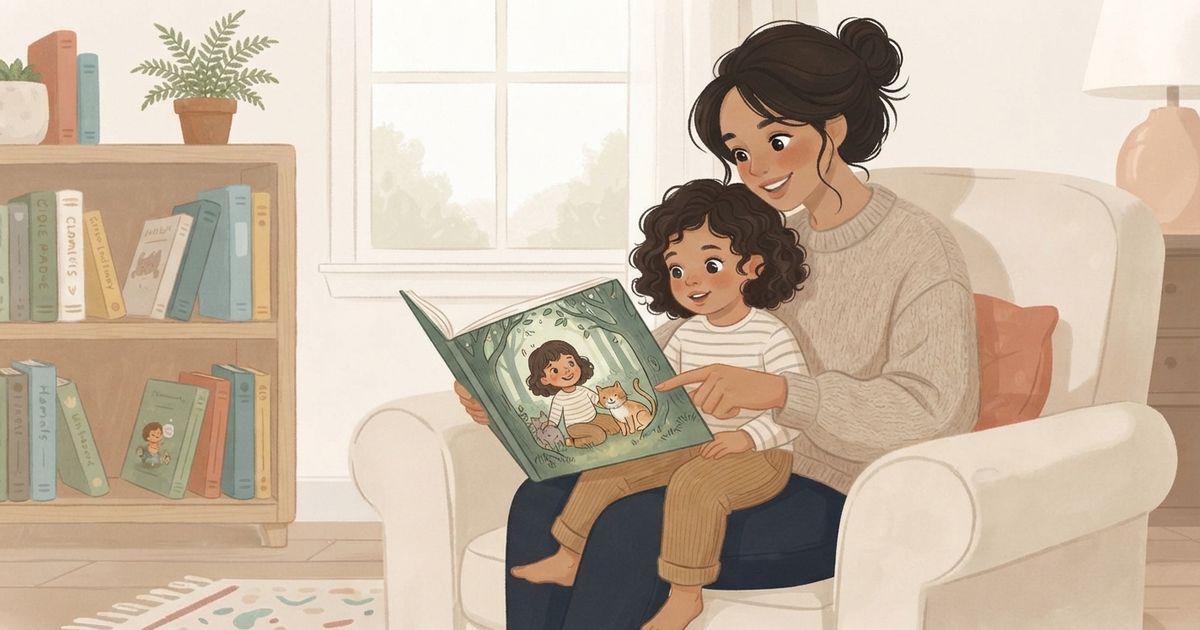
You're reading a bedtime story and, on a whim, swap the main character's name for your daughter's. She sits bolt upright. "That's ME!" Suddenly a book she's heard ten times is the most exciting thing that has ever happened. What is it about hearing their own name in a story that lights kids up like that?
A child's name is one of their first words
Long before your baby says "mama," they're already tuned in to their own name. In a classic 1995 study in Psychological Science, Denise Mandel, Peter Jusczyk, and David Pisoni played recordings of names to 4.5-month-old babies: their own name and three others. One of the other names had the same rhythm and stress pattern as the baby's name (think "Corey" and "Henry"). The babies still listened longer to their own name. At four and a half months, they couldn't understand a single sentence, but they knew the sound of "that's me."
Later research showed the name is more than a familiar sound. A 2010 study by Eugenio Parise and colleagues measured the brain activity of 5-month-olds and found that, after hearing their own name, babies paid more attention to objects shown to them than after hearing a stranger's name. Their name works like a spotlight: "Pay attention, this part is about you."
And in a 2005 Psychological Science study, Heather Bortfeld and colleagues found that 6-month-olds could use a familiar name, like their own, as an anchor to pick out the new word that came right after it in a stream of speech. For a baby trying to figure out where one word ends and the next begins, their name is a handy landmark. Not bad for a word they didn't even choose.
From "that's my name" to "that's my story"
That built-in name radar doesn't switch off as kids grow. It evolves. By the preschool years, hearing their name in a story does something new: it turns them from listeners into participants.
Researcher Natalia Kucirkova tested this with preschoolers. In a 2014 study in the Journal of Pragmatics, children around 3 years old were read a book with both a personalized section (including their name) and a non-personalized section. During the personalized parts, kids talked more, and for longer, often about themselves: "That's me!" "That's my dog!" In a related study in First Language, children aged about 3 to 4 learned new words better when those words appeared in the personalized parts of a book.
So the thrill isn't just vanity, although, fine, a little vanity is involved. It's attention, engagement, and a feeling of belonging to the story rather than watching it from the outside.
Getting the most out of their name
Pause right before it. "And then... Eli opened the magic door!" The tiny pause builds anticipation and lets them brace for the fun.
Point to it on the page. Preschoolers are often fascinated by the letters in their own name, and seeing it printed is a small literacy win.
Let them "read" it. Even kids who can't read yet can "read" their own name aloud when you get to it. Instant pride.
Mix in the people they love. Adding a sibling, grandparent, or best friend spreads the joy and makes the story a family affair.
Don't overuse it. A name in every single sentence starts to lose its sparkle. A few well-placed moments keep the magic.
With toddlers, a simple rhyme or song with their name works beautifully. Early grade-schoolers may enjoy spotting their name and, eventually, reading the whole sentence around it themselves.
How a story helps
A story that includes a child's name speaks directly to one of the earliest and strongest attention signals they have. It invites them in, keeps them engaged, and gives them a reason to talk, ask questions, and connect the story to their own life. For parents, it's also a warm opening to deeper conversations: "What would you do if you were really in that story?" Hearing their name in a book tells a child, in the simplest possible way, that there's room for them in the world of stories.
Frequently Asked Questions
When do babies recognize their own name? Research suggests babies can recognize the sound of their own name by around 4.5 months, even distinguishing it from names with a similar rhythm. By about 5 to 6 months, they use it to guide attention and understand speech.
Why do kids like books with their name in them? Their name is a powerful attention signal from infancy. In a personalized story, children tend to talk more, engage more, and in some studies, learn new words better.
Is it good to put my child's name in stories? Yes, in moderation. Using their name in a few key moments boosts engagement and excitement. Mixing in family members and familiar places makes it even more meaningful.
Sources
- Mandel, D. R., Jusczyk, P. W., & Pisoni, D. B. (1995). Infants' recognition of the sound patterns of their own names. Psychological Science, 6(5). Link.
- Parise, E., Friederici, A. D., & Striano, T. (2010). "Did you call me?" 5-month-old infants own name guides their attention. PLoS ONE. Link.
- Bortfeld, H., and colleagues (2005). Mommy and me. Psychological Science. Link.
- Kucirkova, N., Messer, D., & Sheehy, K. (2014). The effects of personalization on young children's spontaneous speech during shared book reading. Journal of Pragmatics, 71. Link.
- Kucirkova, N., Messer, D., & Sheehy, K. (2014). Reading personalized books with preschool children enhances their word acquisition. First Language, 34(3). Link.
Topics in this article
- child's name in a story
- name recognition in babies
- personalized stories
- baby language development
- self-reference
- Natalia Kucirkova
- early literacy
- preschool reading
- personalized book creation
- children's books
- positive parenting
QT
Quilloo Team
Bringing together child development research and thoughtful storytelling for parents.
Weekly parenting insights you'll actually use.
No spam. Just thoughtful ideas, expert tips, and stories that make a difference.