
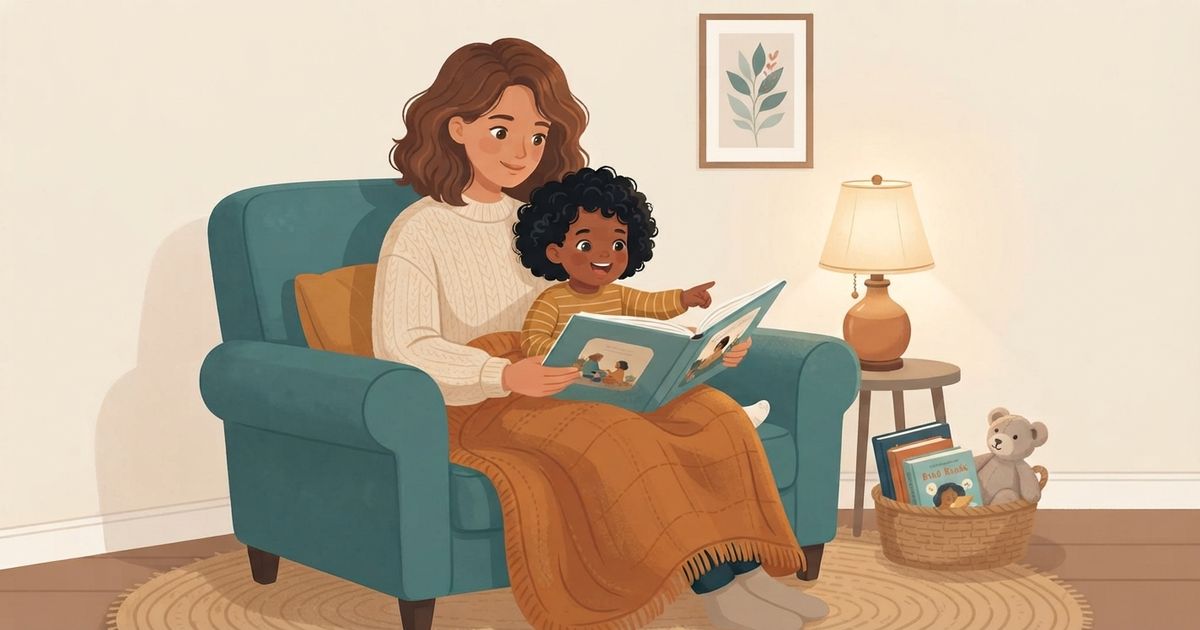
Some kids sprint to the couch at 7 p.m. because they know what's coming: the reading blanket, the lamp, and a parent who isn't going anywhere. Other kids treat books like broccoli. The difference usually isn't the child. It's whether reading feels like a ritual or like one more item on the list.
The math behind one book a day
A daily reading routine sounds nice. It also adds up to something surprisingly concrete. In a 2019 study published in the Journal of Developmental and Behavioral Pediatrics, Jessica Logan and her team at The Ohio State University worked with a public library to pull 60 of the most-borrowed board books and picture books for young children, then literally counted the words inside them.
Their estimate: a child who is read one book a day hears roughly 290,000 more words by age five than a child who is never read to. At five books a day, the gap climbs to about 1.4 million words. Logan's point was that book language is richer than everyday talk. "Put your shoes on" doesn't teach "enormous," "whispered," or "reluctantly." Stories do.
The good news hiding in that math: you don't need marathon sessions. One book, most days, is already a meaningful head start.
What turns a habit into a ritual
A habit is something you do. A ritual is something you look forward to. Kids feel the difference immediately, and a few ingredients make it happen:
The same time and place. After bath, before lights out, or right after dinner. Predictability is the point. Sleep researcher Jodi Mindell found that the more consistently families kept a bedtime routine, the better young children slept, and reading is one of the most common pieces of that routine.
A small signal. A specific lamp, a "reading blanket," a little song that means "book time." Signals do the transition work so you don't have to.
Your child gets a vote. Letting them pick the book, or choose between two, gives them ownership. Ownership is the secret sauce of anything a four-year-old wants to repeat.
Your full presence. Phone away, voice in, silly accents optional but encouraged. The ritual is less about the book than about the ten minutes of you.
A closing line. "The end, and I love you." "See you in the morning, adventurer." Same words every night. Kids treasure a predictable ending.
What it looks like at different ages
Babies (0 to 12 months): Short and sensory. Board books with faces, high-contrast pictures, your voice. If they chew the book, the ritual is working.
Toddlers (1 to 3): They'll want the same three books on loop, point at pictures, and sometimes wander off mid-page. That's fine. Keep going. They're still listening from behind the couch.
Preschoolers (3 to 5): Now you can pause and ask, "What do you think happens next?" Longer picture books work, and they'll start "reading" familiar ones back to you from memory.
Early readers (5 to 8): Take turns. They read a page, you read a page. Keep reading aloud even after they can read alone, because a story they can understand is usually well above a story they can decode.
Why the ritual stalls (and how to restart it)
The most common way parents accidentally kill the ritual is by turning it into a lesson. Quizzing ("What letter is that? What color?") on every page makes story time feel like a test. Save most questions for after.
The second is guilt about missed nights. A skipped evening doesn't break anything. Just pick it back up tomorrow, same lamp, same blanket. If your child has lost interest, try moving the time, adding a new book about something they're obsessed with right now (dinosaurs, garbage trucks, their own birthday), or letting them read to a stuffed animal while you listen.
How a story helps
A story turns reading from an activity into a relationship. When a child waits all day for "our book time," what they're really waiting for is a guaranteed moment of closeness with a parent, anchored by a familiar voice and a world you enter together. Stories that connect to your child's real life, their pet, their neighborhood, a challenge they're facing, make that anticipation even stronger, because the book feels like it belongs to them. That sense of belonging is what keeps a child asking for the ritual long after they can read on their own.
Frequently Asked Questions
How many books should I read to my child a day? Even one book a day adds up to hundreds of thousands of extra words heard by kindergarten. More is great, but consistency matters more than volume. Pick a number you can sustain most days.
What age should you start a reading routine with a baby? You can start from birth. Babies benefit from your voice, rhythm, and closeness long before they understand the words. Short sessions with board books are perfect.
What to do if my toddler won't sit still for a book? Let them move. Toddlers often listen while playing nearby. Choose short, interactive books, keep sessions brief, and stop before they get frustrated so reading stays a happy experience.
Sources
- Logan, J. and colleagues, The Ohio State University (2019). "Million word gap" study on words heard through shared book reading. Journal of Developmental and Behavioral Pediatrics. No free public link found for the paper; Ohio State news summary.
- Mindell, J. A., Li, A. M., Sadeh, A., Kwon, R., & Goh, D. Y. (2015). Bedtime routines for young children: A dose-dependent association with sleep outcomes. Sleep, 38(5). Link.
Topics in this article
- daily reading routine
- reading ritual
- reading aloud
- million word gap
- Jessica Logan
- early literacy
- bedtime stories
- toddler reading
- personalized book creation
- children's books
- positive parenting
QT
Quilloo Team
Bringing together child development research and thoughtful storytelling for parents.
Weekly parenting insights you'll actually use.
No spam. Just thoughtful ideas, expert tips, and stories that make a difference.