Quilloo

Posts tagged “attachment-based parenting”

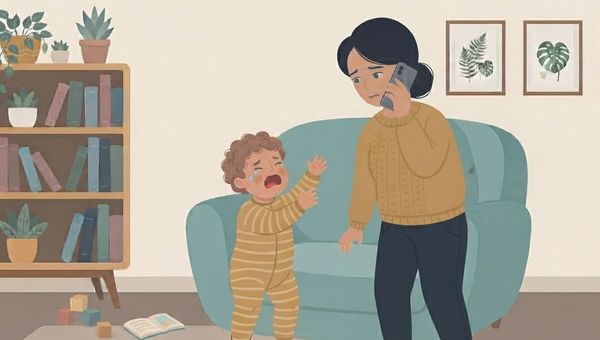
A digital illustration shows a worried mother standing by a teal sofa, talking on her smartphone while looking down with concern at her toddler in striped pajamas who is standing and crying with outstretched hands. The living room features a bookshelf filled with books, plants, and framed botanical prints on the wall.
separation anxiety

Separation and Alarm: Why Distance Feels So Big to a Young Child

A tone of voice, a distracted look, a few minutes in another room: young children feel distance deeply. Gordon Neufeld explains the alarm behind many tough moments, and three ways to soften it.
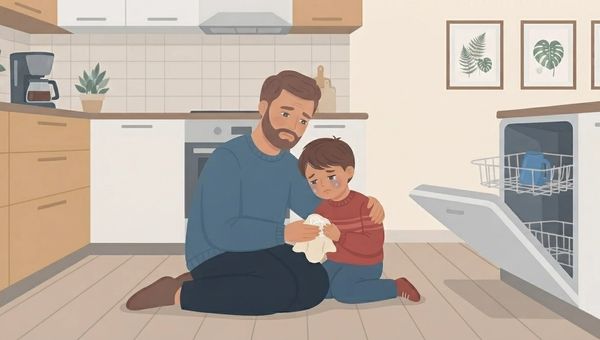
A digital illustration in a soft, flat vector art style depicts a kitchen scene where a father with a beard, wearing a blue sweater and dark pants, sits on the wooden floor and gently comforts his young son, who has dark hair and a red sweater, as he cries. The father has his arm around the boy and holds a cloth. Next to them on the right, an open dishwasher has a blue cup visible inside its top rack. The kitchen background includes white tiled walls, upper and lower wooden cabinets, a coffee machine, potted plants, and framed botanical prints on the wall. The color palette consists of warm earth tones, soft blues, and muted greens, creating a calm and supportive atmosphere.
tears of futility

Tears of Futility: Why a Good Cry Can Help Your Child Move On

When a child sobs over the wrong cup, there may be more going on than meets the eye. Gordon Neufeld's tears of futility explain how crying helps kids adapt, and how parents can simply stay close.

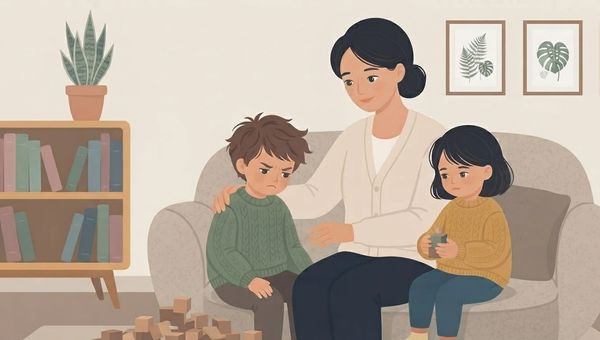
A woman in a cream cardigan comforts a scowling boy in a green sweater on a beige sofa. To their right, a quiet girl in a yellow sweater holds a wooden block. A bookshelf with books and a plant sits to the left, and three framed botanical prints hang on the wall. Wooden blocks are scattered on the floor. The illustration has a calm, muted aesthetic.
frustration and aggression

Frustration and Aggression: What Gordon Neufeld Sees Behind Hitting and Lashing Out

Behind a flying block or a shove, Gordon Neufeld sees frustration looking for an exit. Understanding the traffic circle of frustration helps parents respond to what lies beneath the outburst.

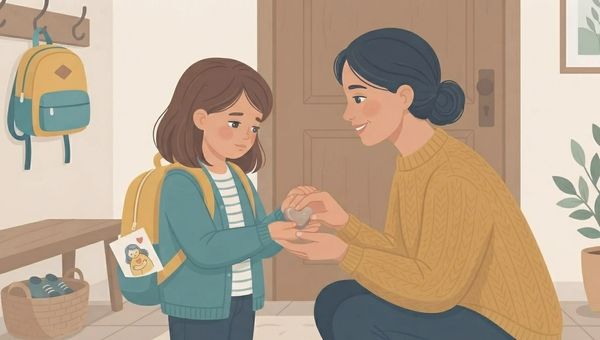
A digital illustration in a soft, flat vector art style depicts a hallway scene where a woman crouches down to give a small smooth stone to her young daughter, who is wearing a school backpack. The girl has a slightly sad expression while looking at the stone in her hands. The hallway features a front door, a wall hook with another backpack, a bench, a basket of shoes, and a potted plant. The color palette consists of warm earth tones, soft blues, and muted greens, creating a tender and supportive atmosphere.
bridging the divide

Bridging the Divide: Gordon Neufeld's Way to Make Goodbyes Easier

Goodbyes get easier when there is a bridge across them. Gordon Neufeld's idea of bridging the divide offers three simple planks: connect in the morning, send something to hold, and reunite with joy.

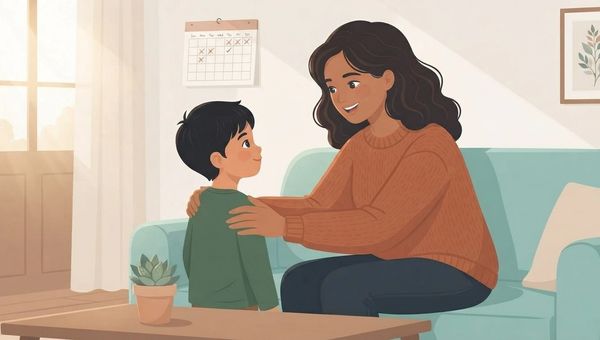
An illustration in a cozy, sunlit living room shows a mother kneeling or sitting slightly behind a young boy, gently placing both hands reassuringly on his shoulders. The mother, with dark wavy hair and a rust-colored knit sweater, looks down at him with a warm, reassuring smile. The young boy, with short dark hair and a green long-sleeved shirt, stands facing her, looking up at her with a calm expression. They are positioned in front of a soft teal sofa. On the wall behind them, a simple calendar hangs, and a framed botanical art print is visible. In the foreground, a wooden coffee table holds a small potted succulent. Soft natural light streams in from a window on the left, creating a warm, comforting atmosphere. The illustration style is flat, modern, and cozy.
caring alpha

The Caring Alpha: Why Kids Feel Safer When Parents Lead With Warmth

Children often feel safest when someone warmly takes the lead. Gordon Neufeld's idea of the caring alpha explains why, and offers three simple phrases that help your child rest in being looked after.

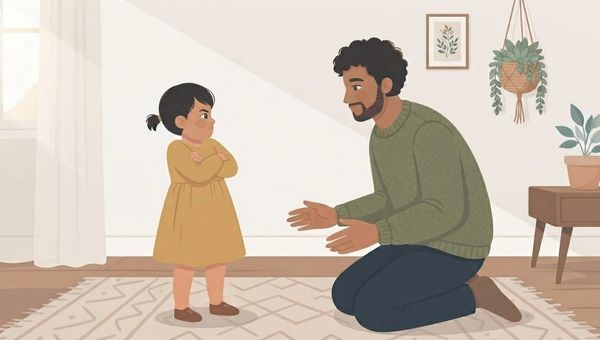
An illustration in a cozy, sunlit living room shows a father kneeling on a patterned rug, facing his young daughter who is standing with her arms crossed and a stubborn expression. The father, with short dark curly hair, a beard, and a green knit sweater, has his hands open in a welcoming, gentle gesture as he looks at her calmly. The little girl, with short dark hair in pigtails and a mustard-yellow dress, stands with a firm, resistant posture. In the background, a white wall features a framed botanical print and a hanging macramé plant holder with a succulent, while a small side table holds a potted plant on the right. Soft natural light streams in from a window on the left, creating a warm and comforting atmosphere. The illustration style is flat, modern, and cozy.
counterwill

Counterwill: Why Kids Say No (and What Gordon Neufeld Suggests You Do)

Your child says no to the very thing she wanted a second ago. Gordon Neufeld calls it counterwill, an automatic resistance to feeling forced, and four small shifts can ease the daily standoffs.

Your subscription could not be saved. Please try again.
Your subscription has been successful.

Weekly parenting insights you'll actually use.

No spam. Just thoughtful ideas, expert tips, and stories that make a difference.

Protected by reCAPTCHA. Google's Privacy Policy and Terms of Service apply.