
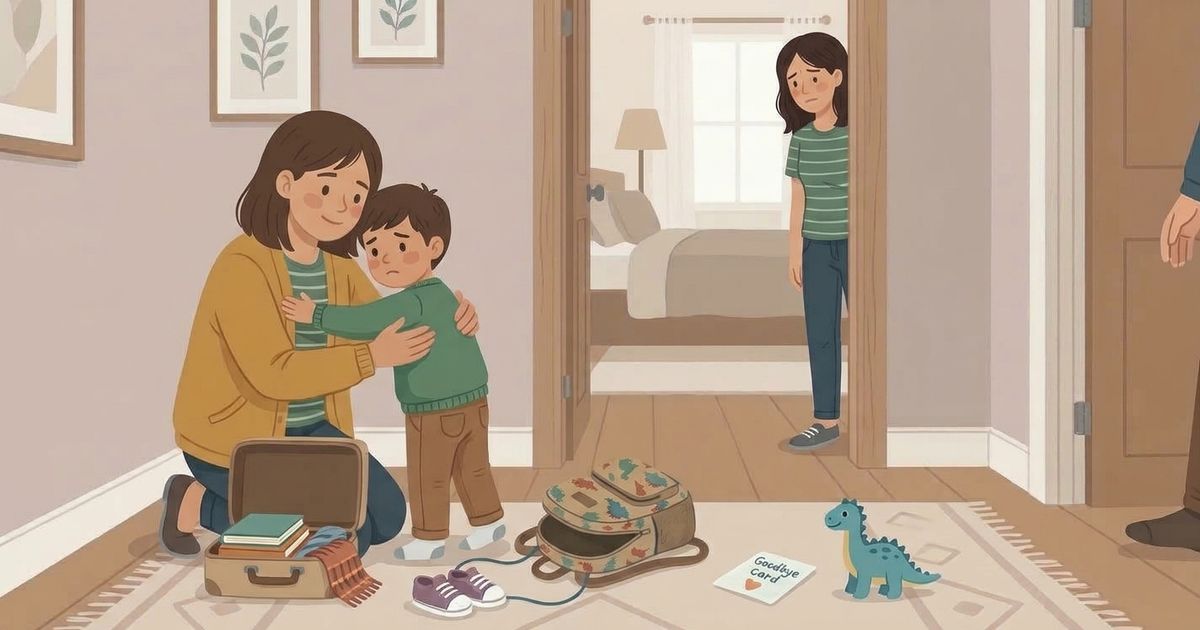
For two years, Maria has known exactly how your son likes his toast cut, which song stops the bath-time protest, and where the blue dinosaur hides. Now she's moving on, and you're dreading the day your child looks for her at the door and she isn't there.
When a nanny or babysitter leaves, it's normal for a child to feel sad, clingy or out of sorts. It means the relationship mattered. What helps most is an honest, age-appropriate heads-up, a real goodbye instead of a disappearing act, and plenty of comfort and routine while your child warms up to whoever comes next.
Why this goodbye can hit hard
Young children don't just get used to a caregiver. They build a relationship of trust with them. Child development researchers have long described how babies and toddlers can form attachments, meaning deep bonds of trust and comfort, with several caring adults, not only parents. A nanny who feeds, soothes and plays with your child every day is often one of those people.
Research on childcare teachers gives a glimpse of why changes matter. In a 1993 study in Early Childhood Research Quarterly, psychologists Carollee Howes and Claire Hamilton followed young children in childcare and found that changes in their primary teachers, and in their relationships with those teachers, were linked with changes in how socially competent the children were with peers. It's an older study about childcare centers rather than nannies at home, so treat it as a clue rather than a direct answer. Zero to Three, the national early childhood organization, also emphasizes continuity of care, keeping the same caregivers for a long time, because close relationships take time to grow.
None of this means a caregiver change will harm your child. Caregivers change in almost every family. It simply means the goodbye deserves care.
What your child may feel (and show)
Depending on age, a child might:
- Look for the caregiver at the usual time, or go to the door when the bell rings
- Become clingier with you, or protest more at separations
- Have a few rough nights or regressed behaviors
- Act angry or cool toward a new caregiver at first
- Ask "Where's Maria?" over and over, even after you've explained
Older preschoolers may also wonder whether they did something to make the caregiver leave. A simple, clear answer helps: "Maria got a new job closer to her family. It's not because of anything you did. She loved taking care of you."
How to help them say goodbye
Tell them ahead of time, at their level. A 2-year-old needs only a few days' warning, linked to something concrete ("After three sleeps, Maria's last day"). A 5-year-old can handle a week or two, with a calendar to cross off.
Plan a real goodbye. Sneaking away to avoid tears tends to backfire, because the child is left with a mystery instead of an ending. A last afternoon together, a goodbye card, a photo of the two of them, or a special outing gives the relationship a clear and loving close.
Let feelings be big. Your child may cry, refuse to hug, or act silly at the goodbye. All of that is okay. You can name it: "You're sad that Maria is leaving. I'm sad too. We'll miss her."
Keep a link if it's possible. If the caregiver is open to it, a postcard, a video call, or a visit months later can show your child that people we love don't vanish just because they don't come every day. Only promise what you know will happen.
Protect the routines. The toast, the bath song, the dinosaur's hiding place. Pass them on to the next caregiver, so your child's day still feels like their day.
Welcoming the next caregiver
New relationships need time. In a 2018 study of 104 toddlers starting childcare in Vienna, a team led by researcher K. Ereky-Stevens tracked how secure toddlers felt with their new caregivers over four months. Attachment security was higher when caregivers were sensitive to the whole group of children, not only during one-on-one moments. It's one study of center care, not home care, but the hopeful message is clear: young children can build new, secure bonds.
You can help by overlapping the two caregivers for a few days if possible, staying nearby for the first few sessions, and letting your child show the new person "how we do things." Don't worry if your child resists at first. Protest is often loyalty to someone they loved, not a sign the new person isn't right.
If sadness, sleep trouble or clinginess continues for more than a few weeks, or seems to be getting worse, check in with your pediatrician.
How a story helps
A story about a child whose favorite babysitter moves away gives your child a gentle way to understand a goodbye. They can watch a character miss someone, keep a memory close, and slowly open up to a new caregiver. Stories like this give children words for missing someone and show that love and memories stay even when people move on. Reading it together in the days before and after the last day can make the change feel less like a sudden loss.
FAQ
Is it normal for my child to be sad when the nanny leaves? Yes. It shows your child formed a real bond. Sadness, clinginess or a few rough nights are common and usually ease within weeks.
Should I tell my toddler the babysitter is leaving? Yes, a short and simple heads-up helps. For toddlers, a few days' notice linked to sleeps or a calendar works better than weeks of warning.
Should the nanny say goodbye in person? If possible, yes. A clear, warm goodbye usually helps more than slipping away to avoid tears.
How long does it take a toddler to adjust to a new caregiver? It varies, but many children settle over a few weeks to a few months. Overlapping caregivers and keeping routines the same can help.
Sources
- Howes, C., & Hamilton, C. E. (1993). The changing experience of child care: Changes in teachers and in teacher-child relationships and children's social competence with peers. Early Childhood Research Quarterly, 8(1), 15-32. Link
- Ereky-Stevens, K., Funder, A., Katschnig, T., Malmberg, L.-E., & Datler, W. (2018). Relationship building between toddlers and new caregivers in out-of-home childcare: Attachment security and caregiver sensitivity. Early Childhood Research Quarterly, 42, 270-279. Link
- Tam, S. (2010). Primary caregiving and continuity of care. Zero to Three. Link
Topics in this article
- child sad when nanny leaves
- babysitter leaving
- saying goodbye
- new caregiver
- continuity of care
- attachment
- toddler separation
- childcare transitions
- personalized book creation
- children's books
- positive parenting
QT
Quilloo Team
Bringing together child development research and thoughtful storytelling for parents.
Weekly parenting insights you'll actually use.
No spam. Just thoughtful ideas, expert tips, and stories that make a difference.