You're standing in front of a long list of options, and it's not clear where to start. Fear of the dark? Potty training? A new sibling who hasn't even arrived yet? A birthday? With so many possible directions, it's easy to feel like you're just picking at random. There's actually a better way to think about it.
The term pediatricians use that parents rarely hear
In medicine there's a concept called anticipatory guidance. It's essentially what a pediatrician does during a checkup. Not just addressing what's happening right now, but preparing the parent for what's coming in the next few months, before it even starts. The idea is that information arriving right before you need it gets absorbed and applied far better than general information that shows up without any clear timing.
A trial that showed exactly how well this works
A controlled study funded by the U.S. National Institute of Child Health and Human Development tested this directly, with 168 first-time pregnant women. The women were randomly assigned to one of three groups. One group received a baby book with anticipatory guidance content woven into it (information on injury prevention, development, and parenting, timed to match the child's expected age). A second group received a regular book without that content. A third group received no book at all. The mothers' knowledge was measured several times, starting in the third trimester of pregnancy and continuing until the child was 18 months old.
The result was clear. Mothers who received the book with anticipatory guidance scored significantly higher on knowledge, statistically speaking, than both other groups, across the entire follow-up period. In other words, it's not just that books help in general. The study showed that books with information timed to match what's coming soon help substantially more than a generic book or no book at all.
So how do you actually choose
That basically comes down to three simple questions worth asking before picking a topic.
What's coming up soon, not just what's happening now. If a new sibling is on the way but hasn't arrived yet, that's exactly the time to prepare your child, not after. If starting preschool is approaching, it's better to begin two or three weeks ahead, not on day one.
What's the small daily friction that keeps repeating. Sometimes the right topic isn't a big event at all, but something small that happens every week, like struggling to share a toy or having a hard time separating at daycare drop-off.
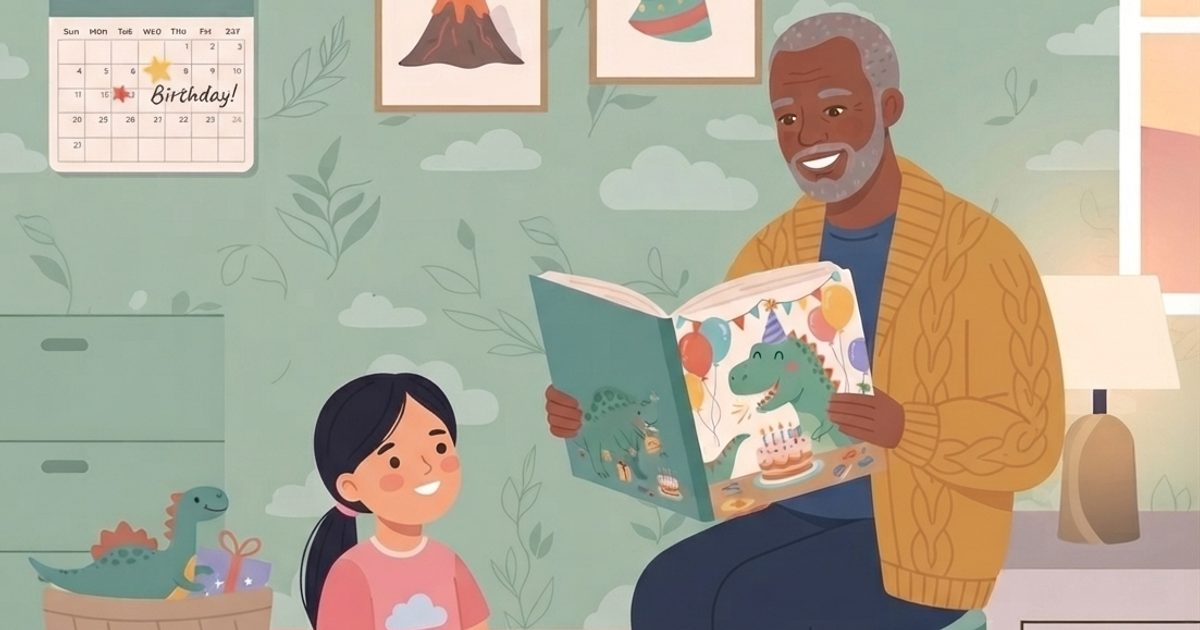
What is your child currently obsessed with. Dinosaurs, space, princesses, whatever it is. A story that weaves in their current passion tends to land better, even when the "serious" topic underneath is something else entirely.
Where Quilloo fits in
Because timing matters this much, Quilloo lets you create a new story the moment it's relevant, not just once every few months when you happen to buy a new book. If something small happened this week, a conflict with a friend, a new fear, an upcoming change, you can create a story about it right now, exactly when your child needs it most, instead of waiting until you happen to get to a bookstore.
Frequently Asked Questions
How far ahead of an event should I start preparing my child through a story? It depends on the event, but generally one to three weeks ahead gives enough time to sink in without being too far removed from your child's memory.
What if several topics feel relevant at the same time? It's better to focus on one topic at a time. Too many messages at once can confuse more than they help.
Should I choose a topic based on what worries the parent or the child? Always the child. A parent can be worried about something the child hasn't even noticed, and vice versa.
What if I'm not sure which topic is right for right now? Just pay attention to the past week. What kept coming up, what your child asked about, what they flinched at. The answer is almost always already there.
Want to create a story about exactly what's going on with your child this week?
Topics in this article
QT
Quilloo Team
Bringing together child development research and thoughtful storytelling for parents.
Weekly parenting insights you'll actually use.
No spam. Just thoughtful ideas, expert tips, and stories that make a difference.