
Blog

An illustration of a mother and toddler sitting on a bathroom floor. The mother, with short ginger hair, wears a cream sweater and patterned light-blue pajama pants. She holds a Black toddler in her lap, who is also wearing a matching patterned light-blue onesie. They are looking at each other, smiling.  Next to them is a small stool with a stack of books, a basket of towels, potted plants on a windowsill, a sink, and a toilet. The style is gentle and illustrated, with warm colors.
attachment-based potty training

The Attachment-Based Approach to Potty Training

This approach treats the relationship as the foundation potty training is built on, not a separate thing to protect while training happens.
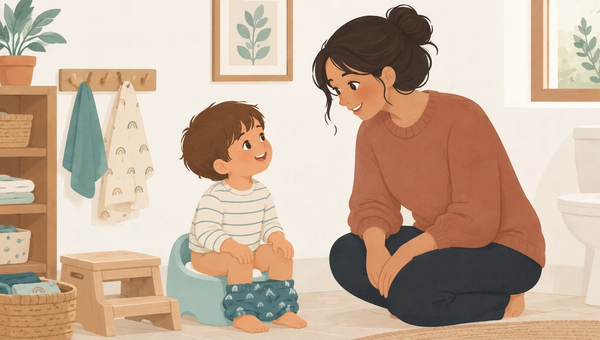
A mother gently supports her toddler during Montessori-inspired toilet learning in a warm, calm bathroom, with a child-sized potty, step stool, baskets, towels, and natural botanical decor.
Montessori potty training

The Montessori Approach to Potty Training

Montessori educators don't call it potty training. The word they use instead says a lot about the whole approach.
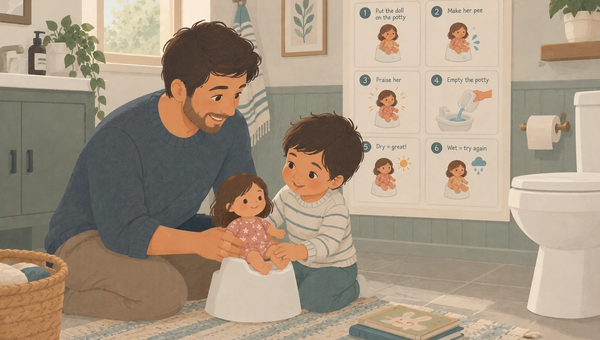
A father and young boy practice toilet training with a doll on a small potty in a cozy bathroom, while an illustrated step-by-step chart shows the doll practice routine. The warm pastel scene emphasizes learning through modeling, repetition, and positive encouragement.
Azrin and Foxx method

The Azrin and Foxx Method: Potty Training in Less Than a Day

A doll that can "wet" itself is doing more work in this method than it looks like at first glance.

A caregiver gently supports a baby over a small potty in a cozy, softly lit bathroom, illustrating elimination communication and infant potty training.
elimination communication

Elimination Communication: The Approach That Starts Before Your Baby Can Walk

Some families start "potty training" before their baby can even sit up unsupported, and it's not as unusual globally as it sounds.
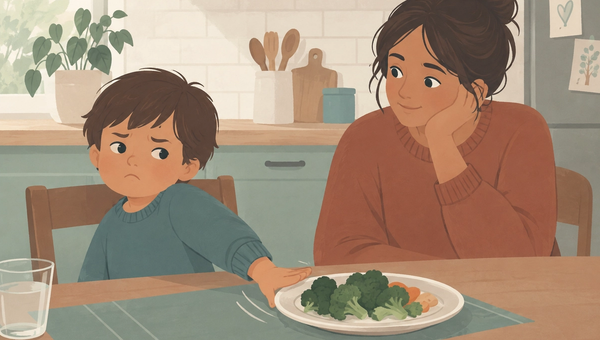
A child pushes away a plate of broccoli at the dinner table while their mother watches calmly, illustrating the challenges of introducing new foods to children.
picky eating

Why It Takes 8 to 15 Tries Before Your Kid Accepts a New Food

The food you crossed off the list after try number three might have needed twelve more chances.

A 2D flat vector illustration of a warm, safe indoor scene in a child's bedroom. An adult father, wearing a muted green sweater and dark pants, kneels on a cloud-patterned rug and is giving a warm, enveloping hug to his young daughter, who has curly brown hair and is wearing a brown dress. The daughter is nestled securely in his embrace, looking up at him with a peaceful and trusting expression. They are positioned next to a low wooden coffee table. On the table rests a closed, softbound children's book and a clear glass of water. In the background is a twin bed with moon-and-star patterned bedding, a canopy, and several plush animal toys, including a unicorn. The walls are decorated with framed animal art prints (bears, owls) and a pennant banner that reads "Dream Big". A distinctive star-shaped floor lamp stands in the corner, casting a soft, warm glow. The overall atmosphere is intimate, caring, and secure.
Shefali Tsabary research

The Feigner: When "Everything's Fine" Becomes the Whole Strategy

The bright smile and quick exit from a public meltdown might be managing the audience more than the actual moment.
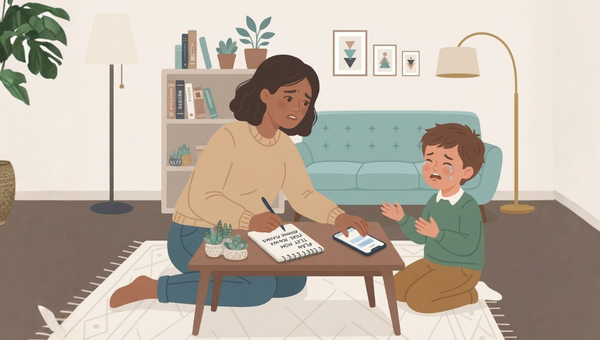
A 2D flat vector illustration in a warm corporate art style. An adult woman with dark curly hair and a concerned expression sits on a light-colored rug in a cozy living room, writing in a notebook that says "PLAN: TEXT MOM". A crying young boy with brown hair and a green sweater kneels next to her, gesturing with his hands. The room features a light blue sofa, a bookshelf filled with books and plants, a floor lamp, and wall art.
Shefali Tsabary research

The Fixer: When Rescuing Your Kid Becomes the Problem

Solving your kid's problem before they've finished describing it might be quieting your anxiety more than helping them.Solving your kid's problem before they've finished describing it might be quieting your anxiety more than helping them.
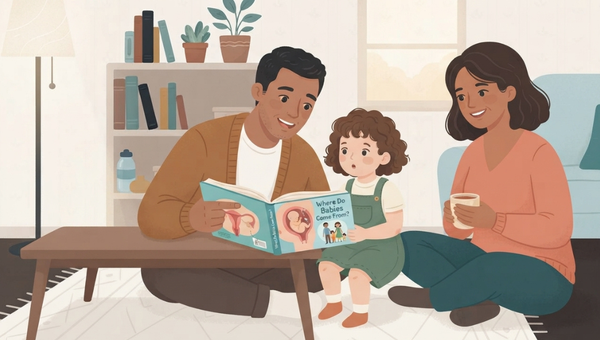
An illustrated family scene in a warm, textured digital art style, depicting a Black man and a Black woman sitting on a patterned rug in a cozy living room, reading an open picture book with a young curly-haired child. The man, on the left, wears a brown cardigan and is holding the book, which is open to pages with illustrations of a human uterus and a developing fetus. The book cover title, clearly visible in English, reads: "Where Do Babies Come From?". The child sits in the middle, wearing green overalls and looking intently at the book with a curious expression. The woman, on the right, wears an orange-pink sweater and is sitting cross-legged, holding a mug of coffee and smiling warmly at the book. The background includes a wooden bookshelf filled with books and potted plants, a window, a floor lamp, and a light blue armchair. The entire composition has a gentle, inviting, and educational atmosphere. A small, subtle star icon is in the bottom right corner.
talking to kids about bodies

How to Talk to Your Kid About Bodies and Where Babies Come From

The bath time question every parent dreads eventually gets asked. Here's how to answer it without freezing up.
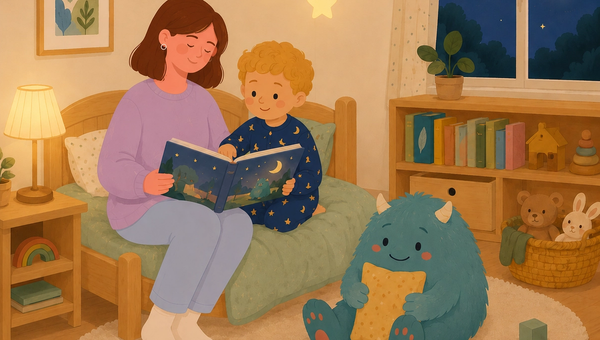
A mother reads a bedtime story with her son in a cozy bedroom while a friendly fluffy monster hugs a pillow nearby, creating a warm, comforting atmosphere under the moonlit night sky.
positive parenting

The Playground Versus the 10 Minutes Before Bed

Sometimes 10 focused minutes matter more than an entire hour at the playground.

Your subscription could not be saved. Please try again.
Your subscription has been successful.

Weekly parenting insights you'll actually use.

No spam. Just thoughtful ideas, expert tips, and stories that make a difference.

Protected by reCAPTCHA. Google's Privacy Policy and Terms of Service apply.