Your child grabs a toy from a friend at a birthday party, and you feel your face heat up. "You need to share!" you say, for the umpteenth time. They nod. And next time, they do the exact same thing. So maybe words aren't enough, and maybe what actually works is letting them watch someone else do it right.
This effect has actually been measured
A meta-analysis reviewing decades of research (Mares and Woodard, 2005, published in Media Psychology) found that children exposed to more prosocial content, meaning content showing sharing, helping, and kindness, showed more of that same behavior themselves. The most interesting finding wasn't just that it works, but when it works best. When positive behavior is shown explicitly, not as a subtle hint between the lines. A character who genuinely helps, genuinely shares, genuinely says "let's do this together," leaves a much deeper mark than a general idea of "being good."
Why "the moral of the story" sometimes backfires
The same researchers found something in a separate study worth paying attention to. Young children tend to interpret a story's moral too literally. If a character in a story learns to "be kind to a three-legged dog," some kids took away that they should be kind specifically to three-legged dogs, not that the general idea was kindness toward anyone who's struggling. In other words, the more concrete and close to the child's actual situation the example is, the better the odds they'll translate it correctly.
The moment shared reading changes everything
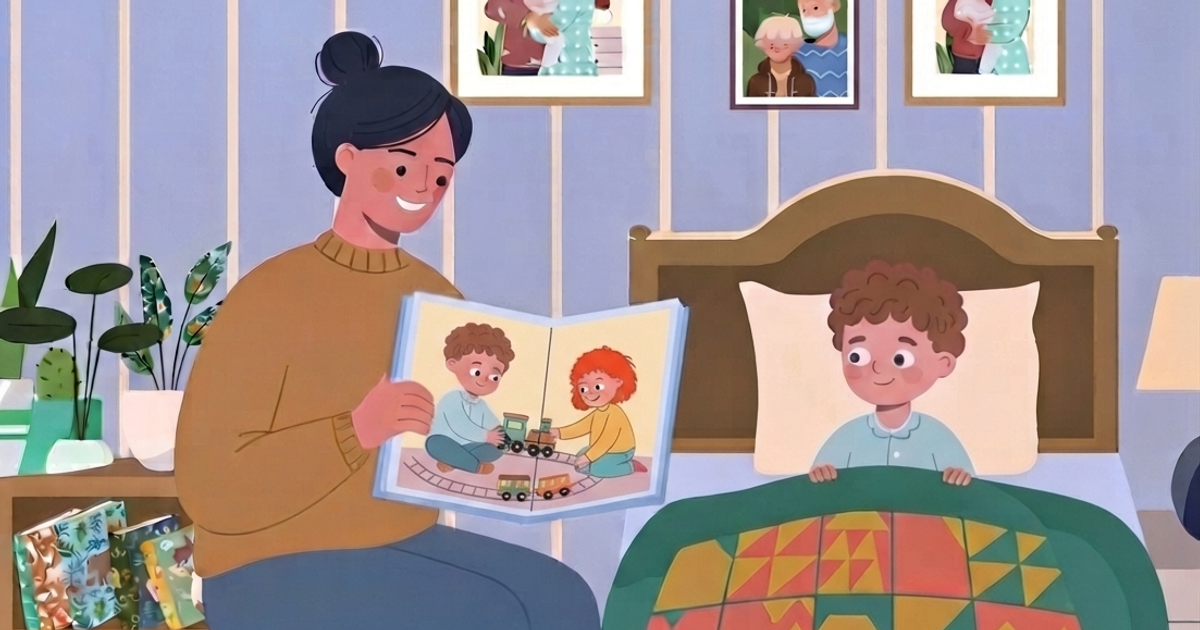
There's another finding easy to miss: the effect of prosocial content is much stronger when an adult reads or watches along with the child, rather than the child being exposed to it alone. That's exactly what happens every night when you read a story together. The parent is right there, reacting, maybe even asking "what would you have done in their place?"
Where Quilloo fits in
Now think about what happens when you combine both findings: explicit behavior, in a concrete, close-to-home situation. With Quilloo, you can create a story where your own child is placed in exactly the situation they struggle with, the same birthday party, the same friend, the same toy, and watches themselves choose to share, to help, to invite someone in. It's not some distant character doing something abstract. It's them, in a situation they already recognize, doing the exact thing that's hard for them in real life. And when you read it together at night, exactly as the research points to, the odds it sticks with them the next day go up considerably.
Frequently Asked Questions
At what age can I start teaching kindness through stories? Even from around 18 months to 2 years, children show early signs of prosocial behavior, like comforting someone who's upset, so it's a good time to start.
Is it better to have a clear moral or a subtler story? According to the research, the more explicit and concrete the example, the better it lands with young children. A moral that's too subtle can simply go unnoticed.
Do I need to talk with my child about the story after reading it? Yes, that matters a lot. A short conversation about what happened in the story significantly strengthens its effect on the child's actual behavior.
What if my child still doesn't share after a few stories? This is a gradual process, not an instant switch. Consistent repetition of the same behavior across different stories, alongside positive reinforcement when the child does share, builds the habit over time.
Want to watch your child choose to share, in exactly the situation that's hardest for them?
Topics in this article
QT
Quilloo Team
Bringing together child development research and thoughtful storytelling for parents.
Weekly parenting insights you'll actually use.
No spam. Just thoughtful ideas, expert tips, and stories that make a difference.