Quilloo

Posts tagged “Neufeld Institute”

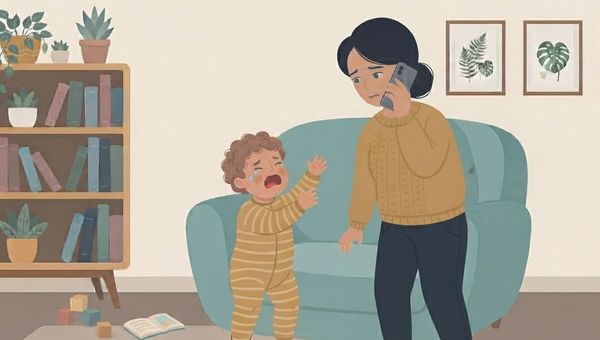
A digital illustration shows a worried mother standing by a teal sofa, talking on her smartphone while looking down with concern at her toddler in striped pajamas who is standing and crying with outstretched hands. The living room features a bookshelf filled with books, plants, and framed botanical prints on the wall.
separation anxiety

Separation and Alarm: Why Distance Feels So Big to a Young Child

A tone of voice, a distracted look, a few minutes in another room: young children feel distance deeply. Gordon Neufeld explains the alarm behind many tough moments, and three ways to soften it.
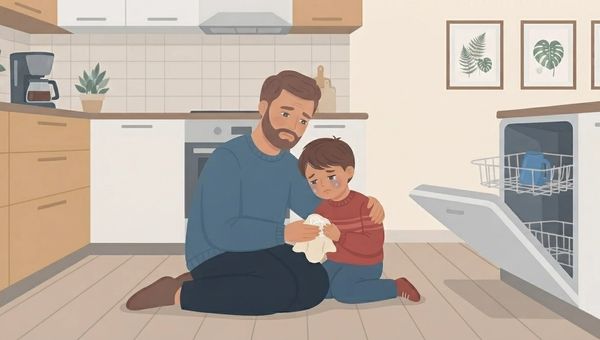
A digital illustration in a soft, flat vector art style depicts a kitchen scene where a father with a beard, wearing a blue sweater and dark pants, sits on the wooden floor and gently comforts his young son, who has dark hair and a red sweater, as he cries. The father has his arm around the boy and holds a cloth. Next to them on the right, an open dishwasher has a blue cup visible inside its top rack. The kitchen background includes white tiled walls, upper and lower wooden cabinets, a coffee machine, potted plants, and framed botanical prints on the wall. The color palette consists of warm earth tones, soft blues, and muted greens, creating a calm and supportive atmosphere.
tears of futility

Tears of Futility: Why a Good Cry Can Help Your Child Move On

When a child sobs over the wrong cup, there may be more going on than meets the eye. Gordon Neufeld's tears of futility explain how crying helps kids adapt, and how parents can simply stay close.

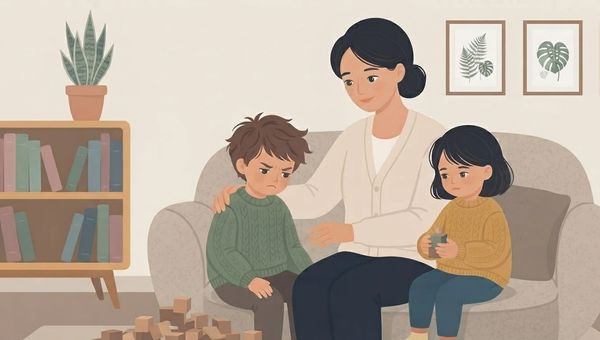
A woman in a cream cardigan comforts a scowling boy in a green sweater on a beige sofa. To their right, a quiet girl in a yellow sweater holds a wooden block. A bookshelf with books and a plant sits to the left, and three framed botanical prints hang on the wall. Wooden blocks are scattered on the floor. The illustration has a calm, muted aesthetic.
frustration and aggression

Frustration and Aggression: What Gordon Neufeld Sees Behind Hitting and Lashing Out

Behind a flying block or a shove, Gordon Neufeld sees frustration looking for an exit. Understanding the traffic circle of frustration helps parents respond to what lies beneath the outburst.

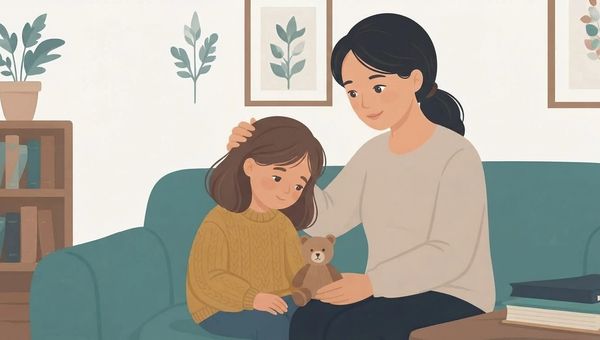
A digital illustration in a calm, flat vector art style shows a mother and her young daughter sitting closely on a teal-colored sofa in a living room. The mother, with dark hair tied back and wearing a cream-colored sweater, has her arm around her daughter and is gently stroking her head, looking at her with a warm, comforting expression. The daughter, with medium-length brown hair and wearing a mustard-yellow knit sweater, is looking down with a thoughtful, slightly sad look on her face, holding a small brown teddy bear in her lap. The background is a muted wall with a bookshelf on the left containing various books and a potted plant, and two framed botanical prints above the sofa. On the right side, there's a stack of two books on a wooden side table. The overall lighting is soft and even, creating a peaceful, supportive atmosphere. The color palette is composed of warm earth tones, muted greens, and teal.
time-outs

Time-Outs vs. Time-Ins: What Gordon Neufeld Says About Discipline That Keeps Kids Close

Time-outs are popular, but Gordon Neufeld asks what they cost a child's sense of closeness. Here is his reasoning, where experts differ, and a four-step time-in that keeps the limit and the connection.

Your subscription could not be saved. Please try again.
Your subscription has been successful.

Weekly parenting insights you'll actually use.

No spam. Just thoughtful ideas, expert tips, and stories that make a difference.

Protected by reCAPTCHA. Google's Privacy Policy and Terms of Service apply.