
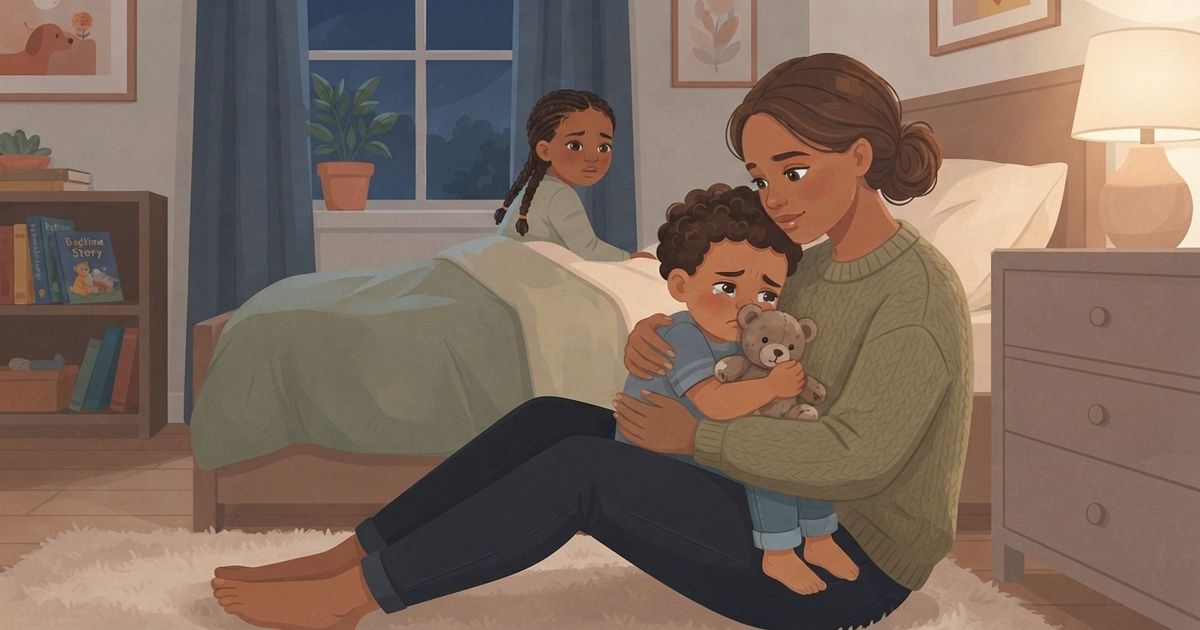
You spent the entire Saturday with your kids. Soccer practice, grocery store, a birthday party, two loads of laundry, and a long negotiation about broccoli. And yet, at bedtime, your five-year-old clings to you and says, "You never play with me." It feels wildly unfair. You were together all day.
Jane Nelsen, the family therapist who created Positive Discipline, would say both things are true. You were together all day. And your child may still be missing something specific: what she calls special time.
The idea, in one sentence
Regularly scheduled, one-on-one time that a child can count on is one of the most encouraging things a parent can give, and it works differently from the time you already spend together.
Nelsen describes special time in Positive Discipline and in her later tool card collections, and she's careful to distinguish it from two other kinds of time families share. There's the "have to" time, like getting dressed, driving to school, and running errands. There's casual time, like hanging out in the same room while everyone does their own thing. Both matter. But special time is something else: planned, predictable, and just for the two of you.
The secret ingredient is the schedule
What makes special time special isn't really the activity. It's the predictability.
Nelsen points out that children feel a sense of connection when they can count on special time with you. A spontaneous game of catch is lovely. But a child who knows that every Tuesday and Thursday after dinner is "Maya and Dad time" carries that knowledge around all week. It's an anchor. On a hard day, when you're busy or distracted or short-tempered, she still knows her time is coming.
This is also why special time works so well with a busy family. You don't need hours. Nelsen notes that even ten minutes of special time can feel surprisingly powerful when it's what your schedule allows. Longer is nice, but regular beats long.
Planning it together
A detail that's easy to skip: Nelsen recommends planning special time with your child, not for them. Sit down together and brainstorm a list of things you'd both enjoy. The list might include board games, building with blocks, a walk around the block, baking cookies, drawing, or a silly dance party.
Planning together does two things. It gives the child a sense of ownership, and it makes the time feel genuinely shared rather than like one more activity the grownup organized. When a child has helped create it, she's more invested in it.
Some families give special time a name: "Leo time," "Mommy-and-Ava time." Names make it feel official, and kids love official.
What about babies and toddlers?
Nelsen is practical about age. Children under about two need lots of time and attention anyway, and they aren't really old enough to grasp the concept of scheduled special time. For them, she says, the main thing is that they feel you enjoy being with them. A formal schedule isn't necessary.
From around three and up, the scheduled version starts to make sense, and it continues to matter all the way into the teen years, when the activity might shift to a coffee run or a car ride, but the principle stays the same.
Protecting the time
Nelsen suggests treating special time as genuinely uninterrupted. In her original advice, that meant taking the phone off the hook. Today, it means putting the phone in another room or turning on Do Not Disturb.
She also shares a lovely variation from one mother who chose the opposite approach. This mom left the phone on during special time with her three-year-old, and when it rang, she would answer and tell the caller that she couldn't talk because this was her special time with her daughter. The little girl would grin hearing her mom tell other people how important their time was. Either way, the message is the same: right now, you come first.
Special time isn't a bedtime story
One more subtle point. Nelsen notes that you can weave the spirit of special time into the bedtime routine, a few minutes of talking about the day, for example. But she's clear that bedtime shouldn't replace daytime special time. Bedtime connection is wonderful, and it's also when everyone is tired and the routine has its own job to do. Special time works best when it has its own place in the day.
How it helps with behavior, too
Special time isn't a discipline technique exactly, but it often reduces behavior problems. A child who feels secure in her connection with you has less reason to seek attention or power in disruptive ways. The clinginess at bedtime, the whining during your phone call, the meltdown when a sibling gets your attention: these often soften when a child knows her turn is guaranteed.
That's also why, when the "you never play with me" complaint shows up, special time offers a better answer than defending how much time you spent together. You can say, warmly: "Our special time is Thursday. What should we do?"
Nelsen suggests a similar move in Positive Discipline for children who keep demanding attention: a knowing smile, and a warm reminder of when your next special time is.
Set it up this week
Here's how to start, step by step.
Pick the slot. Look at your week and find two or three times you can genuinely protect. Ten to twenty minutes is plenty to start. Consistency matters more than length.
Name it. Give it a name your child will love. "Sam-and-Mom time" or "Daddy Daughter Club" works fine.
Brainstorm the list together. Write down ten things you'd both enjoy. Keep the list somewhere visible, like the fridge, and let your child pick from it.
Protect it from interruptions. Phone away, siblings occupied, laundry ignored. If you have more than one child, each one gets their own slot.
Talk about it during the week. When your child is upset or you have to say no, remind her of the next special time. "I can't play right now, and I'm really looking forward to our special time on Thursday."
Frequently Asked Questions
What is special time with a child?
Special time is regularly scheduled one-on-one time between a parent and a child. Jane Nelsen describes it as different from errands or casual time together, because the child can count on it in advance.
How long should special time be?
Even ten minutes can make a real difference, according to Nelsen. Regularity matters more than length, so a short, predictable slot is better than an occasional long one.
At what age should you start special time?
Nelsen suggests scheduled special time isn't necessary before about age two, when simply enjoying time together is enough. From around age three, a predictable schedule becomes meaningful.
Can bedtime count as special time?
Bedtime connection is valuable, but Nelsen recommends it not replace daytime special time. Special time works best as its own protected part of the day.
Sources
- Jane Nelsen, "Schedule Special Time for Connection" (excerpt from Positive Discipline), PositiveDiscipline.com. Link.
- Jane Nelsen, Positive Discipline: The Classic Guide to Helping Children Develop Self-Discipline, Responsibility, Cooperation, and Problem-Solving Skills (Ballantine Books, revised 2006 edition), Chapter Four, "A New Look at Misbehavior."
- Jane Nelsen, Mary Nelsen Tamborski, and Brad Ainge, Positive Discipline Parenting Tools (Harmony Books, 2016). Link.
Topics in this article
- special time with kids
- one-on-one time
- Jane Nelsen
- Positive Discipline
- quality time with children
- parent-child connection
- attention-seeking behavior
- busy parents
- preschooler connection
- scheduled play
- family routines
QT
Quilloo Team
Bringing together child development research and thoughtful storytelling for parents.
Weekly parenting insights you'll actually use.
No spam. Just thoughtful ideas, expert tips, and stories that make a difference.