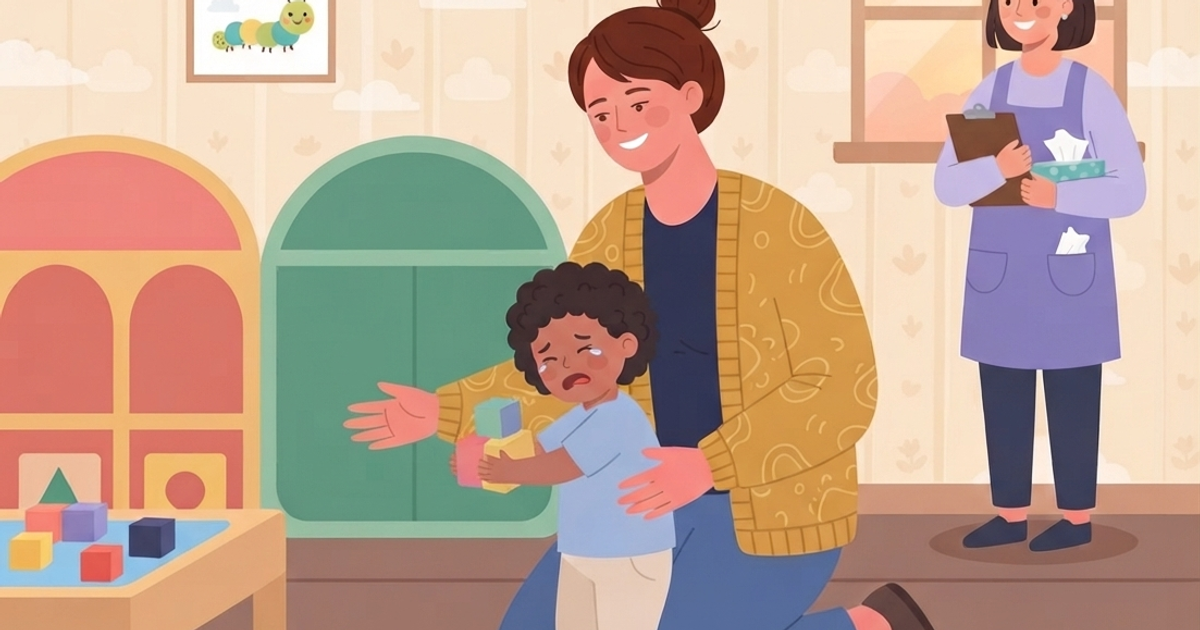
You've done the math. You've packed the bag, prepped the snack, rehearsed a cheerful goodbye speech worthy of a TED talk. And then, right at the door, your toddler clamps onto your leg like it's the last helicopter out of the building. Somewhere behind you, a teacher is smiling in a way that says "yep, seen this before." So what is actually going on here?
This is, scientifically, a whole thing
Back in the 1970s, psychologist Mary Ainsworth ran a now-famous experiment called the Strange Situation, where she watched how toddlers reacted when their caregiver left the room and came back. Spoiler alert, the kids who cried, protested, or clung on when their parent left weren't broken. They were showing exactly the kind of healthy attachment developmental psychologists want to see. According to Stanford Medicine, separation anxiety typically shows up between 10 and 18 months and tends to fade out by around age 3. So if your toddler is currently performing a full Broadway number at drop-off, congratulations, they're right on schedule.
The sneak-out is tempting. Don't do it.
Every exhausted parent has had the thought. What if I just slip out while they're distracted by the block tower? It feels merciful in the moment. It is, according to basically every childcare expert on the internet, a trap. When you disappear without saying goodbye, your kid doesn't learn "leaving is fine." They learn "Mom or Dad can vanish at any second without warning," which is a significantly worse lesson. A quick, honest goodbye, even a tearful one, builds more trust over time than a stealth exit ever will.
The 10 second goodbye that actually works
The advice that shows up again and again, from daycare directors to child psychologists, is almost annoyingly simple. Keep it short. Keep it consistent. And then actually leave. A long, drawn out goodbye, extra hugs, extra "I promise I'll be back," extra hovering by the door, tends to signal to your kid that this moment really is as big a deal as it feels. A quick ritual, one hug, one phrase, one wave through the window, and out, gives your child less time to spiral and more chances to practice being okay without you.
What to actually say (a very small script)
If you want words that work better than "please don't cry, we talked about this," try something closer to: "I see you're sad. I'll be back after nap time. You've got this." Short. Honest. Specific about when you're returning, because toddlers have approximately zero concept of "later," but they can hold onto "after lunch" or "after nap." Then go. Resist the urge to peek back in. If you're dying to know how it went, call the front desk later. That's what they're there for.
A story can do some of the heavy lifting too
Here's a trick a lot of child psychologists actually recommend, and it has nothing to do with buying anything. Before a hard transition, like starting daycare or getting through a rough patch of drop-offs, read your child a story where a character goes through the exact same morning. Backpack, goodbye, a few hours apart, and then a happy reunion. Kids process what's coming by rehearsing it first, safely, on a page, before they have to live it for real. It works even better if the character in the story is dealing with the specific thing your kid is scared of, not just a generic "first day" story. The plot matters less than the shape of it: leaving, missing someone a little, and coming back together. That shape is what actually sticks.
Topics in this article
QT
Quilloo Team
Bringing together child development research and thoughtful storytelling for parents.
Weekly parenting insights you'll actually use.
No spam. Just thoughtful ideas, expert tips, and stories that make a difference.